“We plant our own roots”
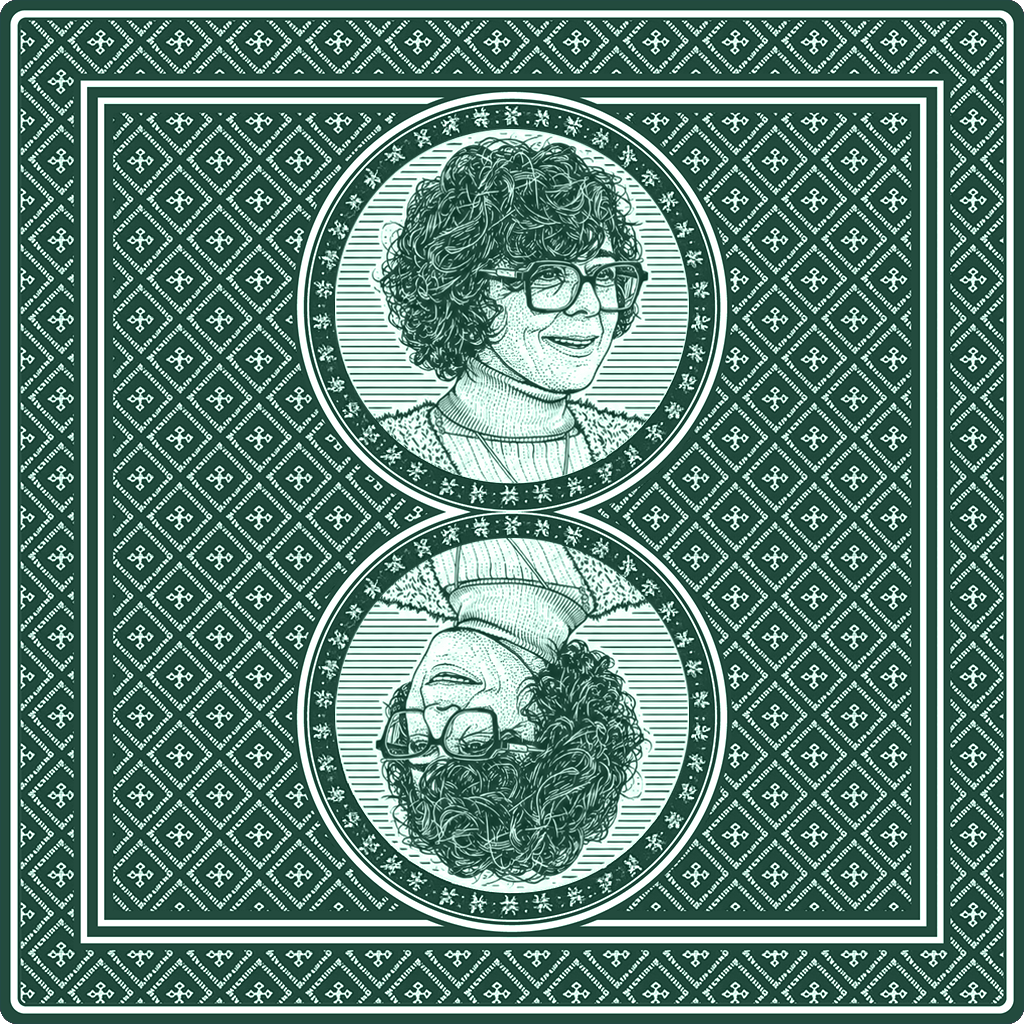
Estre
“We plant our own roots …”
The interview tells the story of Estre, who came to Germany from Spain as an expat in 2013. What began as a career move became a new home for her and her family. She talks about settling into a new country, balancing family and work, and the people who made her first steps in Germany easier.
In the interview, she reflects on how a temporary stay gradually became a place to call home. She speaks about establishing new roots, the differences between Spain and Germany, the challenges and opportunities she encountered, and how mutual support makes settling easier.
Testimony
Professional Mobility and Family Decisions
A professional opportunity leads Estre and her family from Spain to Germany. Her story shows how international mobility is shaped not only by career opportunities, but also by economic circumstances and shared family decisions.
Settling In Through Support and Personal Agency
Estre describes how the support of her employer, social networks, and her own openness helped her settle into life in Germany. At the same time, she makes clear that belonging does not emerge through institutional support alone, but is actively built through everyday relationships and personal initiative.
Work, Family and Belonging Across Borders
Looking back, Estre reflects on balancing work and family life, navigating different workplace cultures, and experiencing subtle forms of discrimination. She also explains how her family has put down new roots in Germany, showing that home is something people actively create.
Historical-Political Background
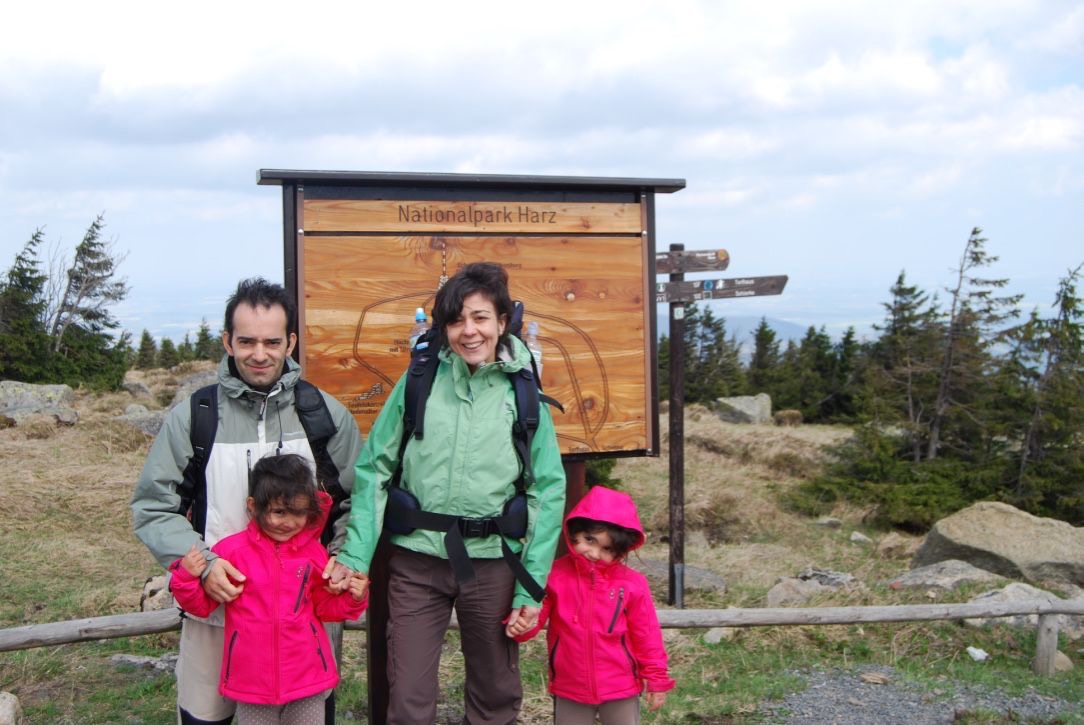
Estre moved from Spain to Germany in 2013 as part of an international work assignment, continuing her international career. She initially relocated to Hanover in March, while her husband and their two daughters joined her shortly after, once accommodation and the children’s schooling had been arranged. Throughout the relocation process, the family received extensive support from her employer.
As the world of work has become increasingly international, companies have expanded the cross-border deployment of skilled professionals over the past decades. Within the European Union, the free movement of workers facilitates this exchange. Many companies offer their employees the opportunity to work abroad for a limited period, enabling them to gain international experience while strengthening collaboration between different branches.
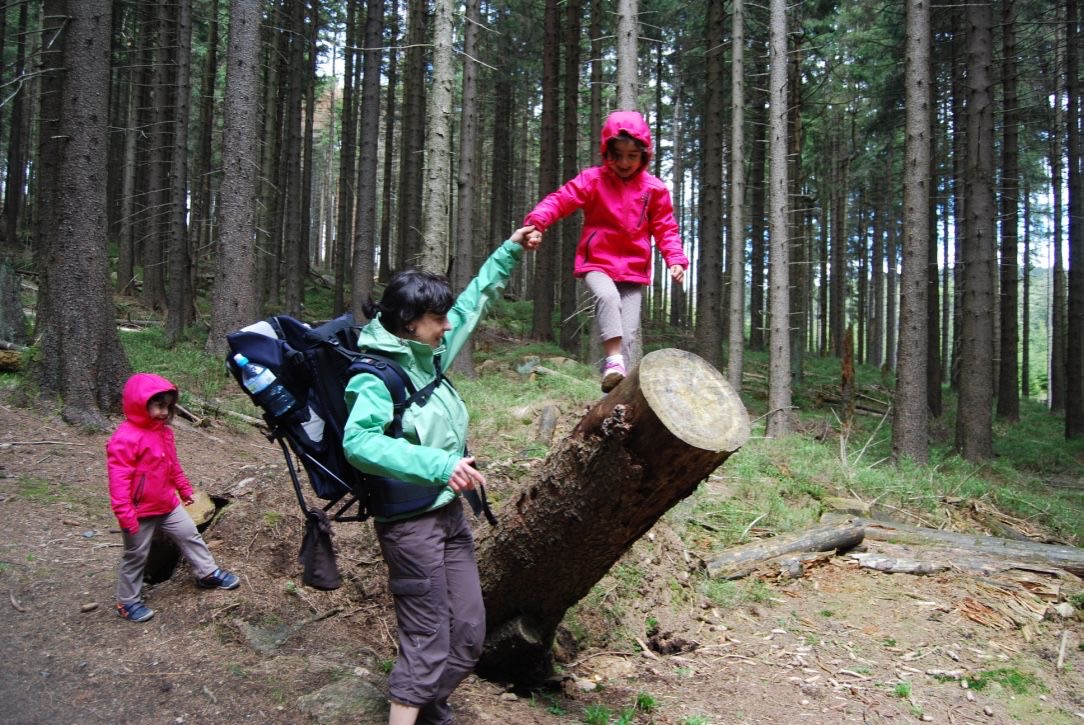
Estre’s story illustrates how a temporary international work assignment can develop into a permanent life in a new country. Her interview highlights that successful settlement depends not only on favourable structural conditions but, above all, on openness, mutual support, and a sense of belonging. At the same time, she describes the move to Germany as an enriching experience for her family. Her daughters grew up in an international and multilingual environment, allowing them to gain a wide range of cultural and personal experiences.
Making of
How and why did you decide to deal with and present this specific story?
On the occasion of the 60th anniversary of the recruitment agreement between Bonn and Ankara, the Ruhr Museum presented the exhibition “We Are from Here. Turkish-German Life 1990. Photographs by Ergun Çağatay” (2021), as well as “Mustafa’s Dream. Photographs by Henning Christoph on Turkish Life in Germany 1977–1989” (2021-2022).
Both exhibitions combined historical insights with personal stories and aimed to bring greater attention to the long-overlooked experiences of labour migration in Germany, while also encouraging dialogue between generations and communities.
The accompanying programs were also deliberately designed to be participatory. The decision to tell migration history not only from an institutional perspective, but also to actively involve the communities concerned, was based on the idea of making diverse experiences visible and sharing interpretive authority.
In this context, the Ruhr Museum is involved in the European project FeMig.Lab. Through its own interview project, it specifically focuses on the life stories of migrant women in order to raise the profile of female migration experiences, which have historically been less well documented. The focus is on intergenerational experiences of women from Spain, Greece, and Turkey. Its goal is to connect individual perspectives with broader historical and political contexts, offering a more nuanced view of female labour migration.
How did you negotiate and decide about the methodologies and processes in acquiring/giving the testimony?
The project is designed and carried out by the Ruhr Museum (Meltem Küçükyılmaz) in cooperation with the Spanischen Elternverein Essen e. V. (Cristina Fernández-Moser), HistAgoge | Geschichtsforschung (Spiridon Papaioannou), and the mitMach Agentur (Mustafa Mert). The questionnaire and thematic focus areas were developed jointly, and the selection of interview partners was also evaluated together. This participatory approach builds on the Ruhr Museum’s previous work.
In terms of content, the project focuses on two distinct generations of migration: women from the so-called recruitment agreement generation and a more recent wave of migrant women and expatriates who have arrived in Germany since around 2011. The selected interviewees are Anastasia Walden, Ceferina García García, and Neriman Yılmaz, representing the recruitment agreement generation, and Estre, Çağla Diner, and Maria Papadopoulou, representing the more recent wave. With two women from Spain, two from Greece, and two from Turkey, the project combines an intergenerational perspective with a comparative, transnational approach. Since all participants responded to the same set of interview questions, their experiences can be compared systematically. By examining their opportunities, challenges, legal status, employment experiences, and social acceptance in Germany, the project aims to highlight both continuities and changes in women’s migration experiences over time and across national contexts.
Prior to the interviews, preliminary personal conversations took place, during which the goals, process, and expectations were discussed transparently. The interviewees were actively involved and had a say in deciding which topics and aspects of their stories they wanted to share. The interviews were conducted in a safe environment within the museum and, where desired, in the participants’ native language in order to build trust and reduce barriers.
Sensitive topics were handled in close coordination with the participants; content could be omitted, anonymized, or adapted at any time.
How and why did you decide to publicly present the story this way?
For the presentation, a format was deliberately chosen that preserves the personal character of the stories and allows the women’s voices to be experienced directly. The combination of interviews, images, and personal materials creates a multi-layered approach that makes individual experiences visible and relatable.
The interviewees were involved in decisions regarding publication and were able to have a say in what content would be included and how their stories would be presented. This ensured that the representation reflected their perspectives and respected their autonomy.
At the same time, the project sees itself as a curatorial process that is always shaped by selection and classification. This responsibility is consciously reflected upon in order to present the stories in a respectful and context-sensitive way. In doing so, the project acknowledges existing power dynamics and seeks to reduce barriers through participation and transparency.
Particular emphasis is placed on protecting the participants: issues relating to data protection and publication are communicated clearly and agreed upon jointly. The aim is also to make the content as accessible as possible, especially for the communities involved, and to ensure open access to these stories.
What is the motivation and benefit for the person/community sharing the story? How did you negotiate this and take it into consideration?
Throughout the project, care was taken to ensure that both the cooperating partners and the interviewees benefited from their involvement. The cooperation partners received a fee for their conceptual and organizational contributions, recognizing their expertise and commitment. The interviewees were offered an expense allowance to acknowledge their time, their willingness to participate, and their openness in sharing personal stories.
In addition, the participating associations and institutions benefit from long-term networking with the museum, as well as from the opportunity to make their own perspectives and topics visible and to contribute them to cultural processes. For the interviewees, alongside the financial recognition, the main benefit lies in the visibility of their life stories.
Overall, the project aims to foster a partnership of equals that encompasses both intangible and tangible forms of recognition and strengthens sustainable relationships between institutions and communities.
What questions and challenges arose during the processes?
A key challenge in the project was multilingualism, which is also a major strength. The linguistic diversity of the interviewees reflects their different migration experiences and helped create a trusting and comfortable atmosphere during the conversations. At the same time, it presented practical challenges, particularly in terms of translation and subtitling. This process required a sensitive approach in order to convey meanings as accurately as possible. Thanks to close collaboration with the project partners, this process was successfully carried out as they contributed both their linguistic and cultural expertise.
Credits
Interview
Conducted on 11 February 2026 at Ruhr Museum, Essen. © Ruhr Museum
Texts
Written by Ruhr Museum.
We would like to extend our heartfelt thanks to Estre for sharing her story and memories with us. Together with five other interviewees from Spain, Greece, and Turkey, she contributes to an intergenerational and transnational interview project exploring women’s migration experiences in Germany.
The conception and implementation of the interview project were carried out by Ruhr Museum (Meltem Küçükyılmaz) in cooperation with Spanischer Elternverein Essen e. V. (Cristina Fernández-Moser), HistAgoge | Geschichtsforschung (Spiridon Papaioannou), and mitMach Agentur (Mustafa Mert).
Photos
Privat photos © Estre
Transcript PDF here
Partner involved
Ruhr Museum
An orange-glowing staircase and 6,000 exhibits in a spectacular industrial setting: The Ruhr Museum’s permanent exhibition at the Zollverein UNESCO World Heritage Site shows the fascinating natural and cultural history of one of the world’s largest industrial regions.
The Regional Museum of the Ruhr Area shows in its permanent exhibition the entire natural and cultural history of the region from the formation of coal over 300 million years ago to today’s structural change to the Ruhr metropolis. Visitors follow the former path of the coal and descend deeper and deeper from the present into the history of the Ruhr region. Over three levels, they pass through windowless bunkers, huge industrial machines, raw concrete walls and conveyor belts. In between, 6,000 exhibits show in often fascinating detail how a formerly agricultural region developed into Europe’s largest coal and steel production area and then became the Metropole Ruhr.