“Creating possibilities everywhere”
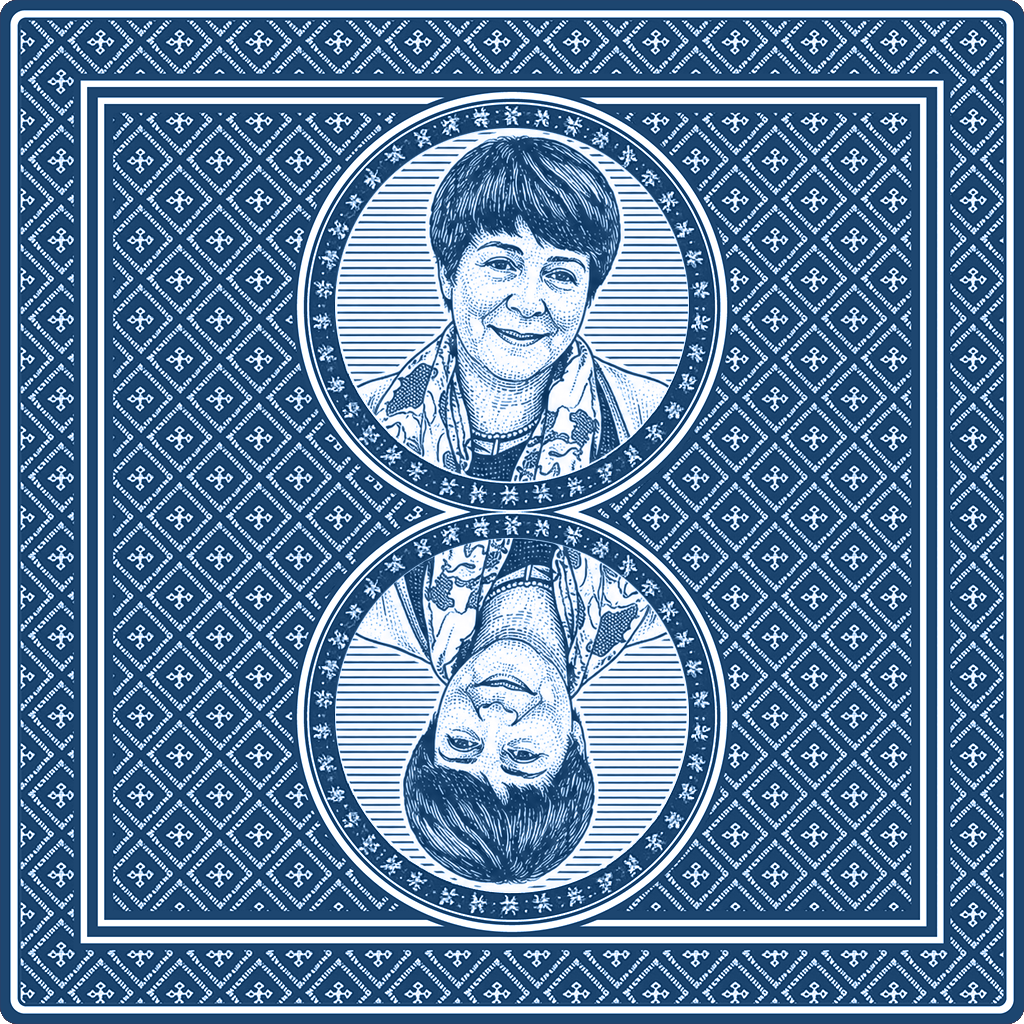
Silvia Henao
“Creating possibilities everywhere”
The interview recounts a life marked by repeated migration from Colombia to the United States, Spain, Ecuador and Belgium. Through experiences of abandonment, education, work, love and motherhood, the narrator reflects on exile, adaptability and the slow construction of belonging across borders.
Testimony
Migration biography overview
Silvia Henao recounts her international trajectory from her birth in Bogotá to her eventual migration to Antwerp, Belgium, to raise her family. The account details her formative years and travels across three continents before establishing a permanent home in 1981.
Childhood, Family and Decision to move to the US
Silvia Henao reflects on a challenging childhood in Colombia marked by family instability and a sense of being unwanted, which fueled her desire to seek a better life abroad. Supported by her aunts, she immigrated alone to the United States at age fifteen to pursue the education and independence that felt unattainable in her home country.
"They hated so much to see me leave, but at the same time they were happy because I would create a new and different life."
Mobility, Identity and Self-Construction
Following her heart to Spain, Silvia Henao finds intellectual renewal and adopts a mobile identity, vowing to live wherever she drops her bags. This period of wandering eventually leads her through Ecuador to Belgium, where she consciously chooses to settle down to provide her children with a sense of place and family.
Motherhood, Work and Reframing Migration
Silvia Henao rejects the idea of a "land of milk and honey," choosing instead to create her own possibilities while balancing the demanding roles of her professional life and motherhood. Her reflections transform a personal sense of exile into a broader understanding of migration as a vital, historical process of constant human adaptation and change.
Migration struggles
Rejecting the notion of migration as a purely economic choice, Silvia Henao explores the deep emotional pain and loneliness of adapting to a new country. She frames her experience in Belgium as a grueling personal challenge, ultimately emerging as a survivor who transformed hardship into self-reliance.
Historical-Political Background
Silvia Henao was born in Bogotá in 1945 as the eldest of ten children. Because her family lived in poverty, she had to take care of her younger brothers and sisters from a young age. After the free years of schooling, her family could not afford the fees so at about thirteen, she started working as a maid to support them. Shortly before she left Colombia her mother told her about something she had seen at the fair in Choachi when she herself was fourteen. There was a stall called the lucky hen where for two reales the hen would peck a ticket that predicted your future. Her mother remembered laughing at the message that her first child will travel around the world because it seemed so impossible. Yet later she would often remind Silvia of that sentence every time Silvia announced that she was moving to another country again. During these years, Colombia’s national timeline included the period commonly referred to as La Violencia (1948–1958)1. While Silvia does not cite political events as a motive for moving, her early responsibilities in the family and entry into domestic work are consistent with the constrained opportunities many Colombians faced in that period.
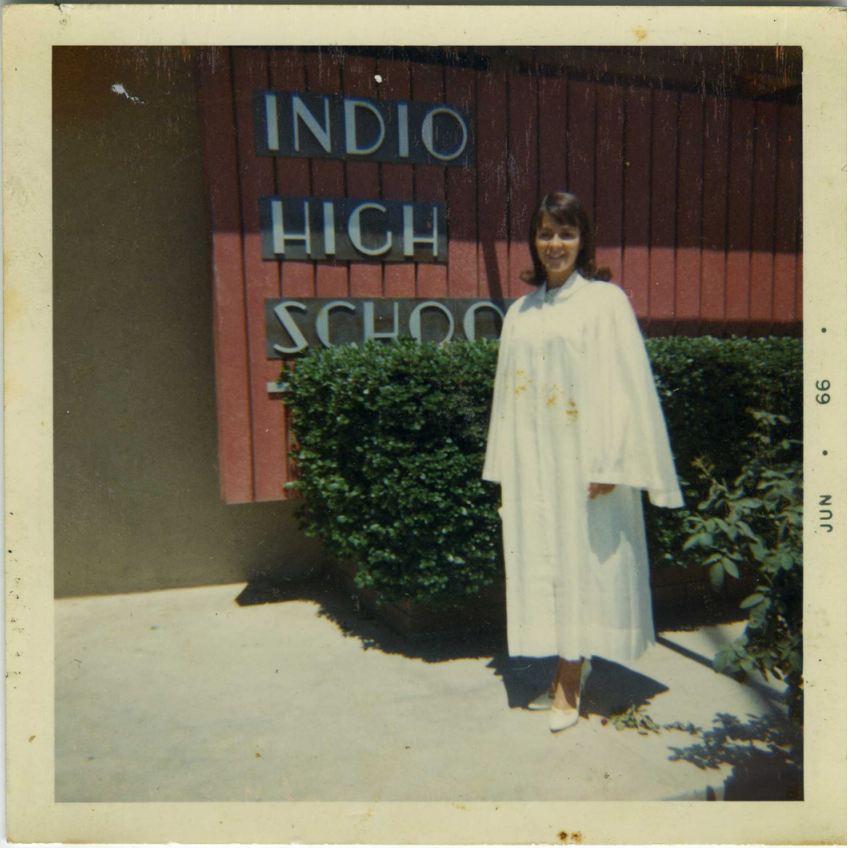
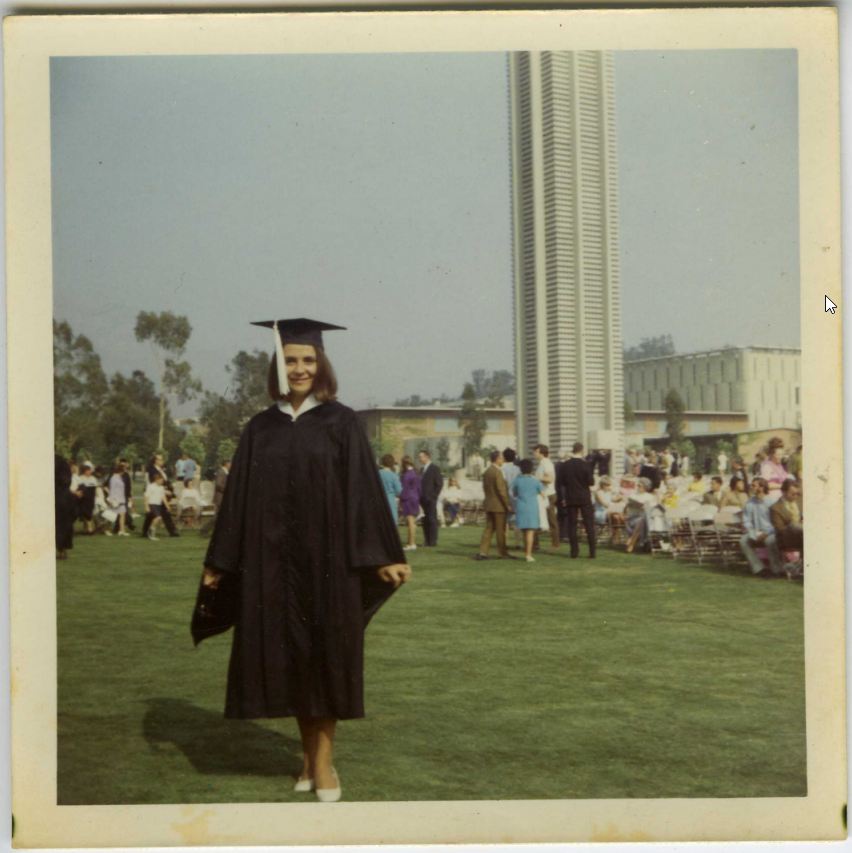
When the American family Silvia worked for asked if she wanted to join them in the United States, she said yes and entered a completely new life. In California she continued to cook and clean for the family, but she also went to school as she was still a minor. She sent money back home to her family and the pressure to contribute financially never disappeared. A French teacher supported her, encouraged her to tell her story and even welcomed her into her home. Nine years after Silvia’s arrival in California, she graduated from the University of California Riverside. She had arrived with only a basic knowledge of English and threw herself into studying literature and languages driven by a need to reconnect with her own language and identity. Her pathway, combining paid domestic work with schooling, resembles documented trajectories of first‑generation migrants who use educational institutions as sites of language learning and social mobility.
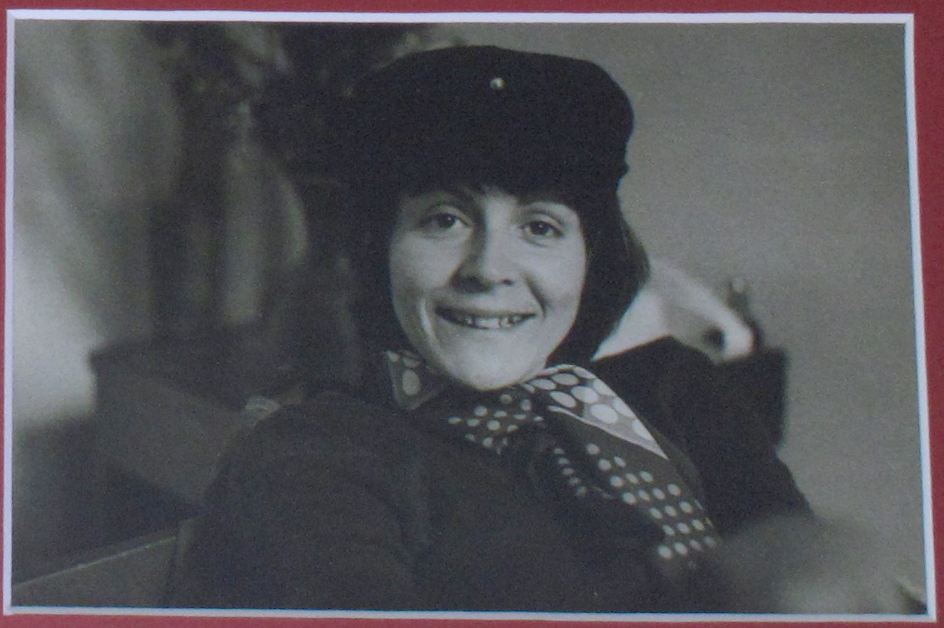
Later at university, she met Paco from Spain and followed him to Madrid when he returned home. By the mid‑1970s, Spain was in the midst of its transition from dictatorship to democracy (beginning after Franco’s death in 1975)2. Universities and urban cultural spaces were opening to new forms of debate and expression, and this environment helped nurture the intellectual and artistic circles in which Silvia moved. Long‑standing cultural–linguistic ties between Spain and Latin America also facilitated circulation for many Latin American students and professionals at the time. Silvia and Paco’s relationship ended and once again she found herself alone in a new country. In Madrid, she taught English and continued her doctoral studies through the New York University extension program. Reconnecting with the Spanish language after years of distance filled her with excitement. She experienced a personal sense of freedom and the Madrid university environment in the mid-1970s was full of energy and political engagement.
Around this time, she met a Latin American dance group that needed a light dancer. She joined them and travelled across Europe, performing in Amsterdam, The Hague and finally at the Festival of Schoten in Belgium where she met the future father of her children. After some time living with him in Ecuador, she started working as a nursery schoolteacher at the Cotopaxi Academy, an international school. The family later decided to settle in Belgium. In Antwerp, Silvia became a teacher at the Antwerp International School in Ekeren where she taught for twenty-three years. She worked with all age groups from nursery to graduating students, and the school became her professional home.
After her retirement in November 2010, she devoted herself to cooperative work. She joined conversation groups with other immigrants, helped them learn Dutch, volunteered at OXFAM and encountered people from many different backgrounds. Silvia’s story shows how migration can be uncertain yet full of new chances. At each step her movements were shaped by labour and opportunities, especially domestic and educational work, which repeatedly placed her in roles of care and service. She migrated from Colombia to the United States for work where she found the opportunity to continue her studies. She migrated to Spain for love and academic work, rediscovered her identity and later joined a travelling dance group through which she worked in several European cities. She followed her ex-partner to Ecuador and worked again in education before finally moving to Belgium, where she built a lasting home. Taken together, Silvia’s trajectory illustrates how personal choices unfold within wider economic, social, and political contexts, even when those contexts remain in the background of a life story. Today, after more than forty years in Antwerp she sees Belgium as her true home.
Making of
How and why did you decide to deal with and present this specific story?
The Red Star Line Museum officially opened its doors in 2013, but long before the opening, the team was already working on research and community projects. For the project Hier Ben Ik, or Here I Am, from 2010 to 2013, the museum travelled through the city of Antwerp with the Transit Story Bus in search of contemporary personal stories about migration. In collaboration with schools where newcomers learned Dutch and with social and cultural organisations, the museum collected hundreds of stories. This meant that by the time the museum opened, it had already held an archive of four hundred contemporary migration stories.
The Transit Story Bus also visited schools, organisations and companies that wished to participate in the project. That is how the museum first met Silvia Henao, who at the time volunteered at TaalooR, a community initiative for people who spoke Dutch or were learning the language. This encounter led to a recorded interview in which Silvia was interviewed by Nadia Babazia and the filmmaker Lut Vandekeybus in 2011. That same year Silvia collaborated with the Red Star Line Museum and the MAS on her autobiographical project Historias de Emigracion.
Given the scale of the collection, not every story can receive equal visibility. However, Femig.Lab focuses specifically on post–Second World War female labour migration, and Silvia’s testimony is currently the only narrative in the collection that fully fits this framework. This made the platform a meaningful and timely context in which to make her story publicly accessible.
How did you negotiate and decide about the methodologies and processes in acquiring/giving the testimony?
Over the years, the museum has increasingly reflected on the ethical implications of recording, preserving and sharing personal stories. Life histories are not neutral data but lived experiences, often shaped by vulnerability and complex migration trajectories.
When Silvia’s interview was conducted, the museum was still developing its oral history practice, with a strong emphasis on collecting a broad range of contemporary migration narratives. This context shaped the interview methodology and setting. In Silvia’s case, the interview location was not individually chosen by the interviewee but was part of a broader project framework in which interviews were conducted at a well-known public site. This choice was made by the museum to establish a symbolic link between contemporary migration stories and Antwerp’s historical role in migration, rather than to create a personalised setting.
However, within these fixed parameters, the interview process itself remained flexible. The aims of the project were clearly explained in advance, and the interview was conducted as an open conversation rather than a rigid questionnaire. Silvia was able to steer the narrative, determine which aspects of her life she wished to address, and set the boundaries of what she felt comfortable sharing. This conversational openness functioned as the primary way in which the process was adapted to her wishes at that time.
In more recent interview practices, this adaptability has become more explicit and structured. Interviewees are now actively involved in decisions about location, pacing, themes and conditions, and these preferences are revisited throughout the process rather than fixed at the outset.
When such stories enter an archive or collection, they risk becoming detached from the person who shared them, which can lead to misinterpretation, loss of context or use in ways the interviewee never intended. For that reason, the museum has developed an ethical framework that emphasizes transparency, long term responsibility and consent as an ongoing process rather than a onetime signature. Privacy is not treated as a bureaucratic checkbox but as a continuous obligation to protect the dignity and agency of the people whose stories are being held.
How and why did you decide to publicly present the story this way?
Within this approach the relationship with interviewees, including Silvia, is considered a continuing responsibility. Renewing contact is part of taking ethical stewardship seriously. Many years after the original recording, the museum contacted Silvia again to renew her consent and to discuss with complete clarity what she wanted to happen with her story. We addressed two things together. First, her recorded testimony would be formally added to the museum collection, which required an updated agreement that respected her wishes. Second, we talked about how and to what extent her story could be made accessible to the public. These choices are never predetermined but negotiated with the person whose life is being documented.
One example of why this process matters is Silvia’s use of the word mestizaje in the interview. The term is common and often neutral in Latin America, while in Western European contexts it can carry colonial associations and be perceived as sensitive. Removing it would flatten her voice and obscure the cultural lens through which she speaks. Instead, keeping the fragment and providing additional context shows that testimonies are shaped by different histories and that an interview is never a finished or frictionless product but part of an ongoing relational process.
We filled in the renewed agreement together in the museum café. The meeting with Silvia was not only a formal moment to confirm her consent but also an informal conversation in which we could rediscover each other. Sharing a table made it easier to talk openly, to answer her questions calmly and to make sure she felt fully in control of the process. The appointment was organized entirely at her pace and in a way that felt comfortable for her, which is essential when dealing with personal stories that will become part of a public heritage collection.
What is the motivation and benefit for the person/community sharing the story? How did you negotiate this and take it into consideration?
At the time, the museum’s focus on building a broad collection meant that less structural attention was given to articulating individual motivations for participation. Silvia later reflected that she initially considered her migration story ordinary and did not fully understand why it was of interest to the museum. This points to a common asymmetry in biographical collecting: experiences that are historically significant may feel self-evident to those who lived them.
Participation was therefore based largely on trust and willingness rather than clearly articulated personal benefit. While contributors were not materially compensated, the intended value lay in recognition and long-term preservation. Reflecting on this experience has since led the museum to place greater emphasis on reciprocity and on communicating more clearly what participants gain from sharing their stories, both during and after the collection process. As part of this ongoing reflection, the museum is currently exploring ways and possibilities of return, considering how stories, materials and outcomes might be meaningfully shared back with the people who originally contributed them.
What questions and challenges arose during the processes?
A key challenge concerns continuity of care and responsibility. Many interviews from the museum’s early years were conducted by staff members who are no longer involved. As a result, the current team, which did not conduct the original interview, nevertheless carries responsibility for decisions about interpretation, contextualisation and public presentation, including representation on platforms such as the FeMig.Lab website. While the original relationships of trust cannot simply be assumed to persist, and therefore need to be actively rebuilt and maintained, the current team remains responsible for decisions that directly affect the person whose story is being shared.
To address this, and with Silvia’s explicit consent, contact was re-established and her daughter was included in the process as a supportive and informed contact person, partly in consideration of Silvia’s age. Her daughter did not act as a substitute decision-maker, but as someone who could help ensure transparency, continuity and accessibility. Involving both Silvia and her daughter made it possible to review proposed historical and political contextualisation together and reinforced the understanding that representation is not a fixed outcome, but an ongoing, relational responsibility.
Credits
This content was provided by the Red Star Line Museum.
The Red Star Line Museum holds the copy rights for the video interview.
The full interview is available here.
Our sincere thanks goes to Silvia Henao for sharing her story and collaborating with us for its contextualization and presentation on the women work migration platform.
Pictures: privat (Silvia Henao).
Video Interview Transcript PDF here.
Partner involved
Red Star Line Museum
The Red Star Line Museum in Antwerp is located in the original departure warehouses of the Red Star Line, through which approximately two million migrants travelled to North America between 1873 and 1934. The museum combines a maritime collection on the operations of the Red Star Line with a substantial body of biographical migration heritage. Oral history is central to its work. By connecting historical transatlantic departures with present day mobility, and by preserving testimonies alongside personal objects and photographs, the museum presents migration as both a structured historical reality and a lived human experience that continues today.
Footnotes
- Mary Roldán, Blood and Fire: La Violencia in Antioquia, Colombia, 1946–1953 (Durham, NC: Duke University Press, 2002). ↩︎
- Encyclopaedia Britannica, “Spanish Civil War,” last modified January 5, 2026, https://www.britannica.com/event/Spanish-Civil-War.
Charles Powell, “Revisiting Spain’s Transition to Democracy,” in The Arab Transitions in a Changing World: Building Democracies in Light of International Experiences, ed. Senén Florensa (Barcelona: IEMed, 2015), https://www.academia.edu/38807787/Revisiting_Spains_transition_to_democracy. ↩︎