“Neither Here Nor There”
Neither Here nor There
“If others can do it, so can I! And with that small comfort, I began my journey”
An anthropological-artistic project expoloring circular migration of ten anonymous Croatian live-in informal care workers in Italy in the last decade of the twentieth and the early twenty-first century.
Testimony
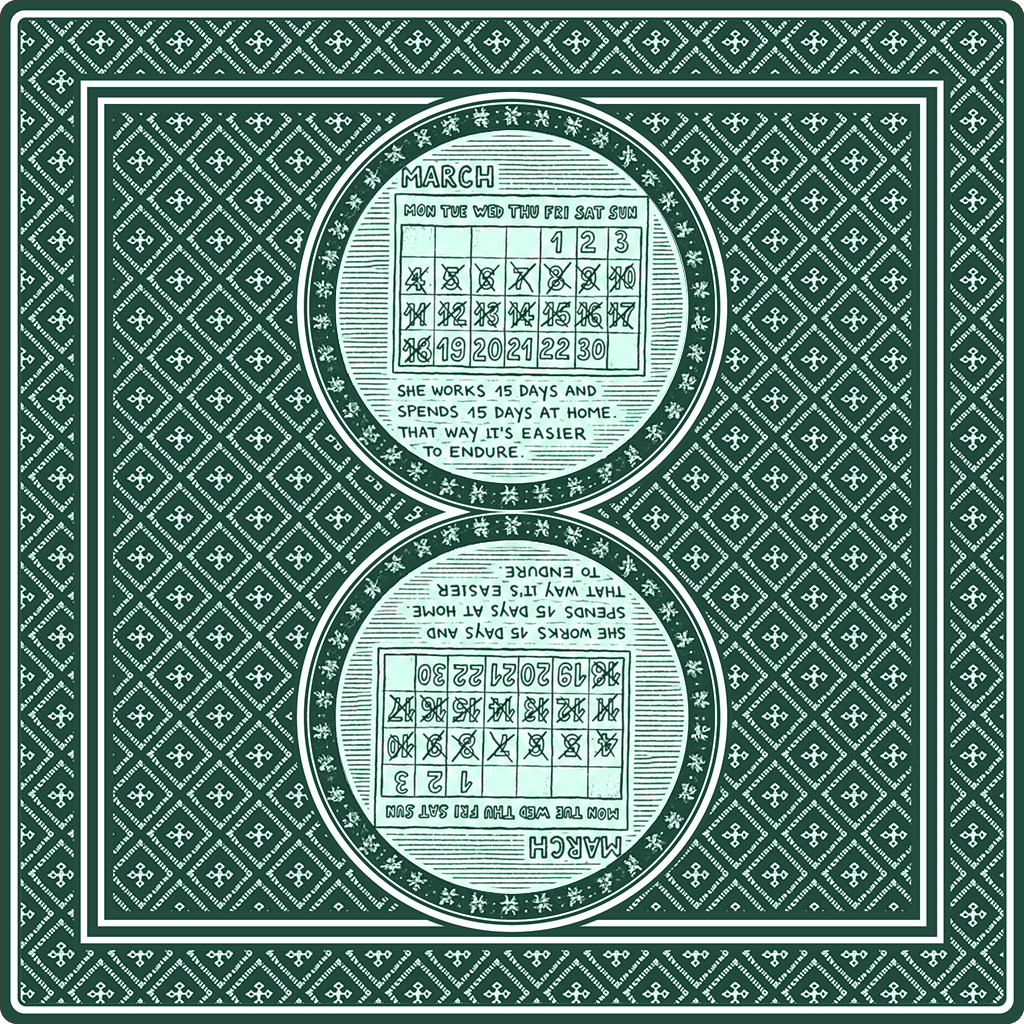
Mothering across borders; fifteen days in - fifteen days out
The interviewee describes how the economic consequences of the post-war transition and her husband’s forced early retirement pushed her to migrate to Italy for domestic work, leaving behind her two young sons to support the family. She reflects on the emotional toll of migration, expressing deep guilt and lasting pain over the impact her absence had on her children despite her efforts to provide for them financially.
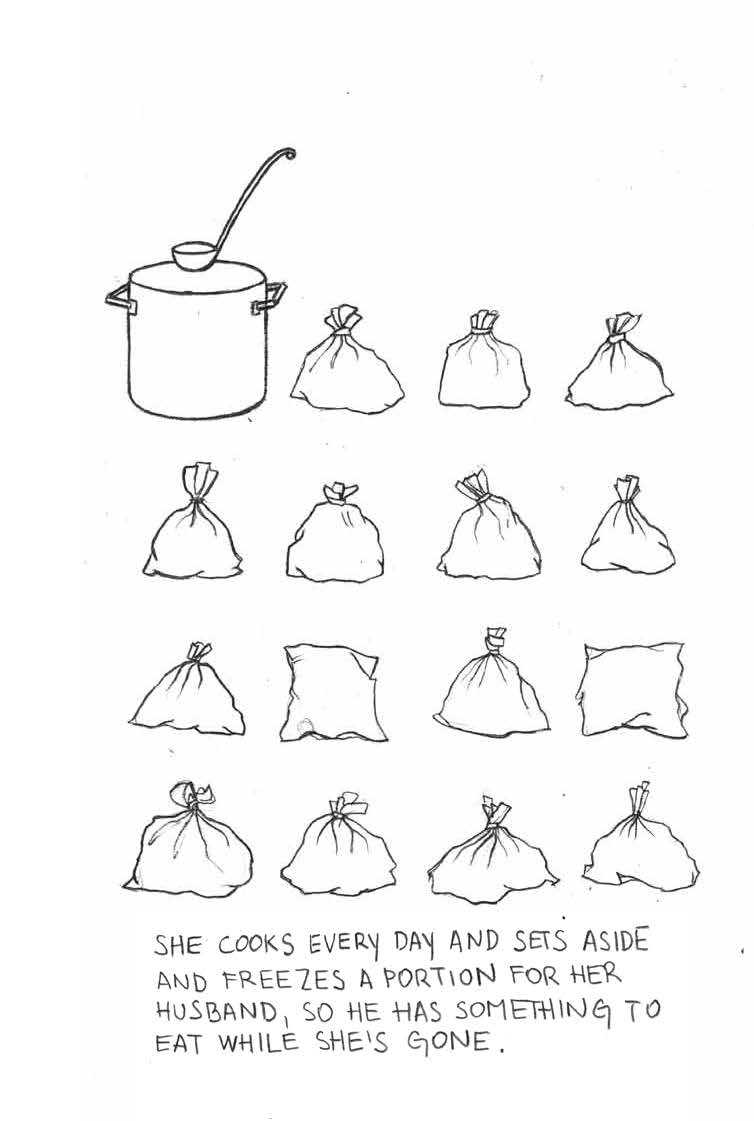
All of this is a consequence of the war and everything we went through. The first time I left for Italy, I left behind two sons, aged seven and nine...I started working in 1997, when I was thirty-three years old. It all happened very suddenly, headlong. My husband was injured at work, at a glass factory, and he was constantly on sick leave. The factory was later bought by a German company, and with privatization, workers slowly lost their rights. They told him he could not remain on sick leave on and off again, and that it would be better if he took early retirement. So, we had to decide what to do. He retired, but the State informed us that it would take a full year to process the paperwork, meaning there would be no pension during that time. With two children in school, I panicked! PANICKED! And as I’m impulsive by nature, that is just how I am, and we all knew that women were leaving for Italy, it was very sudden, and I left to work in Verona, fifteen days in, and fifteen days out. And that’s how it was. It's hard for a man to find works especially if he is older. A woman just switches to another family, and either way, she ends up serving and caring for others...
It's hard for a man to find works especially if he is older. A woman just switches to another family, and either way, she ends up serving and caring for others...
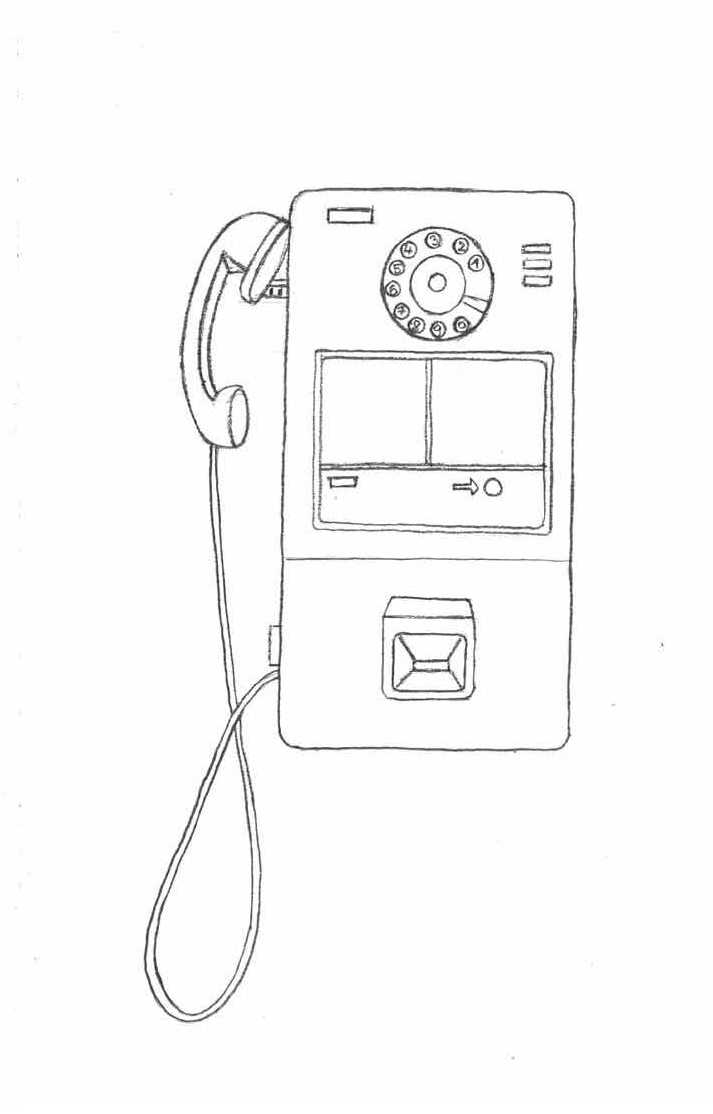
But once in Italy, I was not doing well psychologically, hanging out in a phone booth like a madwoman. Out of guilt for leaving my small children, I tried to make up for it - I bought them things to compensate, and I was aware of it. Let’s be clear: I went to earn a living, but I never came home without gifts, clothes, toys, or sweets.
My older son suffered greatly because I wasn’t there. When I was home, he would constantly come to me — something I will never forget — and hug me. I would say, ‘But we hug all the time,’ and he replied, ‘But you couldn’t hug me when you were in Italy!’
I still remember those words today. It felt like a slap, especially since before I left I hadn’t even been allowed to touch him without his permission. For everything that has happened later in his life, I blame myself. I know that isn’t good, that it is not only my fault, but still I feel it is because of me and that I am to blame because I wasn’t there."
24/7: Negotiating Invisible Work
The interviewee underlines the importance of negotiating working conditions from the start and being informed about their rights. She addresses the specific working conditions of live-in informal care work for people affected by Alzheimer’s.
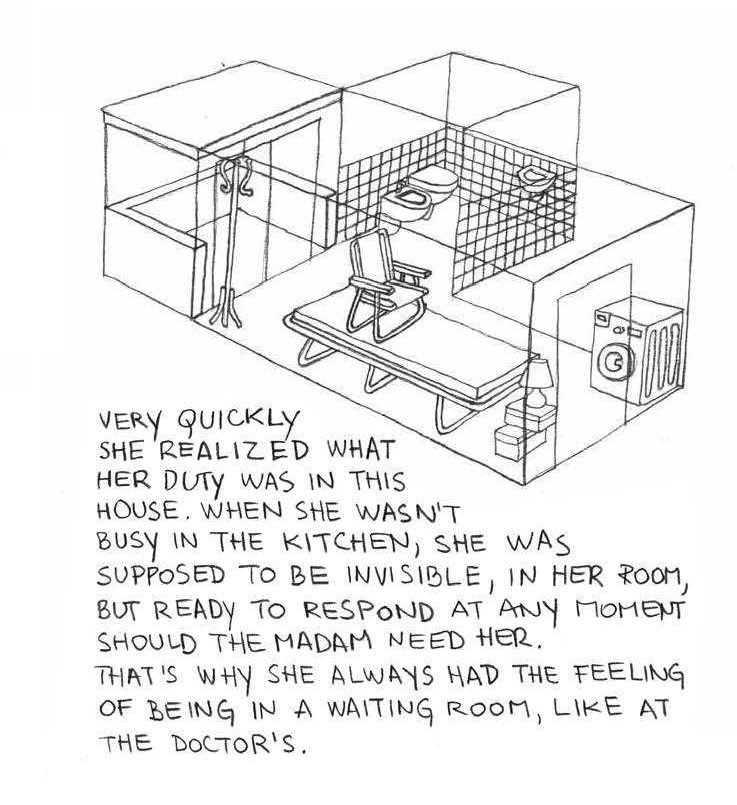
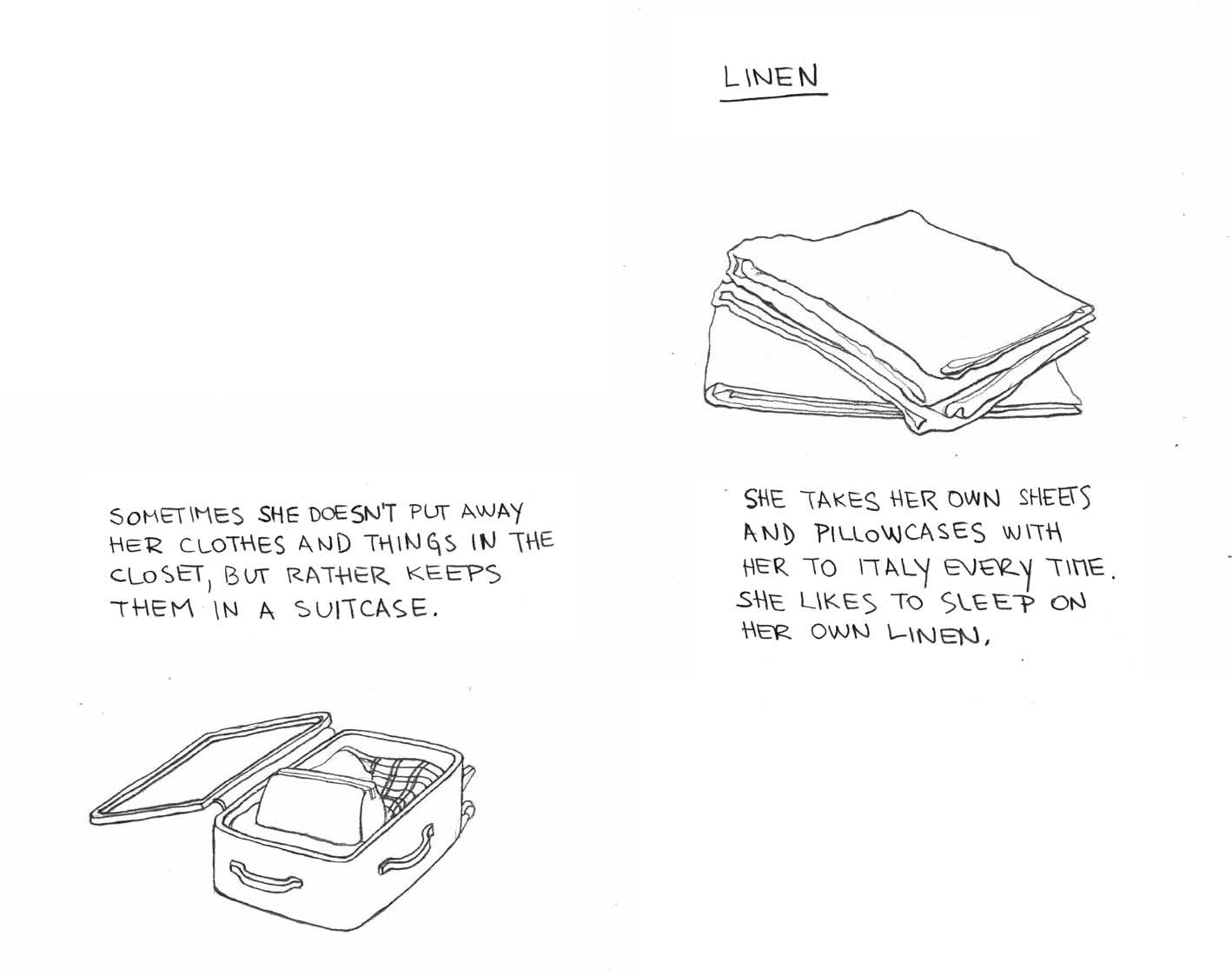
You need to negotiate; you should immediately discuss and agree on your rights and obligations, the overall working conditions, because later it becomes very difficult to change the terms you’ve accepted. If you are informed, if you know who you can turn to, you can achieve anything- but you need to know. And women need to be informed. Information is crucial. For instance, sometimes it’s easier to care for immobile people because you’re sure they can’t get up at night, fall, or wander out of the house. Those who have Alzheimer’s and are still mobile are the most demanding. You can never fully relax with them- they are unpredictable. But it’s not easy, because you are practically a stranger in someone else’s home, and you can’t relax. Sometimes they barely give you a bed or a room to sleep in. You must be there to help them, but ideally, at the same time you should be invisible."
You need to negotiate; you should immediately discuss and agree on your rights and obligations, the overall working conditions, because later it becomes very difficult to change the terms you’ve accepted. If you are informed, if you know who you can turn to, you can achieve anything—but you need to know. And women need to be informed. Information is crucial.
Flying slips of paper; negotiated women's solidarity
The interviewee describes being excluded from older Croatian workers whose informal networks shaped job opportunities. She also recounts discrimination and difficult conditions with some employers, forcing her to rely on her own coping strategies.
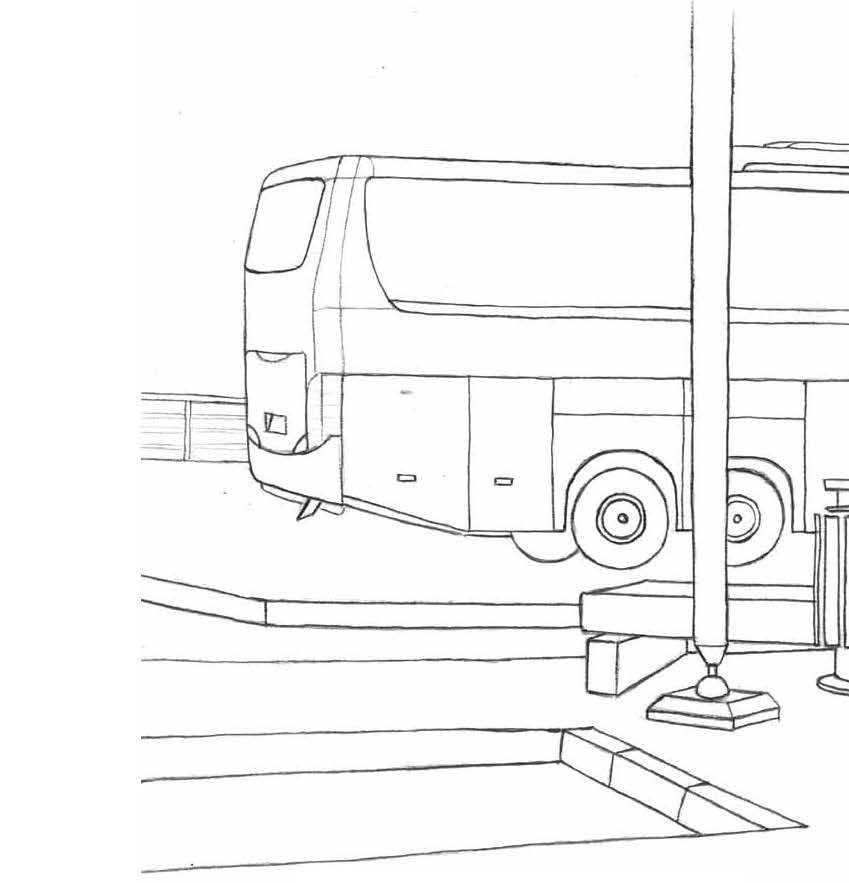
I didn’t socialize with the other Croatian care workers in the area. They weren’t interested in me; to them I was just a kid, an outsider. They were all much older, already retired or about to retire, in their sixties or seventies. They went to work because after fifty, you’re considered old and cannot get a job. That is why they left and not their daughters. We would all reach our destinations by bus and continued on by train. They all knew each other and sat next to each other. At the beginning, I just stayed quiet and watched. On the bus, little slips of paper with the numbers of potential employers were flying around. Right there on the bus, everything was decided, rules were made, partnerships formed and ended.
On the bus, little slips of paper with the numbers of potential employers were flying around. Right there on the bus, everything was decided, rules were made, partnerships formed and ended.
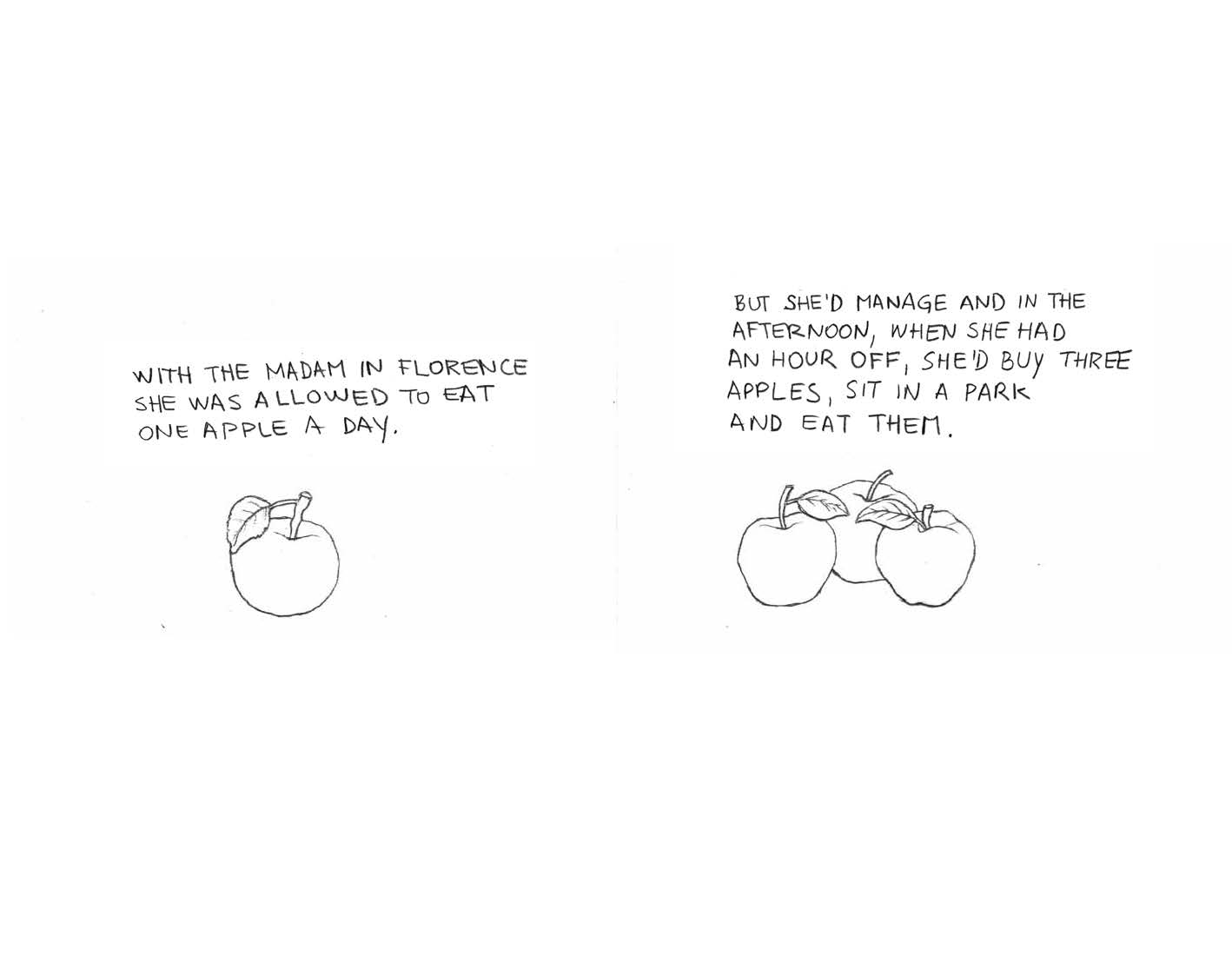
Women talked about everything: who was a good employer, who was bad, what had happened to them, and how they had managed. I experienced both good and bad myself. Some Italians saw me as the ‘ugly Slav,’ while others were kind. With some employers, I went hungry and had to bring my own food from home. If they sent me shopping, they would tell me to buy exactly two apples for them, and nothing for me. I had to figure it out on my own: take three and eat one along the way.
Historical-Political Background
The demise of the Socialist Federation of Yugoslavia (SFRY) in 1991 was a layered and multifaceted political process that continued to shape the socioeconomic reality of those involved for decades, resulting in what anthropologists Orlanda Obad and Petar Bagarić1 poetically describe as abrupt cuts in the social tissue, leaving long-lasting scars. The collapse of socialism represented far more than a linear transition to capitalism, encompassing large-scale deindustrialization, transformations in ownership, and non-transparent privatization practices involving state-owned and worker-managed enterprises, thereby reshaping social hierarchies and inequalities. Changes in the organization of work and production, alongside exposure to free-market competition, led to widespread liquidations and bankruptcies. Consequently, within a single year—from the end of 1990 to the end of 1991- approximately 100,000 newly unemployed persons were registered by the Croatian Employment Service (CES). By 1994, Croatia’s unemployment rate had reached 18%, the highest among transition countries2. These trends peaked in late 2001, when the number of registered unemployed persons rose to 395,141, representing nearly 10% of the total population. At the same time, Croatia was affected by war between 1992 and 1998, which resulted in the displacement of over 700,000 people, as nearly one third of the country’s territory was under occupation3, and fostered an overall atmosphere of fear, destruction, and insecurity. In this context, strategies of family survival were centered on female migrants, and it is estimated that 40,000 women, primarily from south-west Croatia, undertook periodic circular migration in search of informal elderly care work in northern Italy.
Making of
How and why did you decide to deal with and present this specific story?
The project was part of a wider doctoral and curatorial research on informal care and domestic work. It addresses the phenomenon of informal women’s migrant care work in Italy, a subject marked by a general lack of data and institutional neglect in Croatia. Locating interlocutors willing to share their stories proved challenging, given pervasive distrust of institutions, the often informality of the workers status in the receiving country and the symbolic and social stigma associated with elderly care work. The project aimed to make visible and “palpable” the emotional and material experiences of circular migration and care practices that take place behind closed doors and remain largely undocumented and poorly understood. Here I seek to highlight the often-overlooked aspects of short-term migration on the European peripheries, including care drain, transnational motherhood, negotiated solidarity, and the working conditions of informal live-in care workers.
How did you negotiate and decide about the methodologies and processes in acquiring/giving the testimony?
As part of a broader curatorial research project, the study employed a combined methodological approach rooted in cultural anthropology and artistic research, drawing on socially engaged art practice and applied anthropology, with the intention of presenting the outcomes in a museum context as an artistic installation hence gaining a wider audience. The methodology included collaborative drawing of the artist and the anthropologist, a joint review of relevant literature, ethnographic fieldwork, and the critical analysis of audio recordings.
How and why did you decide to publicly present the story this way?
The chosen form of presentation — drawings combined with ethnographic material — was selected because it provides sensorial access to the affective and material realities of circular migration and informal elderly care work behind closed doors. Furthermore, this format represents an alternative mode of anthropological knowledge dissemination that contributes to the destigmatisation of care work and offers insight of the broader applicability of the anthropological research. The incorporation of drawings proved particularly useful in creating a space for two-way communication. For interviewees, the drawings functioned as memory triggers, while for the audience they opened a space for dialogue, fostering understanding rather than merely illustrating the researched themes and enabling deeper engagement with the material.
What is the motivation and benefit for the person/community sharing the story? How did you negotiate this and take it into consideration?
By visualising the experiences of migrant care workers and bringing them into public dialogue, the project challenges the invisibility and stigmatisation of this form of labour. The presentation format was chosen in part to give dignity and legibility to care work that is structurally hidden—benefiting both the individuals who shared their stories and the broader community of informal migrant care workers. By presenting these stories on a wider platform, including through a museum display, the project helped foster legitimisation, social recognition, and respect among wider audiences both locally and internationally.
What questions and challenges arose during the processes?
During the overall research, the biggest challenge was building trust with our interlocutors. Consequently, when selecting drawings and interview excerpts for presentation, the authors and interlocutors agreed to present them anonymously, given the discomfort some still experience regarding their informal employment and the social stigma associated with elderly care work.
Credits
The interview and the drawings from a notebook are part of Božena Končić Badurina and Duga Mavrinac’s project Will Do, Will do … Yes, But How?!, based on the art and anthropological research on live-in elderly informal care workers in 2017.
Projekt: Između tamo i tamo: Anatomija privremenih migracija – Udruga IPAK
The Notebook “Here and there”
Drawings: Božena Končić Badurina
Anthropological research: Duga Mavrinac
Layout: škart
Translation: Domagoj Živčić
Curators: Irena Bekić and Duga Mavrinac
produced by: IPAK_ Research Projects and Authorial Concepts
June, 2017.
Partner involved
Ethnographic Museum of Istria (EMI-MEI)
The EMI-MEI is a cultural and scientific regional institution dedicated to collection, conservation, interpretation and presentation of past and present cultural phenomena related to the Istrian territory (Croatia).
The research focuses on everyday life, oral history, migration and other topics related to economic, social and cultural phenomena of the new millennium. Both the Museum and its Istrian Centre for Intangible Culture strive to be an important cultural meeting point for social dialogue and transformation, that works and engage with local communities and offers contents for visitors and scholars, as well as a relevant place dedicated to scientific research of local cultural phenomena. The EMI-MEI hosts a rather large collection on Emigration while the Economy collection is planned to systematically and substantially address topics of femal labour or female labour migration in next few years.
Footnotes
- Orlanda Obad i Petar Bagarić (eds.). 2020. Devedesete. Kratki rezovi, Zagreb: Institut za etnologiju i folkloristiku i Jesenski i Turk ↩︎
- Rubić, Tihana. 2013. “Afternoon Moonlighting – it Was a Must. The dynamics and Paradoxes of the Croatian Socialist and Post-socialist Labor Market”, Narodna umjetnost 50 (1): 121–145 ↩︎
- Živić, Dražen i Nenad Pokos. 2004. “Demografski gubitci tijekom Domovinskog rata kao odrednica depopulacije Hrvatske (1991. – 2001.)”. Društvena istraživanja 72-73: 727-750 ↩︎