Between Home, Languages and Identities
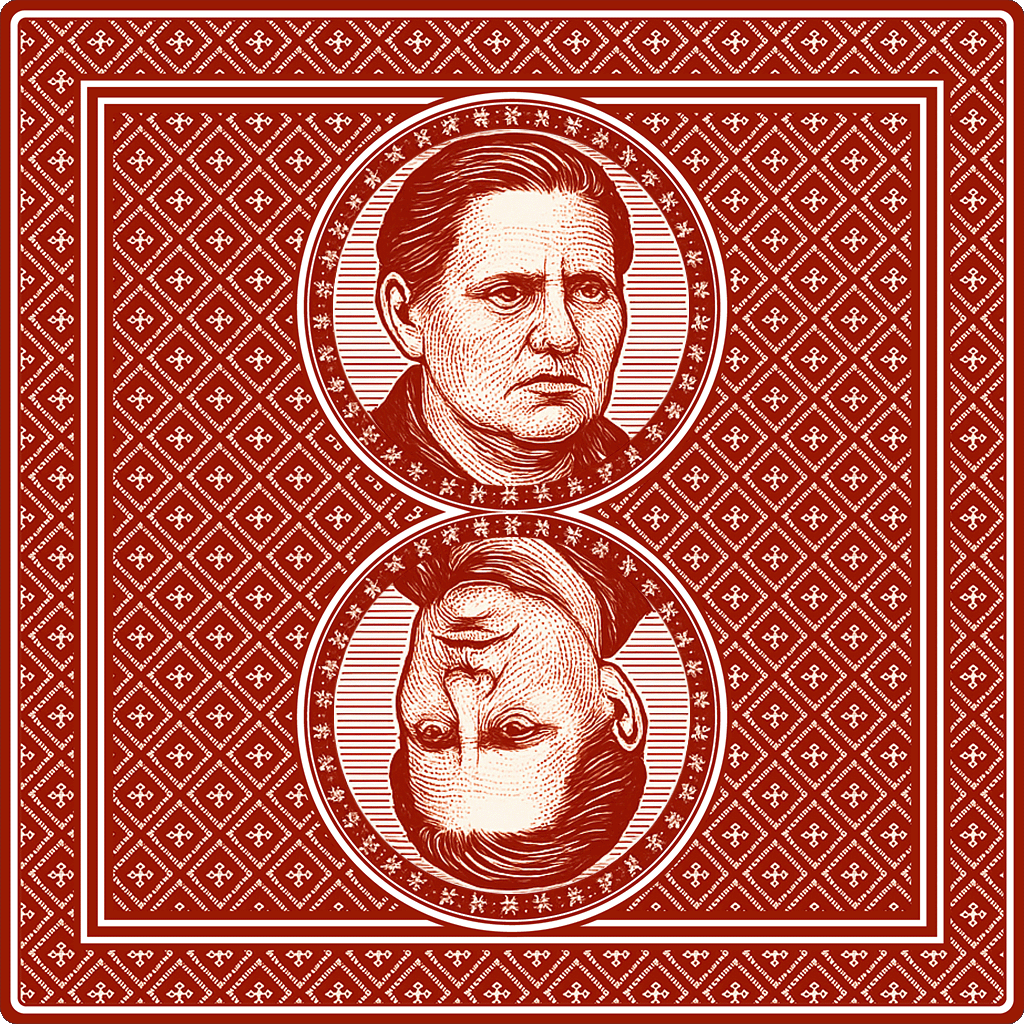
Krystyna Modrzewska
Between Home, Languages and Identities
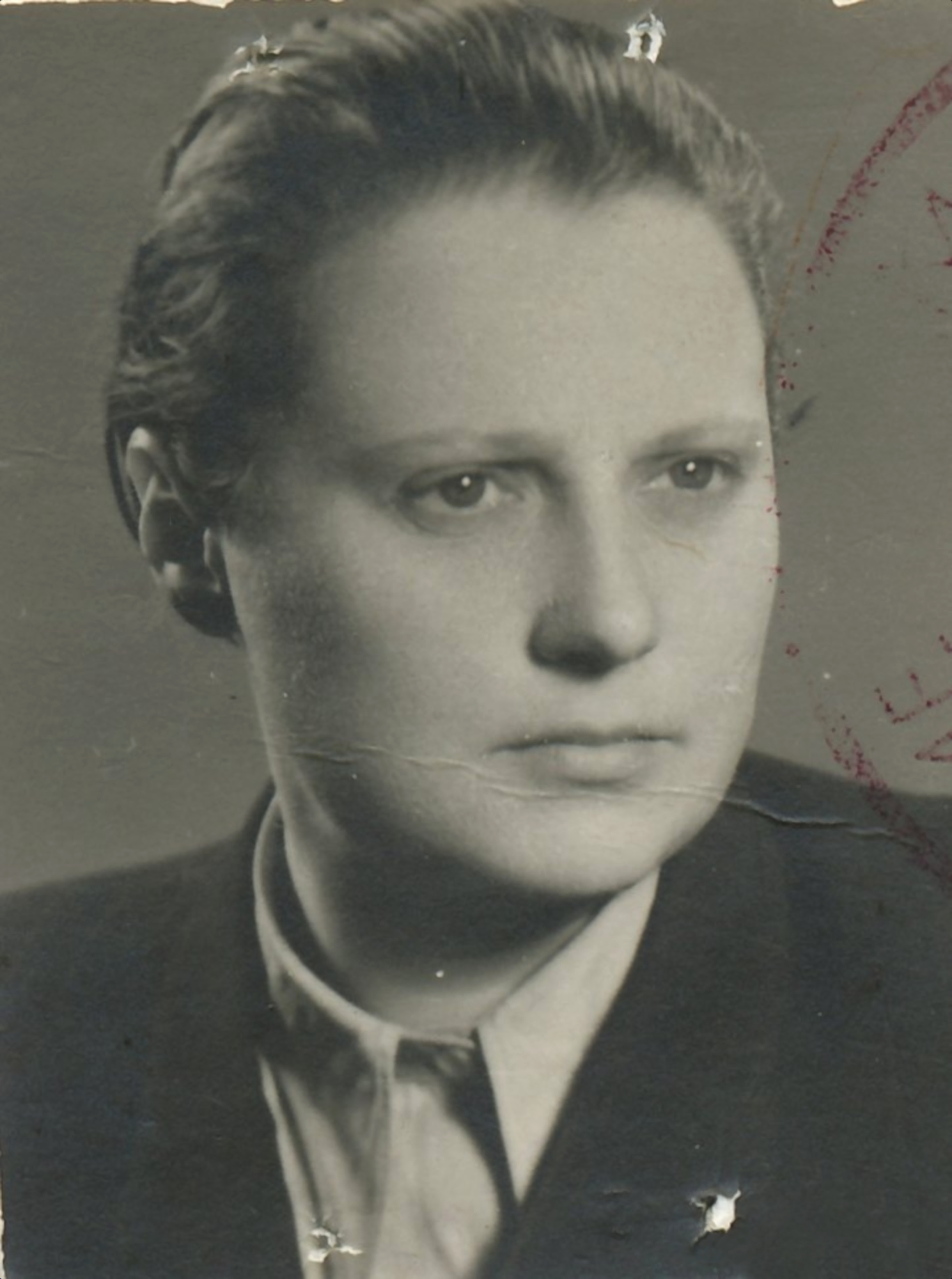
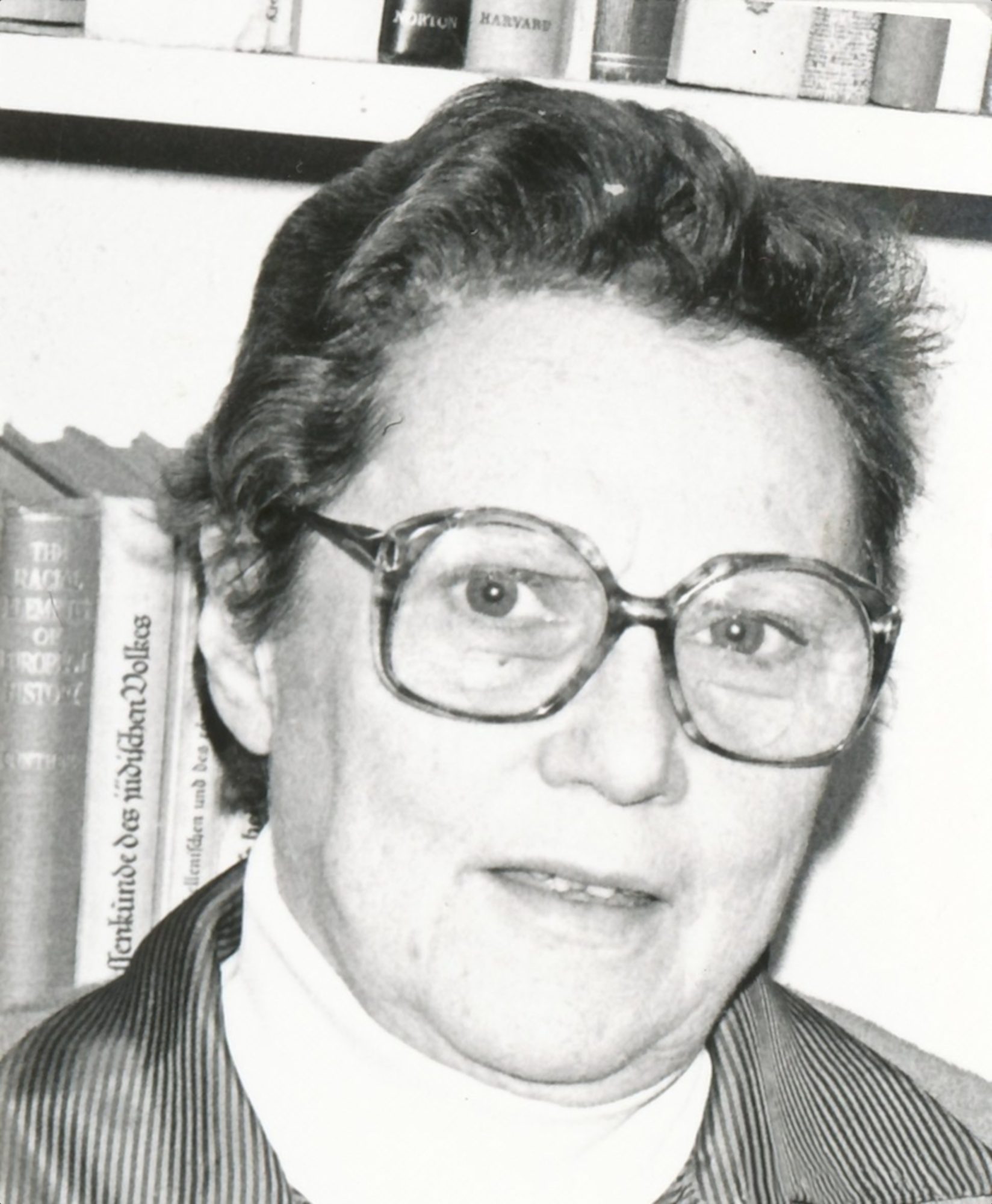
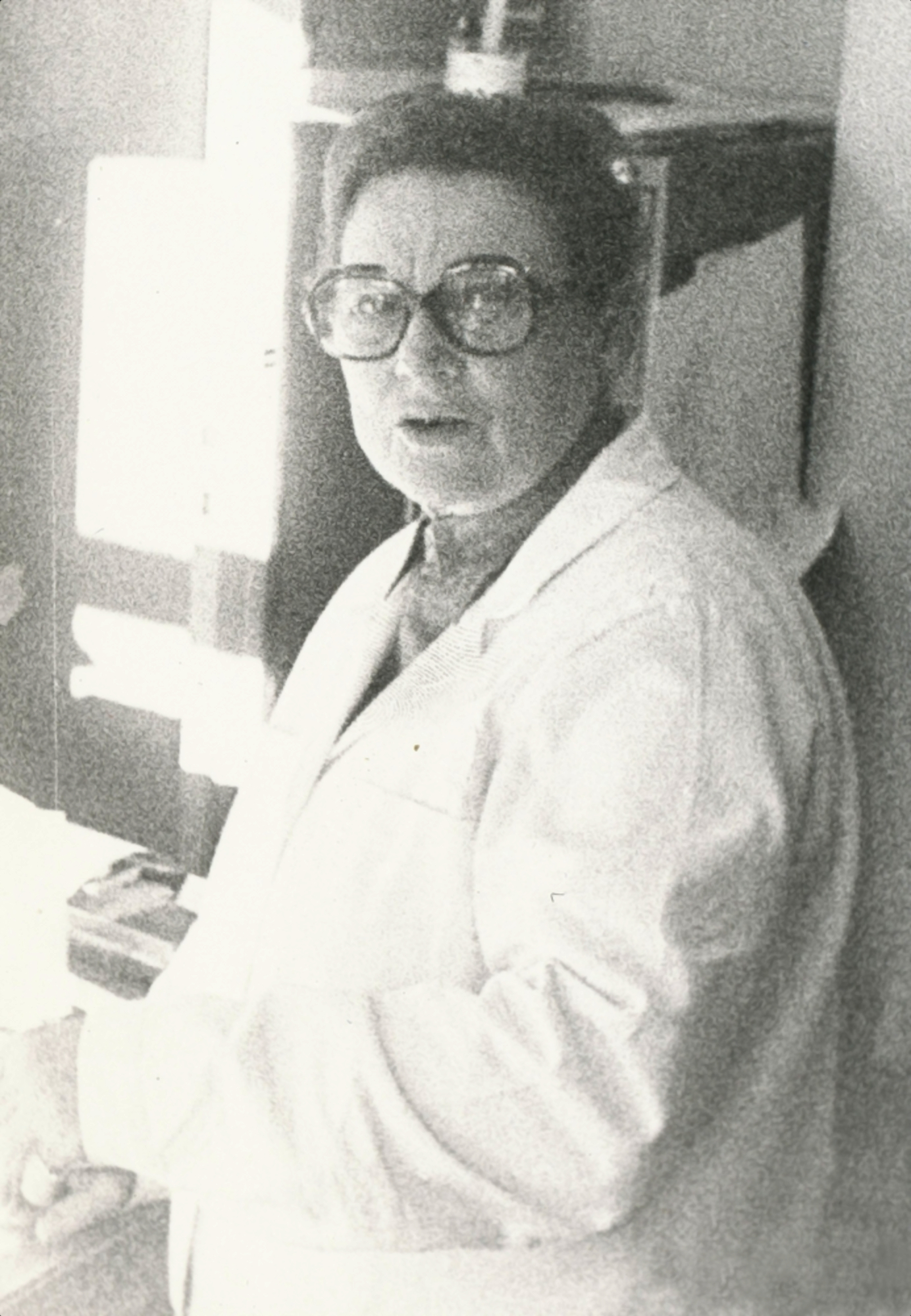
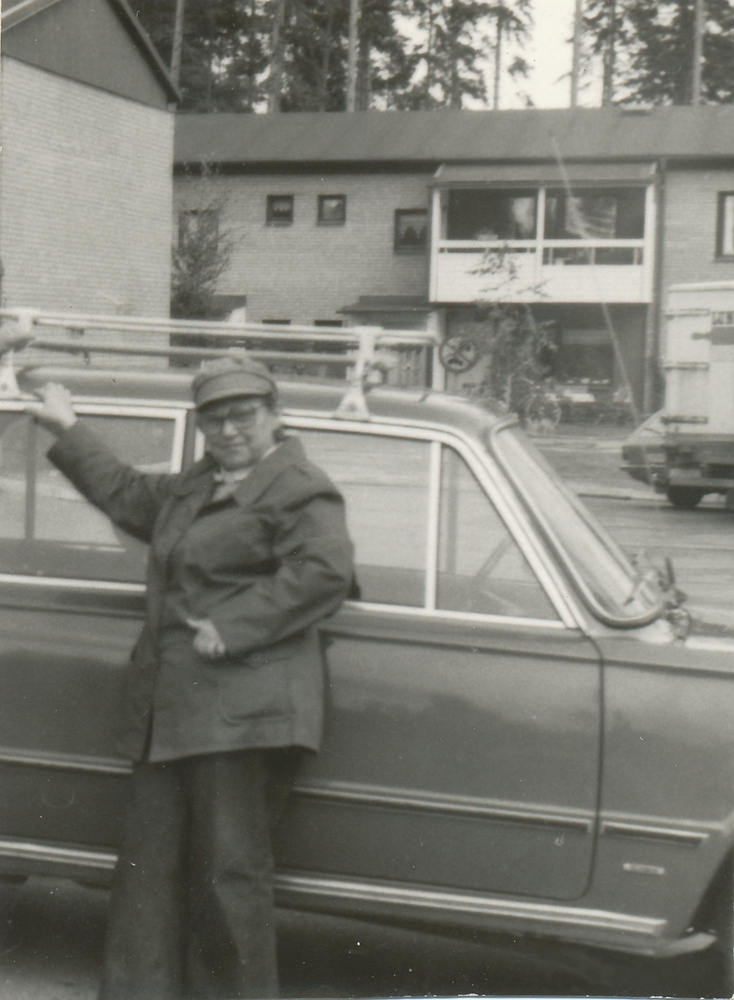
Krystyna Modrzewska (1919–2008) was a Polish-Jewish anthropologist, physician, scientist and writer of Jewish origin. Her life encompassed the experience of the Holocaust, underground resistance, a post-war academic career in Poland, and forced emigration to Sweden in 1970. At the age of 51, she had to rebuild her professional position in a new country. She learned Swedish, began working in Uppsala, conducted research and obtained a second doctorate in 1980. Her story shows how migration can involve the loss of professional status and the need to redefine oneself — professionally, socially and personally.
Testimony
Between Homes, Languages and Identities
Krystyna Modrzewska grew up in an assimilated Jewish family in pre-war Poland and later reflected deeply on her Jewish background, gender and sense of difference. Her studies in Bologna became an important period of self-discovery before the outbreak of war forced her back to Poland.
Krystyna Modrzewska was born on 14 September 1919 in Warsaw as Krystyna Mandelbaum. Her father, Hersz Jakub Mandelbaum, was a doctor and a Bund activist and, before the war, the last head physician of the Jewish hospital in Lublin. Her mother, Franciszka, was a pianist and music teacher. In 1929, the family moved from Warsaw to Lublin, where they lived at 9 Bernardyńska Street.
Krystyna grew up in an assimilated Jewish family closely connected to Polish culture and language. Jewish identity in her home was not associated with religious practice. Years later, she recalled:
One could say that I come from a completely assimilated family. If I know a few words of Yiddish, I learnt them during the occupation. I had no contact whatsoever with the community of religious Jews.
Krystyna Modrzewska, oral history interview, 1 May 1999, Lublin, Oral History Archive of the “Grodzka Gate – NN Theatre” Centre.
Her sense of difference, however, was not limited to her Jewish background. In the autobiographical books she wrote towards the end of her life, Modrzewska returned to her childhood and adolescence, describing her experience of her body and gender. In Trzy razy Lublin (Three Times Lublin), she wrote about growing up without identifying with the femininity assigned to her:
I did not like my dresses as early as the age of three, and afterwards they were merely a necessary evil for me. I was irritated by the growing atmosphere of femininity developing around me […]. I was growing up too, but differently. In a way that I could neither understand nor explain, and which frightened me. I felt betrayed by my own body. It was becoming increasingly alien and cumbersome.
Krystyna Modrzewska, Trzy razy Lublin, Lublin 1991; quoted in Joanna Ostrowska, “Polska, żydowska, queerowa. Tożsamość i biografia Krystyny Modrzewskiej (Mandelbaum)”.
Modrzewska also recalled dressing in her father’s suit as a teenager. She did not present this simply as a youthful rejection of fashion. In later life, she connected these memories with what she described as her “transsexual nature”. In her own writing, her experience of gender became one of the central elements through which she understood herself.
In Trzy razy Lublin, she described her years as a student in Bologna as a period of discovering the world and other people, but above all of discovering herself:
I did not return a different person from the one who had left, but I returned knowing who I was, weighed down by the full burden of that awareness. I now asked myself what to do with my life, and I could find no answer.
Krystyna Modrzewska, Trzy razy Lublin, Lublin 1991; quoted in Joanna Ostrowska.
In 1937, she began studying natural sciences at the University of Bologna. Her move to Italy was her first experience of living outside Poland for an extended period. While in Bologna, she was baptised into the Catholic Church. As she later recorded in her diary, this was not a pragmatic decision. Modrzewska regarded her baptism as a serious decision concerning her faith and identity.
Her time in Bologna also played an important role in her personal development. She later described it as a period in which she first began to understand her own sense of difference. At the time, however, she had neither the language with which to name it nor a social environment in which she could safely live it.
The outbreak of war interrupted her studies. She returned from Italy to Poland and found herself in a reality in which her origins, her name and her ability to move freely would become matters of survival.
Resisting in everyday life - The war and life under an assumed name
During the occupation, Modrzewska survived under an assumed Polish identity while working, moving between places of refuge and participating in the underground resistance. She also tried to help others escape persecution, while navigating the complex intersections of her Jewish identity, gender and personal relationships.
After returning to Lublin, Modrzewska and her mother found themselves in immediate danger. During the occupation, she used the Polish surname Modrzewska. The name, which initially helped to conceal her Jewish identity, became part of her identity for many years.
Her experience of the war was, from the beginning, an experience of living between different identities. As Krystyna Mandelbaum, she belonged to the Jewish population persecuted by the Germans. As Krystyna Modrzewska, she lived on “Aryan papers” and had to convincingly present herself as Polish. At the same time, she was already struggling with a sense of gender identity that she could not easily place within the categories available to her. Later interpretations of her biography have therefore examined the intersection of her Polish, Jewish and queer identities.
Her wartime experience was one of constant tension: moving from place to place, hiding, obtaining documents and working. In 1941, she was sworn into the Home Army (Armia Krajowa), using the codename “Kret” (“Mole”). She also worked in the occupation administration, which gave her access to information and documents.
From 1943 onwards, she worked as an official in the county administration in Garwolin. She used her position for underground activities, including preparing documents for people at risk of arrest. At the same time, she tried to help others. During the liquidation of the Warsaw Ghetto, she managed to get out and attempted to rescue relatives and friends.
In her 1999 oral history interview, she recalled:
I also wanted to get my grandmother and her sister out, but I was one day too late. I managed to get a friend out and took her to Minkowice.
Krystyna Modrzewska, oral history interview, 1 May 1999, Lublin, Oral History Archive of the “Grodzka Gate – NN Theatre” Centre.
Her wartime relationships with women also had a personal dimension. In her account of the friend she helped escape from the ghetto, Modrzewska used deeply emotional language. She described her as “the most beautiful ideal” and later wrote about the pain associated with their relationship after the deaths of those close to her.
Contemporary categories should not, however, be imposed automatically on these wartime relationships. The sources do allow us to observe that women and relationships with women occupied a particularly important place in Modrzewska’s account of her own life.
A diary that was not allowed to speak in full
Written in 1947, Modrzewska’s wartime diary offers an early account of hiding, survival and everyday life under occupation. Its later censorship, documented by Jacek Leociak, also reveals how personal testimonies of the Holocaust could themselves become subject to political and institutional control.
Modrzewska’s diary is one of the earliest records of her wartime experience. It was written in 1947, only a few years after the events it describes. It was therefore not a recollection written decades later, but an attempt to record her experience soon after the end of the war. Modrzewska submitted the diary to the Central Jewish Historical Commission.
The diary has a particular history. Fragments were not published until 1959 and 1960, in three consecutive issues of the Bulletin of the Jewish Historical Institute. The text was censored, however. The interventions went far beyond the removal of individual sentences. Entire sections concerning the convent, Modrzewska’s relationship with the nuns and her critical assessment of their behaviour were removed. Passages concerning antisemitism and the experiences of Jews during the occupation were also subject to censorship.
The diary presents hiding not as a single dramatic event, but as months of everyday activities: working, waiting, finding money, looking for another place to stay and adapting to circumstances over which Modrzewska had very limited control.
The diary does not portray her as a passive person hiding from the Holocaust. It shows a woman who worked, made decisions, negotiated her circumstances, observed the people around her and tried to retain her independence even when her possibilities were severely restricted.
Source: Jacek Leociak, “Cenzor na straży Kościoła. Ocenzurowany pamiętnik Krystyny Modrzewskiej”, Zagłada Żydów. Studia i Materiały, no. 5, 2009, pp. 371–393.
Building life after the war: Scientist, doctor, writer
After surviving the war and losing much of her family, Modrzewska rebuilt her life through science, medicine and writing. Her academic career and the use of the male pseudonym Adam Struś also became important ways of negotiating her professional and gender identities.
In September 1944, Modrzewska returned to Lublin. The war was coming to an end, but her life could not return to its pre-war shape. Most of her family had been murdered, and the world in which she had grown up had ceased to exist.
She soon rebuilt her life around science.
In 1947–1948, she worked at the Department of Anthropology at Maria Curie-Skłodowska University. In 1948, she received a doctorate in natural sciences. She subsequently worked in Poznań and, from 1950, in Białystok, where she simultaneously studied medicine. After completing her medical degree, she returned to Lublin. From 1964, she headed the Department of Anthropology at UMCS.
She combined her academic research with writing. During the 1960s, she published fiction under the pseudonym Adam Struś.
The pseudonym was not simply a literary disguise. Modrzewska wrote as a man, using the first person singular. Her wartime experiences were thus rewritten through a male protagonist. Researchers of her biography have identified this as one of the earliest ways in which Modrzewska attempted to express her experience of gender.
This does not mean that Adam Struś can be directly identified with Modrzewska’s later gender identity. It is, however, an important part of her long search for a language through which she could describe herself.
In her post-war life, work was therefore not merely a way of rebuilding stability. It became the foundation of a new identity.
Between Homes, Languages and Identities, March 1968
The antisemitic campaign of 1968 transformed Modrzewska’s relationship with Poland and ultimately forced her to leave the country she had called home. Her emigration meant not only crossing a border, but losing her professional position, social world and sense of security.
By 1968, Modrzewska was an established scientist and head of a university department. Nearly three decades had passed since the end of the war, most of which she had spent in Poland.
The antisemitic campaign of 1968 once again placed her Jewish origins at the centre of public and professional life. Political and professional pressure led her to consider leaving the country.
In Czas przedostatni (The Penultimate Time), published in 1992, she described the final months before emigration as a gradual process of separation from the life she had built:
I was detaching myself for a long time, slowly and painfully. Two hundred and forty-eight days and nights between them were spent detaching myself from everything that had made up my life until then.
Krystyna Modrzewska, Czas przedostatni, Lublin 1992, p. 8.
It was not a single moment of decision. Leaving was a process.
It is important not to present her emigration as simply a free choice to begin a new life elsewhere. Modrzewska left Poland as a consequence of the antisemitic campaign of 1967–1968. Her migration was shaped by political pressure and exclusion. She left as a mature scientist, doctor and writer, after having spent almost her entire life in Poland.
Her departure therefore meant losing far more than a place of residence. It meant leaving behind her professional environment, academic position, language and social world — everything she had built over decades.
Elsewhere, she wrote about the flat that had ceased to feel safe, and about objects, books and furniture that suddenly lost their former meaning. She remembered people who had been expelled or forced to flee during the war and recognised something of their fate in her own experience.
She expressed the transformation of her relationship with her city most starkly:
All the familiar places had become foreign and hostile. Bad events and bad words attacked from every direction.
Krystyna Modrzewska, Czas przedostatni, Lublin 1992, p. 5.
In June 1970, she left for Sweden.
The first days in Sweden - A refugee
At the age of 51, Modrzewska arrived in Sweden as a refugee, suddenly reduced from an established academic to a person waiting for the authorities to decide her future. Learning Swedish, finding work and navigating a new society became the first steps towards rebuilding her life.
Her account of her arrival in Sweden is among the most concrete records of migration in her writing. After leaving Poland, she arrived in Ystad. She had two suitcases and little money. She was taken to a refugee centre, where she was registered by the Swedish authorities.
Modrzewska described this change in status in striking terms:
I became another number, another entry in the register of stateless refugees, a new file on the shelf of the Immigration Office, a case to be dealt with in the drawer of someone’s desk.
Krystyna Modrzewska, Czas przedostatni, Lublin 1992, p. 9.
This experience contrasted sharply with her previous life. She arrived in Sweden as a woman in her early fifties, with a doctorate, academic experience and many years of university work behind her. In her new country, however, she was no longer a professor or head of a department. She was a refugee waiting for the authorities to decide her future.
Emigration also meant entering another world of social categories that determined who one could be and how one could be perceived. Modrzewska had already experienced concealing her Jewish identity during the war and living with a sense of incongruity between herself and the gender assigned to her. Now she had to find her place as a Polish and Jewish emigrant in Sweden.
From the first days of her emigration, she concentrated on learning Swedish. Together with other refugees, she attended language classes. She described the initial experience of the language as one of complete helplessness: she could not understand the words, could not reproduce them, and the sounds of the new language seemed entirely unfamiliar.
At the same time, one question occupied the refugees in the camp: what would happen next?
Modrzewska wrote about uncertainty over employment and where she would eventually live. Among the refugees, reports circulated about hostility towards foreigners and concerns about jobs and housing.
This was the beginning of another stage in her life: first she had to learn the language, then find work, and finally rebuild the professional position she had spent decades establishing in Poland.
Starting again at fifty-one: Work after emigration
In Sweden, Modrzewska had to reconstruct an academic career she had already established in Poland, eventually earning a second doctorate and returning to scientific research. Her experience of academic recognition also became intertwined with her increasingly explicit understanding of her gender identity.
In 1970, Modrzewska was 51. In Poland, before the antisemitic campaign, she had headed the Department of Anthropology at UMCS. In Sweden, she began again from a position far below her previous professional standing.
In 1971, she began working at the Institute of Clinical Genetics at Uppsala University. She gradually returned to scientific research, including research into the genetic factors associated with schizophrenia. In 1980, she received a doctorate in medical sciences, and in the following year she became a docent. She retired in 1985.
This required her to re-enter academia, this time in another language and another country. Her second doctorate had a significance beyond the formal acquisition of another academic degree. In Na krawędzi chaosu (On the Edge of Chaos), she returned to the question of why she had sought another doctorate when she had already received one in 1948.
For the satisfaction of demonstrating my own independence and scientific ability […] the whole truth would be difficult to express.
Krystyna Modrzewska, Na krawędzi chaosu (1994)
Modrzewska also wrote about the university ceremony at which doctors were formally awarded their degrees and about the academic cap placed on the head of the person being honoured. This detail had a deeply personal significance connected to her experience of gender. She wrote that, for a “transvestite”, wearing the cap publicly as part of the ceremony meant more than an academic ritual: she described it as a “triumph” of her most personal truth.
This passage is particularly significant because it shows how her return to an academic career in Sweden became intertwined with a later, increasingly conscious articulation of her gender identity. It was not only about regaining professional status. The doctorate also offered an opportunity to publicly experience something that had remained concealed for much of her earlier life.
Emigration did not end her career. It forced her to once again undertake a difficult journey that she had already made before.
Language and Belonging - Polish and Swedish
Modrzewska lived and worked between languages: Swedish became the language of her professional life, while Polish remained the language of memory and writing. Later, learning Hebrew became a way of reconnecting with a Jewish heritage that had played little role in her childhood in an assimilated family.
Swedish became the language of her professional life. Polish remained the language in which she wrote, remembered and made sense of her past.
In her oral history interview, she said:
I lectured in Swedish, but my language is Polish.
Krystyna Modrzewska, oral history interview, 1 May 1999, Lublin, Oral History Archive of the “Grodzka Gate – NN Theatre” Centre.
Later in life, she also began learning Hebrew. In 1999, she explained:
I began learning Hebrew in Sweden. Out of curiosity and out of a need to pay my respects to the past.
Krystyna Modrzewska, oral history interview, 1 May 1999.
Her relationship with language therefore changed throughout her life. Polish was the language of her childhood and education, of literature and memory. Swedish became the language of her professional life in exile. Hebrew appeared later as an attempt to turn towards a heritage with which her assimilated family had had little connection.
Language was also a tool through which she could speak about gender. For many years, Modrzewska lacked a language with which she could directly describe her experience. Her later autobiographies are therefore not simply memoirs, but attempts to find words for something which, as she herself wrote, had remained difficult to understand and accept for most of her life.
Writing herself back into past: Memory, Lublin and retugn
In exile, Modrzewska returned repeatedly to her past through autobiographical writing and visits to Lublin. Writing became a way of revisiting displacement, memory, gender and belonging, and of making sense of a life lived between countries, languages and identities.
In exile, Modrzewska began to write with increasing intensity about the past.
She returned to Poland for the first time after 17 years. Later, she visited Lublin regularly. Her books — Trzy razy Lublin (1991), Czas przedostatni (1992), Na krawędzi chaosu (1994), Dom przy Bernardyńskiej (1999) and Z Bolonii do Uppsali (2002) — were written from the perspective of a life lived between Poland and Sweden.
Writing became a way of revisiting her own biography. Modrzewska returned to the same events, but each time she was able to name them differently. In her later books, the history of her gender identity also became increasingly explicit.
In Na krawędzi chaosu, she wrote about two of the most important truths of her life. The first was what she called a “full awareness of my own difference” and the resulting sense of not fitting in “in a purely biological sense, and consequently also in a social sense”. She also described feelings of guilt, suicidal thoughts and reading Magnus Hirschfeld, through whom she first realised that she was not the only person to experience such a profound sense of difference.
Her writing was not simply a record of what had happened in the past. It was also an attempt to understand herself.
In her 1999 oral history interview, she said:
So I walk once again through this vast, vibrant Lublin, which was never a place in my heart, and which has become a place of my new present.
Krystyna Modrzewska, oral history interview, 1 May 1999, Oral History Archive of the “Grodzka Gate – NN Theatre” Centre.
Writing allowed her to return to successive places and successive versions of her own biography: Warsaw in her childhood, pre-war Lublin, Bologna, occupied Poland, the post-war university and Sweden.
It was not, however, a return to one lost home.
Her life unfolded between different places, languages, names and ways of understanding her own identity. Migration was not a single event in her life, but a repeated experience of displacement and of having to rebuild herself. First, the war forced her to conceal her origins and live under an assumed name. Later, the antisemitic campaign forced her to leave the country in which she had spent most of her life. In Sweden, she had to rebuild her professional position, learn a new language and find her place in a new society.
At the same time, it was only from the perspective of later life that she could increasingly articulate another form of alienation, her experience of her own body and gender, which had accompanied her since childhood.
Krystyna Modrzewska died in Sweden on 27 August 2008.
Historical-Political Background
The story of Krystyna Modrzewska forms part of the history of Central and Eastern Europe, shaped in the 20th century by war, the Holocaust, changing borders, political repression and forced migration.
Before the Second World War, Poland was a multi-ethnic and multi-religious state. More than three million Jews lived there, constituting around 10 % of the population and contributing to the country’s scientific, cultural, economic and political life. At the same time, antisemitism became increasingly visible in the interwar period.
On 1 September 1939, Nazi Germany invaded Poland; on 17 September, the Soviet Union entered from the east. The country was divided between the two occupying powers. For Polish Jews, the occupation brought persecution, ghettoisation, deportation and mass murder. Around three million Polish Jews were murdered during the Holocaust.
After the war, Poland came under Soviet domination. Its borders shifted westwards, millions of people were displaced, and a communist political system was established. Although post-war life allowed people to study, work and pursue professional careers, censorship, surveillance and restrictions on travel and contacts with the West shaped public and professional life.
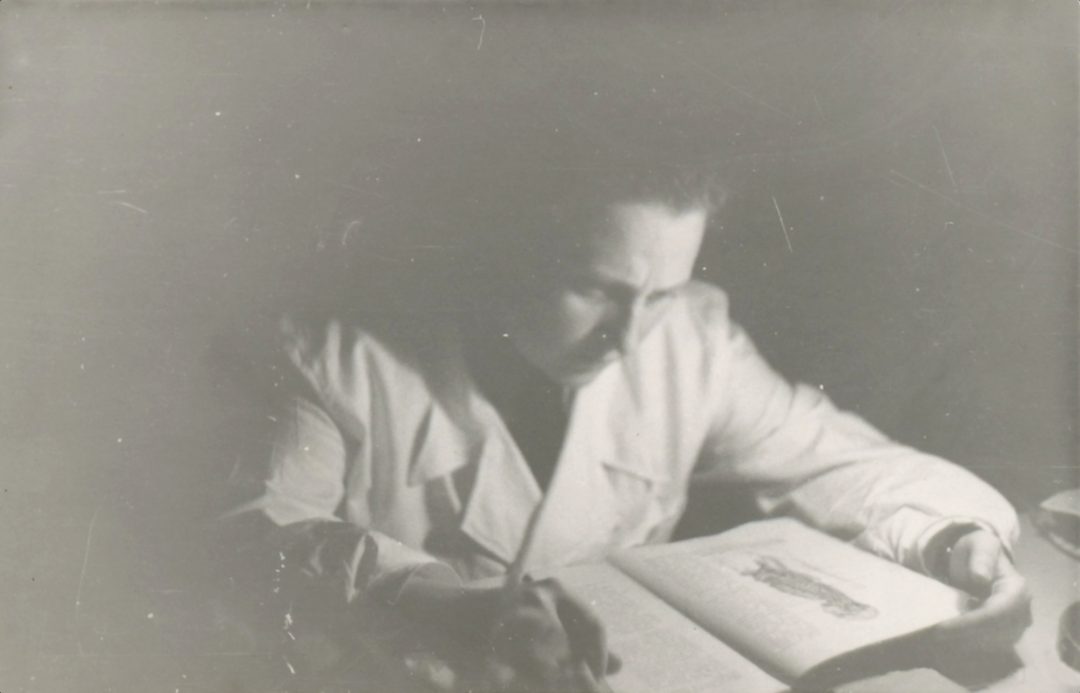
In 1968, student protests were violently suppressed, and the authorities launched what was an officially described as an “anti-Zionist” campaign that was strongly antisemitic in practice. People of Jewish origin were dismissed from universities, workplaces and state institutions. Between 1968 and 1971, around 13,000 Polish Jews left the country. Many were forced to surrender their Polish citizenship and received special travel documents that allowed them to leave but effectively prevented them from returning as Polish citizens.
These departures took place within the wider context of the Cold War, when movement between the communist East and democratic West was tightly controlled. Emigration could mean losing citizenship, employment, professional status, social networks and the possibility of returning home.
It is within this context that Krystyna Modrzewska’s emigration to Sweden in 1970 should be understood. Her departure was not simply a decision to seek a new life abroad, but part of a wider history of politically driven migration from Poland. As a woman in her early fifties, an established scientist, doctor and writer, she had to rebuild her professional position, learn a new language and negotiate her sense of identity and belonging in a new country. Her experience also reflects the particular challenges faced by women whose migration required them to reconstruct not only their careers and social networks, but also their understanding of themselves.
Making of
How and why did you decide to deal with and present this specific story?
We chose Krystyna Modrzewska because her biography connects several aspects of 20th-century European history: Jewish life in pre-war Poland, the Holocaust, survival under an assumed name, post-war academic life, the antisemitic campaign of 1968 and forced emigration to Sweden. Her story also makes visible the intersection of migration, gender and professional life. We focus on her own understanding of identity, including her later reflections on gender, while avoiding imposing contemporary categories on her. As she died in 2008, the story was reconstructed from her writings, oral-history testimony and archival and scholarly sources.
How did you negotiate and decide about the methodologies and processes in acquiring/giving the testimony?
As Modrzewska is no longer alive, we worked with existing testimonies. We prioritised her own words from her 1999 oral-history interview, autobiographical books and 1947 wartime diary, while comparing them with archival and scholarly research. Sensitive issues such as the Holocaust, forced migration, antisemitism and gender identity were addressed through documented sources, without filling historical gaps through speculation.
How and why did you decide to publicly present the story this way?
We chose a narrative, text-based presentation because Modrzewska left extensive autobiographical material and recorded testimony. Longer quotations allow her voice to remain central and preserve the context of her statements. The story is organised thematically around identity, survival, work, migration, language and belonging. We distinguish clearly between Modrzewska’s own terminology and later scholarly interpretations, particularly concerning gender.
What is the motivation and benefit for the person/community sharing the story?
As Modrzewska’s story is preserved through archival sources, our responsibility is to present her testimony carefully, respectfully and in a way that keeps her own voice visible. The aim is to make her experiences more accessible, particularly aspects often marginalised in migration histories: her experience as a Jewish woman, scientist and forced migrant, as well as her reflections on gender and identity. We present her story as a complex historical subject rather than reducing her life to a single category.
What questions and challenges arose during the processes?
The main challenge was avoiding simplification. Modrzewska’s biography crosses Jewish, Holocaust, migration, women’s, academic and gender history. We also had to distinguish carefully between what she herself said and later interpretations of her life. This is particularly important regarding gender identity and historical terminology. The sources themselves also required critical reading: her diary was censored, while her autobiographical works were written decades after some of the events. We therefore treated contradictions, gaps and changes in perspective as part of the historical record rather than trying to resolve them through speculation.
Credits
This testimony was contributed by Larysa Michalska on behalf of Humanity in Action Poland.
Sources and further reading
Primary sources
Modrzewska, Krystyna. Trzy razy Lublin. Lublin, 1991.
Autobiographical account of Modrzewska’s childhood, youth, wartime experiences and relationship with Lublin. The book is an important source for her reflections on identity, gender and belonging.
Modrzewska, Krystyna. Czas przedostatni. Lublin, 1992.
Memoir documenting her departure from Poland and the first period of exile in Sweden, including her experiences as a refugee and her attempts to rebuild her life.
Modrzewska, Krystyna. Na krawędzi chaosu. 1994.
Autobiographical writing reflecting on her life, professional career, identity and experiences of difference.
Modrzewska, Krystyna. Dom przy Bernardyńskiej. 1999.
A memoir centred on the family home at 9 Bernardyńska Street in Lublin and the world of her childhood and family.
Modrzewska, Krystyna. Z Bolonii do Uppsali. 2002.
Memoir covering the trajectory between Italy, Poland and Sweden and the different stages of Modrzewska’s life and professional career.
Modrzewska, Krystyna. Pamiętnik z okresu okupacji, deposited with the Central Jewish Historical Commission in 1947; published in fragments in Biuletyn Żydowskiego Instytutu Historycznego, 1959–1960.
An early account of her wartime experiences. The published version was censored, particularly in passages concerning her hiding in a convent.
Modrzewska, Krystyna. Oral history interview, 1 May 1999, Lublin. Oral History Archive of the “Grodzka Gate – NN Theatre”.
Recorded testimony in which Modrzewska discusses her family background, Jewish identity, life in Lublin, emigration, languages and later relationship with her past.
Secondary sources
Leociak, Jacek. “Cenzor na straży Kościoła. Ocenzurowany pamiętnik Krystyny Modrzewskiej.” Zagłada Żydów. Studia i Materiały, no. 5 (2009), pp. 371–393.
A key study of Modrzewska’s wartime diary and the censorship to which it was subjected after the war.
Ostrowska, Joanna. “Polska, żydowska, queerowa. Tożsamość i biografia Krystyny Modrzewskiej (Mandelbaum).”
An important biographical interpretation focusing on the intersections of Modrzewska’s Polish, Jewish and queer identity, including her writing and changing ways of describing herself.
Matyjasek, Joanna. Dziewczyny z mojej szkoły, pisarki Żydówki z Lublina.
A study placing Modrzewska within the history of Jewish women writers from Lublin and discussing her wartime experiences, emigration, scientific career and autobiographical writing.
Archival and digital collections
Ośrodek „Brama Grodzka – Teatr NN”, Lublin – Biblioteka Multimedialna.
Digital collection containing editions and materials relating to Modrzewska’s books, including Czas przedostatni, Trzy razy Lublin, Na krawędzi chaosu and Dom przy Bernardyńskiej.
Polska Bibliografia Literacka (PBL), Instytut Badań Literackich PAN.
Bibliographic records of Modrzewska’s published works.
Polscy Sprawiedliwi – POLIN. “Tacy jak ja. Historia Krystyny Modrzewskiej.”
Biographical resource discussing Modrzewska’s wartime testimony, autobiographical writing and Polish, Jewish and queer identities.
Partner involved
Humanity in Action Poland
Founded in 2008, Humanity in Action (HIA) Poland is part of the transatlantic Humanity in Action network with non-profit, non-partisan partner organizations in Bosnia and Herzegovina, Denmark, the Netherlands, Germany, and the United States. The educational, networking and leadership programs focus on respect for human rights and actions supporting democracy, civil society and multiculturalism. HIA Poland shares its values through education and the support of forms of civic engagement that are shaped by specific historical and cultural contexts. HIA’s objective is to facilitate and promote dialogue to respond to the challenges that democratic societies face as they become increasingly diverse. Deeply engaged in human rights, pluralism and democracy, the uniqueness of HIA lies in the multitude of perspectives that are brought together in a vibrant international community.