“Thank goodness it turned out very well.”
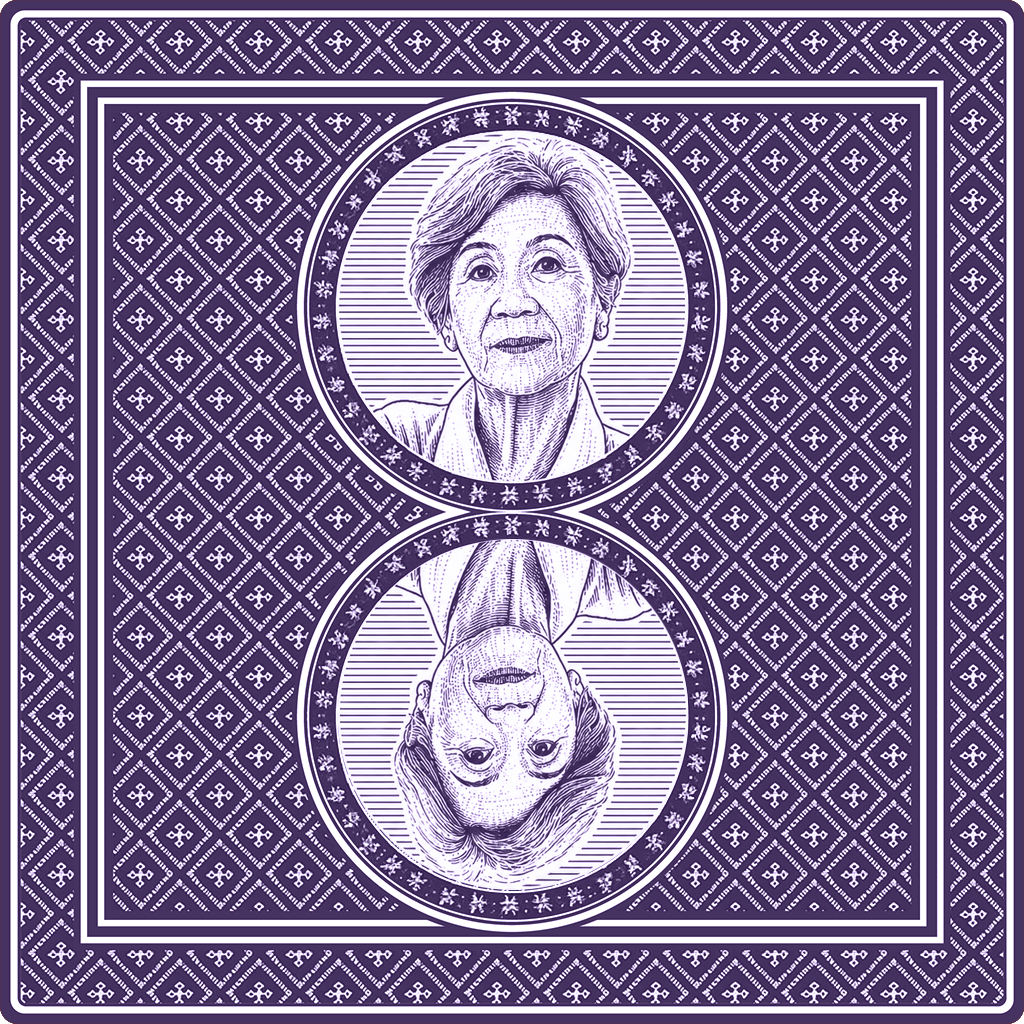
Haeng-Ja Fischer
“Thank goodness it turned out very well.”
This story is about Haeng-Ja Fischer. She is one of over 10,000 nurses recruited from South Korea by the Federal Republic of Germany (FDR) between 1955 and 1977. When she arrived in West Germany in 1969, she was in her mid-twenties, spoke hardly any German, and had no idea what to expect at her new job at the St. Josef-Hospital in Bochum. Driven by the goal to build a new life and a better future for herself and her two children, she worked hard, learned German without formal classes, trained months to get her driver’s license and even managed to buy a former miner house.
Her life story illustrates—both as a general example and in specific details—the challenges that young female migrant workers had to overcome in order to build a new life for themselves in Germany. With great perseverance, but also with consideration for those around her, she succeeded in building a self-determined and independent life not only for herself, but also for her children, grandchildren, and even great-grandchildren.
Testimony
Leaving South Korea
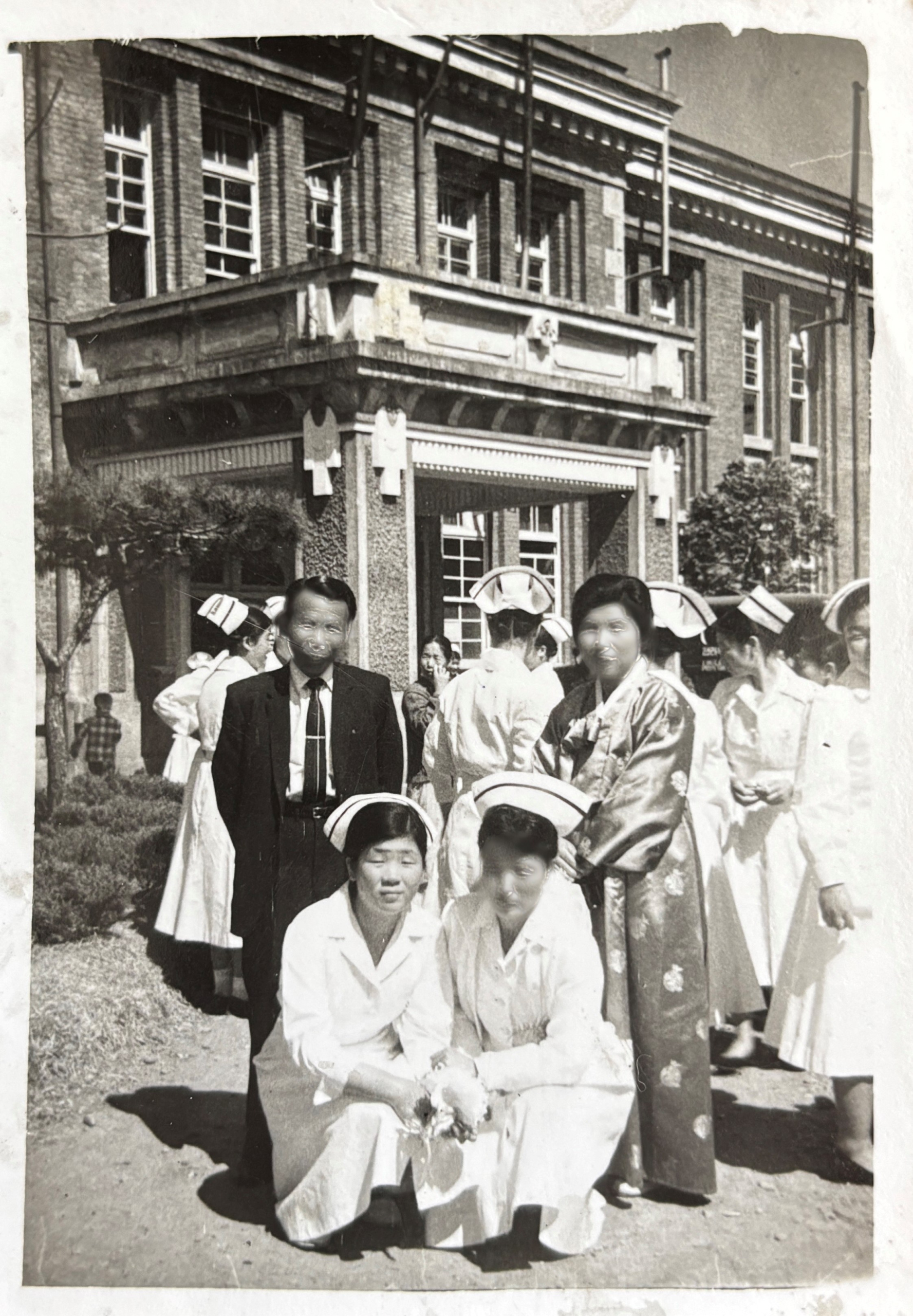
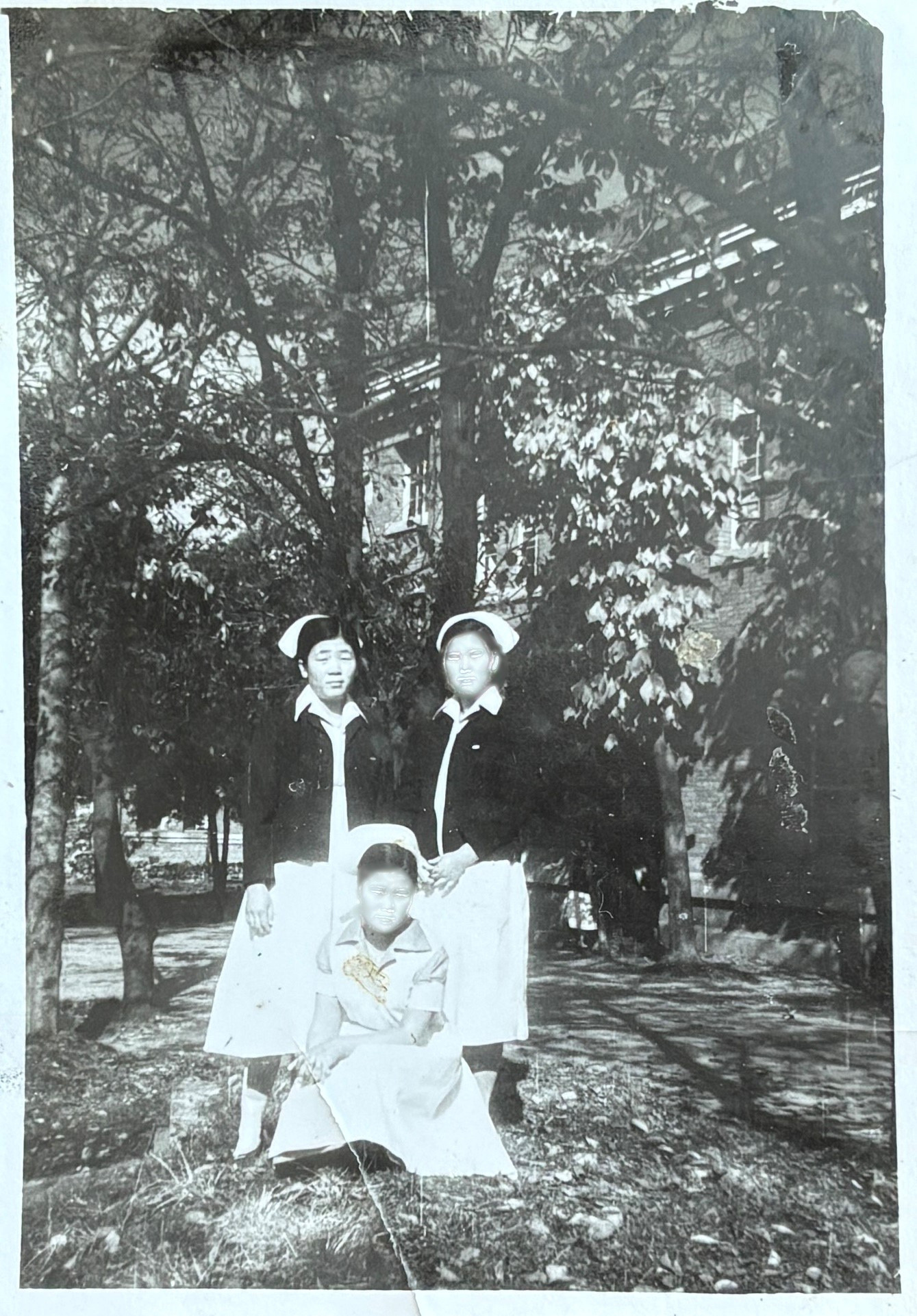
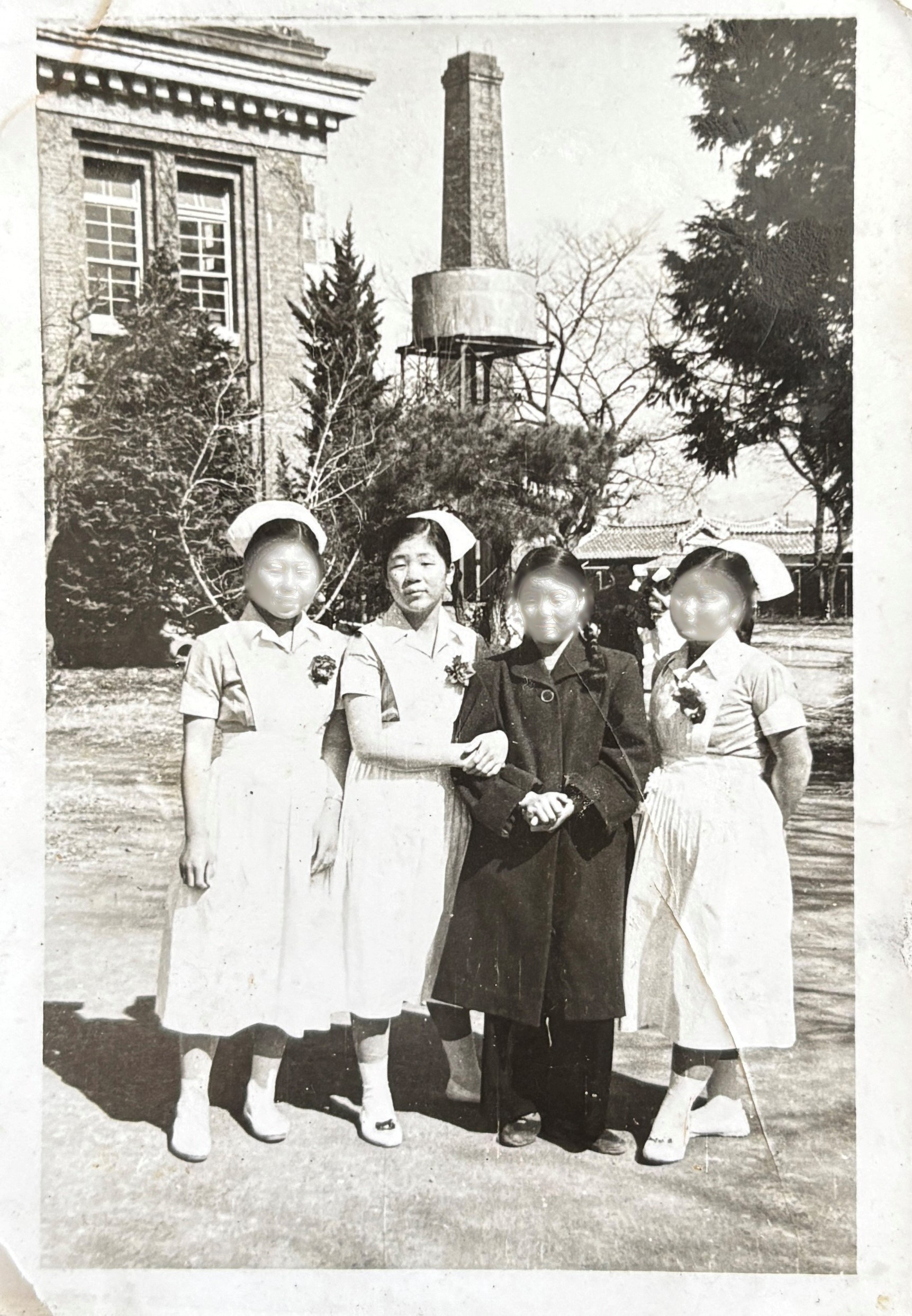
I wanted to get a divorce in Korea, but it wasn’t legally possible. Men were allowed to have two or three wives, but women weren’t allowed to get even one divorce! That’s why I had to try to get away to another place. I couldn’t stay in Korea because my husband was violent. Those were terrible experiences.
Despite her good education – which is roughly comparable to a bachelor’s degree today – there were very few job opportunities for Haeng-Ja Fischer in South Korea in the late 1960s. She was also suffering in her marriage. She wanted to divorce her abusive husband. However, this was very difficult for women in South Korea at that time. In order to change her situation and get the chance to build a better life for her and her two children, applying for a nursing job abroad seemed like a great opportunity.
One morning, I heard on the 8 o’clock news that they were looking for Korean nurses who could be “exported” to Germany. “Exported,” I think they said. […] So I applied.
At first, she considered going to the USA. But, as Haeng-Ja Fischer reports, the USA at that time “only accepted single people but not those married with kids”. As she heard about free nurse positions in West Germany she applied and was accepted. Sometime later, in 1969, she arrived at Cologne-Bonn Airport (North Rhine-Westphalia). To her surprise – but above all to her delight – the head nurse drove her and other women by car from the airport to her new work place at St. Josef-Hospital in Bochum. Seeing a woman driving a car on the German “Autobahn” in some ways meant “everything is possible”.
Aufbruch aus Südkorea
Ich wollte mich in Korea scheiden lassen, aber das ging gesetzlich nicht. Männer durften zwei oder drei Frauen haben, aber Frauen nicht mal eine einzige Ehe scheiden lassen! Deshalb musste ich versuchen, wegzukommen und woanders hinzugehen. In Korea konnte ich nicht bleiben, weil man Mann mich schlug. Das waren schreckliche Erlebnisse.
Trotz guter Ausbildung – die heute etwa mit einem Bachelor-Abschluss vergleichbar ist –, gibt es für Haeng-Ja Fischer Ende der 1960er-Jahre in Südkorea nur wenig Arbeitsmöglichkeiten. Auch leidet Haeng-Ja Fischer damals in ihrer Ehe. Sie will sich scheiden lassen. Dies ist damals in Südkorea für Frauen jedoch sehr schwierig. Die Arbeitsaufnahme im Ausland erscheint daher als Möglichkeit, Geld zu verdienen, um die Familie zu unterstützen und ihr Unabhängigkeit zu bringen.
Eines Tages hörte ich morgens in den 8-Uhr-Nachrichten, dass koreanische Krankenschwestern gesucht werden, die nach Deutschland „exportiert“ werden könnten. „Exportiert“ haben sie gesagt, glaube ich. […] Dann habe ich mich gemeldet.
Zunächst erwog sie, in die USA zu gehen. Doch wie Haneg-Ja Fischer berichtet, nahmen die USA zu jener Zeit „nur Alleinstehende auf, nicht aber Verheiratete mit Kindern“. Als sie von freien Stellen für Krankenschwestern in Westdeutschland hörte, bewarb sie sich und wurde angenommen. Einige Zeit später, im Jahr 1969, kam sie am Flughafen Köln-Bonn (Nordrhein-Westfalen) an. Zu ihrer Überraschung – aber vor allem zu ihrer großen Freude – fuhr die Oberschwester sie und andere Frauen mit dem Auto vom Flughafen zu ihrem neuen Arbeitsplatz im St.-Josef-Krankenhaus in Bochum. Eine Frau auf der deutschen Autobahn am Steuer eines Autos zu sehen, bedeutete in gewisser Weise: „Alles ist möglich“.
“My name is Nurse Haeng-Ja. Hello, what’s your name?”
Language skills had always played a crucial role for her, because language meant not only opportunities for career advancement but also the chance to participate in social life. So, with her first pay cheque, she bought a small, portable tape recorder so she could learn German whenever the opportunity arose.
I told him, “Chief, we studied biology and human anatomy in Korea. You can ask me anything. I can answer all your questions. For example, which nerve sends which signal where so that I can move my arm or my leg.” He was shocked! But he acknowledged it and held me in high regard.
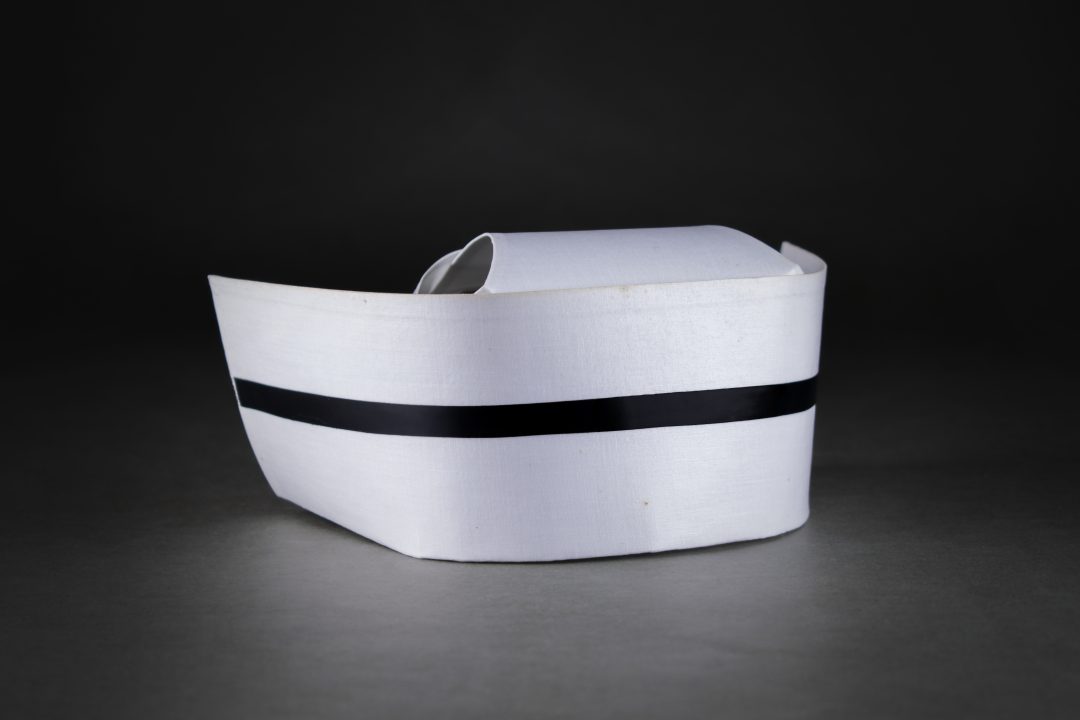
Most of the Korean nurses were highly trained and even better educated than their German colleagues. A nurse’s cap like this symbolized that high education and was therefore worn with pride by the Korean nurses. With their knowledge and skills, they were highly appreciated and valued by patients and doctors alike. "The higher qualification of Korean nurses also sparked jealousy and competitiveness among their German colleagues – which often led to the exclusion of the Korean nurses on the job”
„Ich heiße Schwester Haeng-Ja Fischer. Guten Tag, wie heißen Sie?“
Sprachkenntnisse spielen für Haeng-Ja Fischer eine Schlüsselrolle. Denn Sprache bedeutet für sie berufliches Fortkommen, aber auch die Möglichkeit zur gesellschaftspolitischen Teilhabe. Mit ihrem ersten Lohn kauft sie daher ein kleines und damit mitnehmbares Tonbandgerät, um mit diesem überall Deutsch lernen zu können.
Ich habe ihm gesagt: „Herr Chefarzt, wir haben in Korea Biologie und Menschen studiert. Da können Sie mich fragen. Ich kann Ihnen auf alles antworten. Zum Beispiel, welcher Nerv welchen Befehl wohin gibt, damit ich meinen Arm oder mein Bein bewegen kann.“ Er hatte einen Schock! Aber er hat es anerkannt und mich sehr geschätzt.
Die meisten koreanischen Krankenschwestern waren hervorragend ausgebildet und verfügten sogar über eine bessere Ausbildung als ihre deutschen Kolleginnen. Eine solche Krankenschwesterhaube symbolisierte diese hohe Ausbildung und wurde daher von den koreanischen Krankenschwestern mit Stolz getragen. Mit ihrem Wissen und ihren Fähigkeiten wurden sie von Patienten und Ärzten gleichermaßen hochgeschätzt und gewürdigt. „Der koreanische Qualifikationsvorsprung führte zudem oft zu Neid und Konkurrenzdenken bei den deutschen Krankenschwestern – und damit für die Koreanerinnen zu sozialer Ausgrenzung am Arbeitsplatz.“
Footnotes
Family Reunification: Three Years of Separation
When Haeng-Ja Fischer left South Korea in 1969, she left her two children with her mother. Her aim was to return to South Korea once her three-year employment contract with the St- Josef-Hospital in Bochum had expired, so that she could bring her children to Germany as well. However, there was no official family reunification scheme at that time.
For three years, I wasn't able to go to Korea to visit my family. It wasn't allowed. After three years, I wanted to bring my children here. To do that, I had to have an apartment, a car, and a driver's license. And that's why I got my driver's license in 1971. It took weeks!
Familienzusammenführung: drei Jahre Trennung
Als Haeng-Ja Fischer Korea 1969 verlässt, gibt sie ihre beiden Kinder in die Obhut ihrer Mutter und der zurückbleibenden Familie. Ihr Ziel ist es, nach Ablauf des auf drei Jahre festgelegten Arbeitsvertrags mit dem St. Josef-Hospital (Bochum) nach Südkorea zurückzukehren, um auch ihre Kinder nach Deutschland zu holen. Eine offizielle Familienzusammenführung gibt es damals allerdings nicht.
Für drei Jahre konnte ich ja nicht nach Korea und meine Familie besuchen. Das durfte man nicht. Nach drei Jahren wollte ich dann meine Kinder holen. Dafür musste ich eine Wohnung, ein Auto und einen Führerschein haben. Und deshalb machte ich 1971 den Führerschein. Wochenlang!
An invitation to dinner – tackling challenges head-on
Haeng-Ja Fischer solved problems in her own way. Above all, she was direct and clear, and when faced with a difficult situation, she often tried to change the other person’s perspective by putting them in her position. One time, that meant inviting the hospital personel to “Korean dinner with asparagus and ham rolls”.
Spargel-Schinken-Röllchen oder Herausforderungen offen angehen
Haneg-Ja Fischer löste Probleme auf ihre ganz eigene Art und Weise. Vor allem war sie direkt und klar. Wenn sie mit einer schwierigen Situation konfrontiert war, versuchte sie oft, die Sichtweise ihres Gegenübers zu ändern, indem sie ihn in ihre Lage versetzte. Einmal bedeutete dies, das Krankenhauspersonal zu einem „koreanischen Abendessen mit Spargel und Schinkenröllchen“ einzuladen.
Unacceptable – standing up to others
I think you’ve got a problem. Not with my papers, but with me. […] I won’t accept that!
Inakzeptabel– sich gegen andere behaupten
Ich glaube, Sie haben ein Problem. Nicht mit meinen Papieren, sondern mit mir. Das akzeptiere ich nicht!
Giving something back: share what you have
After the bad experiences in her first marriage, Haeng-Ja Fischer didn’t even want to think about getting married again. But an encounter with Eikelbeck, who was then mayor of Bochum and a patient in St. Josef-Hospital, and his wife Gerda changed that. They introduced Haeng-Ja Fischer to her second husband, Peter. She was happily married to him until his death in 2019.
Lots of doctors were single and wanted to go on a date with me, but they couldn’t talk to me because I didn’t want them to. Because I’d had such a bad experience once, I didn’t want it to happen a second time. You end up thinking all men are the same. But Peter was different.
Together, they dedicated themselves to helping others. They supported children in Gambia, Africa, and in the mid-2010s took in a young refugee from Eritrea. As they both knew how it felt to be a stranger in a foreign country, they felt it was the right thing to do. They helped him study German and supported him as he trained to become a nurse. For her and her husband, one thing was clear: if you have something, you have to share it.
Today, Haeng-Ja Fischer is over 80 years old and content with her life.
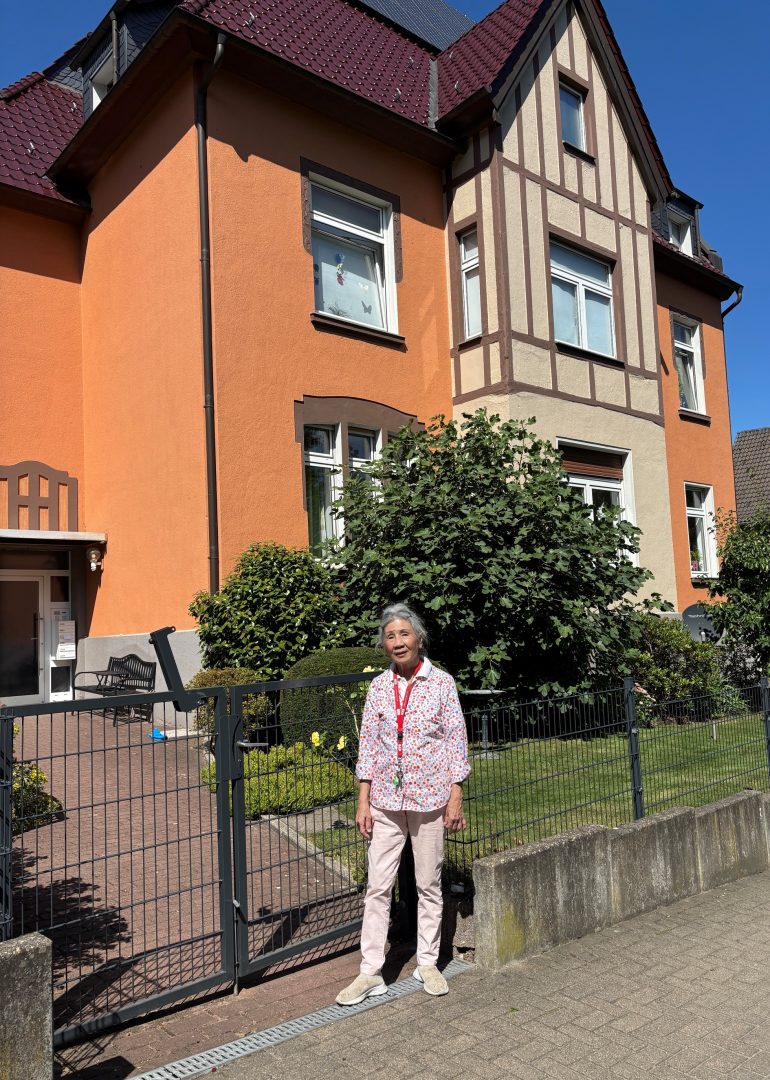
Thank God, things have turned out very well. Today I have a very happy family with grandchildren and great-grandchildren. The children are happy, too. My daughter married a German man and has two sons. My son has a Korean wife - and just like in our family, her father was a miner and her mother a nurse. She’s a very kind woman who has three sons. So it’s a real family. I’m very grateful to God. But it’s not enough just to be grateful - you also have to give something back. And that’s what I try to do.
Etwas zurückgben: teile, was du hast
Nach den schlechten Erfahrungen mit ihrer ersten Ehe kommt für Haeng-Ja Fischer eine Weitere nicht in Frage. Die Begegnung mit dem damaligen Bochumer Oberbürgermeister Eikelbeck und dessen Frau Gerda, änderten dies jedoch. Sie stellten Haeng-Ja Fischer ihren zweiten Mann Peter Fischer vor. Mit ihm blieb sie bis zu seinem Tod im Jahr 2019 glücklich verheiratet.
Viele Ärzte waren ledig und wollten ein Date mit mir, aber die konnten nicht mit mir sprechen, denn ich wollte nicht. Weil ich es einmal so schlecht erlebt hatte, wollte ich das kein zweites Mal. Man denkt, alle Männer wären gleich.
Gemeinsam setzten sie sich für andere ein. Sie unterstützten Kinder in Gambia, Afrika, und nahmen Mitte der 2010er-Jahre einen jungen Mann aus Eritrea bei sich auf. Sie halfen ihm beim Deutsch lernen und unterstützten seine Ausbildung zum Krankenpfleger. Haeng-Ja Fischer wollte etwas von ihren Chancen weitergeben und auch anderen die Möglichkeit auf eine bessere Zukunft ermöglichen. Für sie und ihren Mann war eine Sache selbstverständlich: wenn du etwas hast, musst du es teilen.
Heute ist Haeng-Ja Fischer über 80 Jahre alt. Sie ist mit ihrem Leben zufrieden.
Gott sei Dank ist es sehr gut geworden. Heute habe ich eine sehr glückliche Familie mit Enkeln und Urenkeln. Auch die Kinder sind glücklich. Meine Tochter hat einen Deutschen geheiratet und zwei Jungs. Mein Sohn hat eine koreanische Frau und wie bei uns war ihr Vater Bergmann und die Mutter Krankenschwester. Eine sehr liebe Frau, die hat drei Jungs. So ist es eine richtige Familie. Ich bin Gott sehr dankbar. Man darf aber nicht nur danken, sondern muss auch etwas zurückgeben. Und das versuche ich.
Historical-Political Background
Migration of guest workers: Countering the labour shortage
Haeng-Ja Fischer arrived in Germany during the period of the so-called ‘guest worker’1 recruitment drive. From the mid-1950s onwards, the Federal Republic of Germany began to specifically recruit workers from abroad by means of so-called recruitment contracts. These agreements were intended to counteract the persistent labour shortage in the Federal Republic and to satisfy the ‘Economic Miracle’s’ constant hunger for further growth.2 The first of many subsequent so-called recruitment agreements3, which brought millions of people to West Germany, was concluded by the Federal Republic of Germany with Italy in 1955. This was followed by further agreements with Mediterranean countries.4
In 1963, the Federal Republic of Germany concluded another agreement – one that remains relatively unknown to the public to this day – with South Korea on the ‘employment of Korean miners’. Building on this, an official agreement came into force in 1971 to bring Korean nurses to the Federal Republic of Germany. The aim was to alleviate the nursing shortage. Before this state-led recruitment programme, it was primarily the Christian churches that brought nurses from South Korea to West Germany between 1955 and 1966. Between 1966 and 1971, further nursing staff arrived from the country as a result of a private initiative by Dr. Yi Su Gil, a paediatrician employed at the University Hospital in Mainz. Soon after the recruiting of nurses from South Korea began, both countries – South Korea as well as the FRG – criticized the recruitment policy as being a “reserve development aid”.5 While West Germany was able to secure health care, Korea lost parts of its young well-trained generation by sending not only nurses but men, who were working as miners for the West-German coal mining industry. By 1977, around 8,000 miners and over 10,000 nurses and nursing assistants had come to Germany from South Korea. “Contemporary media reported very favourably about the Korean health workers, but their portrayal was also characterized by racist stereotypes and exoticism. In their daily work life, Korean women also had to face prejudices and discrimination.”67
Germany and Korea – two divided countries
Whilst the Federal Republic of Germany used the recruitment agreements to secure economic growth, the economic situation in South Korea was strained. Sending workers abroad was intended to ease pressure on the domestic labour market and bring valuable foreign currency into the country. Korea was still marked by the Korean War of 1950–1953 and divided into North and South along the 38th parallel. Whilst the South moved closer to the “West” under US leadership, North Korea fell under the sphere of influence of the Soviet Union and China. Despite support from “the West”, South Korea remained poor. The two parts of the country were separated from one another in – much the same way as the Federal Republic of Germany and the German Democratic Republic – and developed in very different ways over the following decades of the Cold War. This applied to political, economic and social developments.8
Not just men
Although most of the recruited work force were men, various companies and sectors – such as hospitals in the healthcare sector – specifically recruited (young) women.9 The proportion of female foreign workers amongst the total foreign workforce in the Federal Republic rose almost continuously between 1962 and 1972/73, from 18.5% to just over 30%. In North Rhine-Westphalia (NRW), their proportion increased from 16% to over 27% during the same period. In the Ruhr region, characterised by heavy industry, where Haeng-Ja Fischer also lived and worked in a hospital, the proportion was slightly lower at 21%.10 Furthermore, in 1968 around 42% of female migrants in West Germany were unmarried or lived without their husbands in the Federal Republic. This included Haeng-Ja Fischer, who was the first member of her family to come to the Federal Republic of Germany, without her husband or children.11
“Almost 30% of all Korean women who came to Germany as nurses stayed here. Of the remaining 70 %, 30% went to North America to seek better job opportunities. The rest went back to South Korea. Some of the returnees co-founded and subsequently settled in a so-called ‘German Village’ on the island of Namhaedo.”12
For Haeng-Ja Fischer and many other women, migration to the Federal Republic of Germany was a step towards independence, freedom and a chance to leave patriarchal structures behind. The women acted of their own volition and were not ‘passive appendages of their husbands’.13 This applied both to women who came without husbands and to women who were not in paid employment and followed their husbands. They often worked hard to keep their families together, to build their own prosperity and, above all, to enable the next generation to have new and improved prospects for the future. They took care of the household and undertook the unpaid and largely undocumented ‘care work’.
Making of
Stay tuned. This content will be added soon!
Credits
The interview was conducted in August 2025 by Dr. Sara-Marie Demiriz, Outreach Research Associate at the LVR Industrial Museum.
Special and deepest thanks go to Haeng-Ja Fischer, who not only shared her story openly and courageously, but above all with the aim of inspiring other women and supporting them on their journey—not only in Germany, but throughout Europe.
Further gratitude goes to the extended family of Mrs. Fischer and her daughter, who assisted us with the administrative and legal procedures.
Finally, credits go to Martin Kauder, student research assistant at the LVR Industrial Museum (2024–2026) for his assistance in text transcription as well as to Lea Althoff, Head of the Digital Services Department, for being a patient and spontaneous sparring partner.
For access to archive material, literature on migration from South Korea, the picture of the nurse’s cap and collegiate exchange, great thanks goes to DOMiD e.V. – Dokumentationszentrum über die Migration in Deutschland, Köln.
Transcript PDF here
Partner involved

LVR Industrial Museums
At seven authentic sites, the LVR-Industrial Museum relate to the story of industrialisation along the Rhine and the Ruhr and how this work and daily grind formed the people in past and present, including in terms of migration and diversity.
The Landschaftsverband Rheinland (LVR) is a local authority association with around 22.000 employees working for the 9.8 million people in the Rhineland. With its 41 schools, ten clinics, 20 museums and cultural institutions, four youth welfare centres, the state youth welfare office and the association for curative education, it fulfils tasks that are carried out throughout the Rhineland. The 13 independent cities and twelve districts in the Rhineland and the Aachen city region are the member authorities of the LVR. At seven authentic sites, the LVR-Industrial Museum relate to the story of industrialisation along the Rhine and the Ruhr and how this work and daily grind formed the people in past and present, including in terms of migration and diversity. The museum sites are the places where all this actually took place:the former factories, now being the sites of the museum.
Footnotes
- The people coming to Germany from the countries of Southern and South-Eastern Europe and the Mediterranean region were initially referred to as “guest workers”. This term suggested, firstly, that those brought over would not stay permanently; secondly, that the legitimacy of their stay was based solely on the labour they provided; and thirdly, that it was male workers who were being recruited. (See: Sara-Marie Demiriz: (K)eine schlichte Verbalnote – das deutsch-türkische Anwerbeabkommen vom 30. Oktober 1961 und seine Folgen, in: Forum Geschichtskultur Ruhr (2021), H. 2, p. 16–20.) ↩︎
- The men – and women – who were recruited served as a cyclical buffer for the economy. Their primary role was to fill positions that could no longer be filled by workers from the Federal Republic of Germany or could only be filled at higher wages. Thus, in the 1960s, the recruited workers were employed specifically “in sectors where heavy and dirty work, piecework pay, shift work and forms of mass production with low skill requirements (assembly lines) were particularly common” (Herbert, Ulrich: Geschichte der Ausländerpolitik in Deutschland, Bonn 2003, p. 213). ↩︎
- The recruitment agreements were bilateral treaties that took into account the interests of both the host country and the sending country. The recruiting countries hoped to secure workers who could be deployed, in line with economic needs, primarily on a short-term basis. The sending countries often aimed to ease pressure on their own labour markets, hoped to receive foreign exchange – that is, remittances of part of the wages earned in Germany sent to relatives back home – and anticipated that, upon their return, returnees’ experiences and knowledge would benefit the economic performance of the sending countries. Finally, during the Cold War, there was also a foreign policy dimension – Turkey, for example, was the easternmost NATO member state. The conclusion of such recruitment agreements was not a German phenomenon, but a European one. Alongside Germany, other industrialised nations such as France, the Netherlands, Belgium, Austria and Switzerland also recruited workers from abroad through bilateral agreements. In 1961, there were approximately 500,000 people of working age without German citizenship living in the Federal Republic of Germany; by the time recruitment was halted in 1973, this figure had risen to around 2.6 million. (See: Jochen Oltmer: Migration. Geschichte und Zukunft der Gegenwart, Darmstadt 2017, p. 180–198; https://www.bpb.de/politik/hintergrund-aktuell/324552/anwerbeabkommen-mit-italien [13 th July 2021].) ↩︎
- Spain (1960), Greece (1960), Turkey (1961), Morocco (1963), Portugal (1964), Tunisia (1965) and Yugoslavia (1968). ↩︎
- Detlef Garz: „Wir waren trotz der Schwierigkeiten fröhlich und mutig, weil wir von einem besseren Leben träumten“ Die historische Entwicklung der südkoreanischen Migration in die Bundesrepublik Deutschland: eine Skizze, in: Yong-Seun Chan-Gusko, Nataly Jung-Hwa Han and Arnd Kolb (eds.): Unbekannte Vielfalt. Einblicke in die koreanische Migrationsgeschichte in Deutschland, 2nd Edition 2022, p. 18–37, here: 24. ↩︎
- Invisible Caretakers – labor migration of women in Germany: Invisible Caretakers – labor migration of women in Germany | DOMiD | Documentation Center and Museum of Migration in Germany [29th July 2026]. ↩︎
- Cf. for the history of Korean labour migration to the FRG: Detlef Garz: „Wir waren trotz der Schwierigkeiten fröhlich und mutig, weil wir von einem besseren Leben träumten“ Die historische Entwicklung der südkoreanischen Migration in die Bundesrepublik Deutschland: eine Skizze, in: Yong-Seun Chan-Gusko, Nataly Jung-Hwa Han and Arnd Kolb (eds.): Unbekannte Vielfalt. Einblicke in die koreanische Migrationsgeschichte in Deutschland, 2nd Edition 2022, p. 18–37; Anissa Finzi/Alice Mazzara: War die Arbeitsmigration nur männlich? “Gasta”arbeiterinnen im Ruhrgebiet, in: Forum Geschichtskultur Ruhr (2019), H. 2, p. 21–24. ↩︎
- Cf.: Garz: „Wir waren trotz der Schwierigkeiten, p. 18–37, here: 22. ↩︎
- The women recruited worked in various sectors; in addition to the textile, clothing and food industries, they also worked for automotive parts suppliers, as well as in iron and metal production and processing. For example, Siemens in Munich, the Stollwerk chocolate factory in Cologne and the automotive supplier Pierburg in Neuss specifically recruited women from abroad. (cf.: Hunn, p. 86ff, Strike at Pierburg: https://domid.org/news/pierburg-streik-solidaritaet-unter-arbeiterinnen/ [25th July 2026] and Monika Mattes, female guest workers). ↩︎
- Cf.: Anissa Finzi/Alice Mazzara: War die Arbeitsmigration nur männlich? “Gasta”arbeiterinnen im Ruhrgebiet, in: Forum Geschichtskultur Ruhr (2019), H. 2, p. 21–24. ↩︎
- Mattes, Monika: “Female Guest Workers” in the Federal Republic of Germany. Recruitment policy, migration and gender in the 1950s to the 1970s. Frankfurt am Main 2005. ↩︎
- Invisible Caretakers – labor migration of women in Germany: Invisible Caretakers – labor migration of women in Germany | DOMiD | Documentation Center and Museum of Migration in Germany [29th July 2026]. ↩︎
- Mattes, Monika: “Female guest workers” in the Federal Republic. Recruitment policy, migration and gender in the 1950s to the 1970s. Frankfurt am Main 2005, p. 10. ↩︎