No single stories

“The residents’ stories are not isolated ‘single stories’; they represent a shared struggle against societal obstacles.”  –  Expressing individual experiences and structural conditions of human trafficking in artwork

Aiko Takahashi and Noi Parichat Pai explain how different artistic approaches are used to make visible the lived realities of people affected by human trafficking, as well as the underlying structural conditions behind it. They share the stories behind the artworks presented here and explain why they chose to present them in the context of Ban Ying’s ongoing political demands.

Anna: Let’s look at the artworks and personal testimonies shown below. We decided to conduct this interview because it is often difficult, if not impossible, for those directly affected to speak publicly themselves. However, when we began discussing this contribution, we also realized that there were already many approaches to make these experiences visible. Could you briefly explain the different artworks and testimonies you selected? How did they come about, and what was the idea behind them?

Noi: The series of drawings known as the back portraits emerged from a project with our umbrella organization, the Global Alliance Against Trafficking in Women. We interviewed 24 women* for the project. We asked them: What is your life like? What is important to you? How did you get through the pandemic? How have you integrated into society? We wanted to do more with this rich material and these powerful interviews. One of our colleagues, who lives in the Philippines, is both a language mediator for Filipino and an artist. She began creating these back portraits. Every woman* who gave us an interview received a portrait. Each portrait was paired with a message the woman* considered important: about her struggles, her existence, or what she was proud of. We also turned the project into a calendar.

Anna: And what is the background of the text collages?

Aiko: The text collages were also created by a language mediator and cultural mediator who is an artist as well. In a way, this artwork is her way of processing the stories and experiences she encounters through her work with us. She learned that we are required to shred all resident-related files after five years and administrative records after ten years. This is justified for data protection reasons, but it also means that many stories and testimonies of our work are lost. As we found ourselves regularly shredding documents, she recognized the artistic potential in these materials and saw an opportunity to use them to speak about our work. We also discussed the language used by authorities. It reveals how authorities perceive the women* we work with and their life stories. This perception stands in stark contrast to how we see them: as strong women* fighting within an unjust society. Drawing on these impressions, she created artworks that highlight realities of life that are deliberately kept hidden by political structures, while also showing how people’s lives become bureaucratized and, in the process, dehumanized within the German system. The lived realities of the women* we support are often far more complex than legal provisions and administrative categories. They are people with extensive life experience and knowledge, yet bureaucracy often stands in the way of their ability to establish themselves here.

Noi: Working with government authorities is often frustrating. Either they make our work more difficult or they slow it down. Our clients need support quickly. Some authorities take an extremely long time to process cases and sometimes make mistakes. Others simply do not have an open attitude toward migration.

Anna: And it was the same artist who created some of the paintings, including the one featuring the beds, correct?

Aiko: Exactly. That particular work emerged directly from everyday life in the shelter. We receive so many requests for accommodation and have to turn most of them away because we do not have enough space. Sometimes we are forced to ask ourselves: Which woman* is currently in a more precarious situation? Who deserves this bed more? Who needs our support more urgently? Looking at people’s lives this way goes against our instincts as human beings. The artwork was created as a way of processing those feelings. It says a great deal about structural gaps: they force us to reduce people’s biographies to a few defining criteria in order to make decisions that we do not really want to make, but that the circumstances make necessary.

Anna: We’ll come back to those structural contexts in a moment, but there are also the self-portraits and photographs from the shelter. Could you tell us a bit about those?

Aiko: The self-portraits were created as part of an art project by Bussaraporn Thongchai. She regularly carried out art workshops with the women so that they could express themselves through art and engage in a therapeutic process that supported stabilization and healing. One result was a series of self-portraits. The women used one hand to draw themselves, while using the other hand to explore and feel their own faces. The idea was to strengthen their self-perception. Through our work, we often see how the body acts as a repository for trauma, and how important it is to find ways of living with that experience in everyday life.

As for the photographs from the shelter, one of them shows a mural created by our former colleague Krisanta Caguioa-Mönnich. Together with former residents, she painted a series of portraits viewed from behind on the kitchen wall of the shelter. The aim was to highlight the continuity of their lived realities. The residents’ stories are not isolated “single stories”; they represent a shared struggle against societal obstacles.

Anna: There are also several materials that appear to have been developed as informational resources by Ban Ying, or at least with Ban Ying’s involvement, showing another dimension of the organization’s work.

Noi: Yes, those materials address questions we are asked repeatedly. Today, many people get information online, including misinformation. Some women* have been deliberately misled. We therefore provide targeted information about the legal pathways for coming to Germany, the rights associated with different types of visas, and where people can seek help if they encounter difficulties once they are here. We have made this information available in multiple languages.

Anna: Are there aspects that are not made visible through the testimonies or artworks presented here? Are there structural issues that simply cannot be represented visually?

Noi: There are so many different life stories, and in principle all of them deserve space. That inevitably means there will always be certain aspects that remain invisible.

Aiko: What remains most invisible is what comes before our work even begins: all the women* who never managed to reach us. There are countless stories we never hear.Another area that remains largely invisible is the work and lives of domestic workers employed by diplomats. There are not even a hundred people doing this kind of work in Germany. They have virtually no representation for their interests and no lobby advocating on their behalf.

Anna: Ban Ying has been advocating for structural improvements for many years. Why do you think these demands continue to go unheard politically?

Aiko: I believe there is a political interest in maintaining a certain level of precarity so that there will continue to be workers available for the low-wage sector. I also think there is a political interest in preventing a more equitable redistribution of social conditions. At the same time, people who are exploited have very little lobbying power within the system. We are fighting for change, but our lobby is tiny. The lobby representing those who already have wealth and influence is far richer and far more powerful.

Noi: I think it has a lot to do with how migration and migrants are perceived. Fear is generated through narratives of criminalization, through claims that “we need to be careful,” “we should not open our country too much,” and “we need to make things harder.” But in reality, we can already imagine how sectors such as care and healthcare would collapse without migrant workers. Policymakers do not want to acknowledge how much migration is needed. Other countries, such as Spain, have set positive examples by recognizing that they need undocumented people who are already living and working there and therefore granting them legal status. Here, by contrast, everything is done to make life as difficult as possible. The focus is entirely misplaced and geared toward exploitation when people are valued only for their usefulness rather than by asking how everyone can have access to a life of dignity.

Anna: Have there nevertheless been political improvements, even if only small ones?

Aiko: One example that comes to mind is the reduction of the required duration of marriage before a spouse could receive an independent residence permit. Ban Ying worked on this issue nationwide through advocacy and networking. The question was how long someone whose residence permit is tied to marriage must remain married before they can obtain an independent right to stay. These kinds of changes can sometimes have a significant impact, which is positive, but they were only achieved through years of struggle. Moreover, such changes tend to be highly specific and dependent on the political climate. The period was temporarily shortened, only to be increased again later, from two back to three years, following a change in government.

Noi: At the same time, fundamental barriers remain. The criminal law provisions on human trafficking have been revised over time to include additional forms of exploitation, which is positive because it helps make different forms of exploitation more visible. However, these changes do not actually help many of our clients if their residence status remains tied to giving testimony or cooperating with law enforcement. This is an enormous hurdle, particularly because criminal justice institutions are often difficult to access, many survivors have had negative experiences with security authorities, gathering evidence is extremely challenging, and many have already experienced deception and betrayal. On paper, the system says: if you cooperate, opportunities will open up. You will receive support, counseling, accommodation, and potentially a residence permit. In practice, however, without assistance and without the work of organizations and specialized counseling centers, navigating this process is incredibly difficult.

Anna: Is there anything else you would like to add that has not yet found a place in these questions, but that is important for understanding the artworks and testimonies?

„Die Lebensgeschichten der Bewohnerinnen* sind keine single stories, sondern ein ge-meinsamer Kampf gegen die gesellschaftlichen Windmühlen.“ – Erfahrungen und strukturelle Bedingungen von Gewalt und Ausbeutung künstlerischen Ausdruck verleihen

Aiko Takahashi und Noi Parichat Pai erklären, wie über verschiedene künstlerische Ansätze die Lebensrealitäten von Betroffenen von Menschenhandel sowie die dahinterstehenden strukturellen Bedingungen sichtbar gemacht werden. Sie erzählen die Geschichten hinter den hier vorgestellten Kunstwerken und zeigen auf, warum sie sich dafür entschieden haben, diese im Kontext kontinuierlicher politischer Forderungen von Ban Ying darzustellen.

Anna: Lasst uns auf die Kunstwerke und Selbstzeugnisse schauen, die unten zu sehen sind. Wir haben uns entschieden, dass wir dieses Interview führen, weil es für die direkt Betroffenen oft schwierig bis unmöglich ist, selbst öffentlich zu sprechen. Als wir angefangen haben, über diesen Beitrag zu sprechen, haben wir aber auch gesehen, dass es schon total viele Ansätze gab, diese Erfahrungen sichtbar zu machen. Könnt ihr diese unterschiedlichen Kunstwerke oder auch Selbstzeugnisse, die ihr ausgewählt habt, kurz einordnen: Wie sind die entstanden und was war die Idee dahinter war?

Noi: Die Serie der Zeichnungen der Rückenporträts ist aus einem Projekt mit unserem Dachverband, Global Alliance Against Trafficking in Women, entstanden. Wir haben für das Projekt 24 Frauen* interviewt. Wir haben gefragt, wie ist ihr Leben, was ist ihnen wichtig? Wie haben Sie sich in der Pandemie durchgemacht? Wie haben sie sich integriert? Wir wollten aus diesem tollen Material, tollen Interviews, mehr machen. Eine Kollegin, die auf den Philippinen wohnt, ist Sprachmittlerin für Filipino und Zeichnerin. Sie hat also angefangen mit den Rückenporträts: Jede Frau*, die uns ein Interview gegeben hat, hat ein Bild bekommen. Dieses Rückenporträt sollte verbunden werden mit einer wichtigen Botschaft, die sie vermitteln wollten: Über ihren Kampf, ihre Existenz, was sie stolz macht. Daraus haben wir auch einen Kalender gemacht.

Anna: Und die Textcollagen, was ist da der Hintergrund?

Aiko: Die Textcollagen sind auch von einer Sprachmittlerin und Kulturmediatorin geschaffen worden, die auch Künstlerin ist. Diese Kunst ist gewissermaßen eine Verarbeitung von den Geschichten und Arbeitserfahrungen, die sie bei uns macht. Sie hat mitbekommen, dass wir alle Bewohnerinnen*-bezogenen Sachen nach 5 Jahren schreddern müssen, die verwaltungsbezogenen nach 10. Das ist aus Datenschutzgründen berechtigt, aber damit gehen auch sehr viele Geschichten und Zeugnisse unserer Arbeit verloren. Als wir dann regelmäßig beim Schreddern waren, hat sie darin sozusagen auch das künstlerische Potenzial gesehen, darüber auch über unsere Arbeit zu sprechen. Und wir haben auch über das Wording der Behörden diskutiert. Es zeigt, wie die Behörden unsere Adressantinnen* und deren Lebensgeschichten wahrnehmen. Dies steht wiederum im Widerspruch zu unserer Wahrnehmung der Adressatinnen*: nämlich als starke Kämpferinnen* in einer ungerechten Gesellschaft.

Mit diesen Eindrücken hat sie Kunst erschaffen, welche von der Politik bewusst in verborgenen gehaltenen Lebensrealitäten aufzeigt, aber auch wie Lebensrealitäten im Deutschen System verbürokratisiert und somit entmenschlicht werden. Die Lebensrealitäten unserer Adressatinnen* sind oft komplexer als Paragraphen. Es sind Menschen, die so viel Lebens- und Bildungserfahrung mit sich bringen, aber die Bürokratie verhindert ihr Ankommen.

Noi: Die Arbeit mit den Behörden ist auch oft frustrierend. Entweder sie macht unsere Arbeit schwieriger oder verlangsamen sie. Wir brauchen für die Klient*innen schnell Unterstützung. Manche Behörden brauchen so lange und machen auch Fehler, und manche haben auch keine offene Haltung zu Migration.

Anna: Und das ist die gleiche Künstlerin, die auch einige der Bilder gemacht hat, zum Beispiel das mit den Betten.

Aiko: Genau, das zum Beispiel ist aus dem Arbeitsalltag entstanden, aus der Zufluchtswohnung, weil wir so viele Anfragen haben und die meisten absagen müssen, weil wir keinen Platz haben. Manchmal müssen wir schauen: Welche Frau* ist sozusagen mehr prekarisiert, verdient mehr dieses Bett, wer braucht gerade dringender unsere Hilfe, was, wenn wir das menschlich angucken, irgendwie gegen unseren Strich geht. Um dieses Gefühl zu verarbeiten, entstand dieses Bild. Das sagt auf viel über die strukturellen Lücken aus: Diese zwingen uns, Biografien auf gewisse Merkmale zu reduzieren, um eine Entscheidung zu treffen, die wir eigentlich auch nicht treffen wollen, die aber notwendig sind.

Anna: Ja, auf die strukturellen Kontexte kommen wir ja gleich nochmal, aber es gibt auch noch die Selbstportraits und die Fotos aus der Zufluchtswohnung. Wollt ihr das noch mal kurz beschreiben?

Aiko: Genau, die Portraits sind auch durch ein Kunstprojekt von Bussaraporn Thongchai entstanden. Sie hat mit den Frauen* regelmäßig Kunstprojekte gemacht, sodass sie selbst sich durch die Kunst ausdrücken können, um darüber in einen gewissen therapeutischen Prozess von Stabilisierung und Gesundheit zu kommen. Auf jeden Fall sind da Selbstportraits entstanden, in dem sie eine Hand benutzt haben, um sich selber zu zeichnen, und die andere Hand, um ihr Gesicht zu ertasten, um nochmal ihre Selbstwahrnehmung zu stärken. Wir bekommen auch bei der Arbeit viel mit, dass Körper ein Speicherort von Traumata und damit einen Umgang im Alltag zu finden ist.

Und bei den Fotographien aus der Zufluchtswohnung, das eine ist die Wandmalerei unsererehemaligen Mitarbeiterin, Krisanta Caguioa-Mönnich zu sehen. Sie hat in der Küche der Zufluchtswohnung gemeinsam mit den damaligen Bewohnerinnen* Portraits von hinten gezeichnet, um die Kontinuität ihrer Lebensrealitäten aufzuzeigen: Die Lebensgeschichten der Bewohnerinnen* sind keine single stories, sondern ein gemeinsamer Kampf gegen die gesellschaftlichen Windmühlen.

Anna: Und dann gibt es noch einige Materialien, die vermutlich mal als Infomaterialien von Ban Ying entwickelt wurden, oder zumindest mitentwickelt wurden, einfach um zu zeigen, wie die Arbeit der Organisation auch umgeht.

Noi: Ja, das sind Infos zu Fragen, die wir immer wieder bekommen. Heutzutage bekommen viele Infos über das Internet, auch falsche Infos. Manche wurden angelogen. Wir haben gezielt Infos gegeben dazu, welche legalen Wege sie haben, um nach Deutschland zu kommen und Rechte sie mit welchem Visum haben werden. Und wohin sie sich wenden können, wenn sie in Schwierigkeiten geraten in Deutschland. Diese wichtigen Informationen haben wir mehrsprachig aufbereitet.

Anna: Gibt es denn Aspekte, die nicht so sichtbar werden durch die Selbstzeugnisse oder Kunstwerke, die hier ausgewählt sind? Gibt es strukturelle Themen, die sich bildlich nicht darstellen lassen?

Noi: Es sind so viele unterschiedliche Biografien, die irgendwie eigentlich alle Platz haben müssen. Und deshalb gibt es immer bestimmte Aspekte, die irgendwie nicht sichtbar sind.

Aiko: Was ganz klar unsichtbar bleibt, liegt ein Schritt davor: Es gibt so viele Adressatinnen*, die es nicht geschafft haben, zu uns zu kommen. Es gibt viele Geschichten,die wir nicht mitbekommen. Was auch weiterhin eher unsichtbar ist, ist die Arbeit oder das Leben von Hausangestellten von Diplomaten. Es sind nicht mal hundert Leute, die so einen Job machen in Deutschland. Sie haben so gut wie gar keine Vertretung für ihr Interesse, keine Lobby.

Anna: Ban Ying setzt sich ja schon seit vielen Jahren auch politisch für strukturelle Verbesserung ein. Warum denkt ihr, werden die Forderungen seit Jahren politisch nicht erhört?

Aiko: Ich glaube, es gibt ein Interesse von der Politik, eine gewisse Prekarität aufrecht zu erhalten, um in diesem Niedriglohnsektor überhaupt Arbeitskräfte zu haben, und ich glaube, es ist politisch gewollt, dass es keine gute Umverteilung der Verhältnisse gibt. Gleichzeitig gibt es keine große Lobby für ausgebeutete Personen in dem System. Wir sind dran, wir kämpfen, aber die Lobby ist viel zu klein. Und die Lobby für die, die schon viel haben, ist viel zu reich.

Noi: Ich denke, das ist die Perspektive, wie man Migration oder Migranten sieht: Angst schüren vor Kriminalisierung und „wir müssen aufpassen, wir sollen unser Land nicht so sehr öffnen, wir sollen es schwieriger machen.“ Aber eigentlich können wir uns schon vorstellen, wie viele Bereiche wie Pflege und Gesundheit dann kollabieren würden. Sie wollen nicht sehen, dass wir Migration brauchen. Andere Länder wie Spanien sind mit gutem Beispiel vorangegangen und haben gesagt: Wir brauchen die Menschen, die ohne Papiere hier sind, also geben wir ihnen Papiere. Aber hier tut man alles dafür, dass es so schwierig ist. Der Fokus ist völlig falsch gelegt und auf Ausbeutung ausgelegt, wenn du Menschen nur in ihrem Nutzen siehst und nicht danach, wie alle Zugang zu einem menschenwürdigen Leben haben.

Anna: Gab es denn auch oder zumindest zwischenzeitlich mal politische Verbesserungen an kleinen Stellschrauben?

Aiko: Also mir kommt da konkret die Reduzierung der Ehebestandszeit in den Sinn, für die Ban Ying sich bundesweit vernetzt und eingesetzt hat. Da geht es darum, wie lange eine Person bei einem Aufenthaltstitel über die Ehe verheiratet sein muss, bevor sie einen eigenständigen Aufenthalt bekommen kann.  Das sind so kleine Dinge, die ja manchmal auch eine Auswirkung haben können, das ist gut, aber das wurde alles auch mit jahrelangem Kampf verhandelt. Und solche Veränderungen sind immer sehr punktuell und von politischen Stimmungen abhängig. Die zwischenzeitliche Verkürzung wurde dann wiederum später durch die Regierungswechsel wieder von 2 auf 3 Jahre erhöht.

Noi: Es gibt aber weiterhin grundlegende Hürden. Zwar wurde der Paragraf zum Menschenhandel mit der Zeit angepasst und gewisse Ausbeutungsformen reingenommen, was ja an sich gut ist, um nochmal unterschiedliche Ausbeutungsformen sichtbar zu machen in der Gesellschaft. Und gleichzeitig aber nützt das den Klientinnen* nichts, wenn der Aufenthalt fest an einer Aussage bzw. der Kooperation mit der Polizei gebunden ist. Diese Hürde ist sehr hoch in Anbetracht dessen, dass die Strafverfolgungsbehörden von den Strukturen her so hochschwellig sind und viele Betroffene keine guten Erfahrungen mit Sicherheitsbehörden gemacht haben, es schwer haben, Beweise zu sammeln, und auch einfach viel betrogen worden sind. Auf dem Papier steht: Wenn du kooperierst, dann gibt es Chancen, du bekommst Unterstützung, du bekommst Beratung, Unterkunft und dann du bekommst du auch eine Aufenthaltserlaubnis. Aber in der Praxis, ohne Hilfe, ohne die Arbeit von Organisationen oder Fachberatungsstellen im Hilfesystem, das ist so schwierig. 

Anna: Wollt ihr noch was sagen, was jetzt keinen Platz gefunden hat in diesen Fragen und noch wichtig ist zur Einordnung der Werke und der Selbstzeugnisse?

Noi: Ich finde, wenn man zurückblickt, was wir bisher gemacht haben, oder verschiedene Kunstwerke, dann bin ich auch immer wieder überrascht, wie die Frauen* trotz allem noch positiv, noch hoffnungsvoll auf ihr Leben hier blicken. Ich finde das total bewundernswert. Davon lerne ich auch.

Aiko: Ja, dass sie nicht nur Betroffene von Menschenhandel sind, sondern viel, viel mehr.
Ban Ying’s struggles in over 35 years

“From the start, we defined for ourselves that there is a specific form of violence connected to the migration process” – Ban Ying’s struggles in over 30 years

Aiko Takahashi and Noi Parichat Pai talk about their work at Ban Ying, an organization that has supported migrant women* affected by sexualized violence and labor exploitation since the 1980s. They explain the structural gaps that Ban Ying sought to address when it was founded and describe how the organization’s work has evolved over time.

Anna: When we started discussing this testimony, it quickly became clear that it would be a dual testimony in which both of you play a double role: On the one hand, you speak about your own experiences in your work. On the other hand, you act as representatives for migrant women* affected by human trafficking and exploitation, people who can often only tell their stories in a highly anonymized way. Let’s start with the first role: What does your everyday work at Ban Ying look like?

Aiko: I work as a social worker in Ban Ying’s shelter. Ban Ying has two projects: one is the counseling and coordination center, where we are right now, and I work in the shelter, which is located at a confidential address. There, we provide a safe place for six to eight survivors of human trafficking and their children. My daily life and work vary greatly because the people living there are in very different life situations. What they all have in common, however, is that together with the women* we try to help them reclaim their right to a self-determined life here in Germany. We support them in stabilizing fundamental aspects of their lives, such as residence status and healthcare, so that they can regain the rights that were taken from them and begin to consider their next steps and what they want for themselves. The issue of human trafficking, as well as Ban Ying’s practical work, lies at the intersection of labour rights, migration, and women’s rights, and that interested me from the very beginning.

Noi: At the counseling and coordination center, I have been working as an interpreter and cultural mediator for Thai clients. I am currently also covering for a colleague as a project coordinator. On the one hand, I continue to answer requests for counseling and phone calls that come from Berlin and across Germany. I handle cases, conduct research, provide advice, refer clients to colleagues or other agencies, offer language mediation, and try to arrange housing. As a coordinator, I manage the inquiries we receive by email as well as our collaborations and partnerships. We are active in umbrella organizations and networks in Berlin, throughout Germany, and internationally. We respond to media inquiries, participate in political processes, and cooperate with the State Criminal Police Office (LKA) by answering questions in suspected cases of human trafficking and being available to support the affected individuals.

Anna: That’s a broad field of work.

Aiko: Yes, absolutely.

Anna: How did Ban Ying come into being?

Noi: The founders told us: out of necessity. In the 1980s, the two founders worked at a sexual health center in Charlottenburg. They encountered women* from Thailand and the Philippines who had entered Germany before visa requirements were introduced. At that time, a woman* could simply come to Berlin on her own. The founders sometimes became aware of cases involving domestic violence or sexual exploitation in the context of forced prostitution. However, there was no structural way to work with these women* or provide them with protection. That was why they had to establish an association. The association was founded in 1988. One year earlier, visa requirements had been introduced. In addition to violence, women* now also faced problems caused by debt from agency recruitment fees and questions concerning residence permits. Some had to bring their children to Germany as well. That was the initial phase.

Aiko: I think the founders explained very well in another interview that the introduction of visa requirements severely precariousized migrant workers. Because marriage and residence status became so closely linked, many women* became more vulnerable to domestic violence or faced difficulties related to children within these relationships. Women* often had to stay with their husbands for long periods simply in order to remain in the country. This also made decisions about separation much more difficult. On top of that came the precarious conditions created by labour exploitation. Together, these factors provided the spark that led to the creation of Ban Ying. There was also simply a lack of spaces for women*. Women’s shelters often lacked knowledge about their specific life situations, as well as openness toward migrant women* and trans* women*. Ban Ying recognized these gaps and tried to create a new safe space.

Anna: How has Ban Ying developed since its foundation?

Aiko: The areas of counseling, as well as the target groups, gradually expanded. In the beginning, the focus was on sexual exploitation and domestic violence. Later, we became a specialized counseling center against human trafficking, sexual exploitation, and labor exploitation. From the start, we defined for ourselves that there is a specific form of violence connected to the migration process, violence that is actually created by restrictive migration policies. These restrictions force women* into relationships of dependency and violence, whether with their husbands or in situations of labuor exploitation.

Noi: Our target group also expanded. We no longer work only with women* from Southeast Asia but with all migrant women* affected by human trafficking. After the fall of the Berlin Wall, we increasingly supported women* from Eastern European countries. Later, more and more women* from Africa came to us, and at times also women* from Latin America. Eventually, we also took on work supporting domestic employees in diplomatic households. There are only two counseling centers in all of Germany that provide this service. In this way, our three main areas of work developed: violence in the migration process, human trafficking, and support for domestic workers employed by diplomats.

Anna: Do you notice that this development is also reflected in the work at the shelter?

Aiko: Yes, I think it clearly reflects legal changes and migration policy. Who actually has access to support systems? Who is currently being made vulnerable through precarious conditions? What do exploitation and human trafficking look like in practice today? These realities depend on global developments and political decisions. That is why it is so important for us to remain as flexible and attentive as possible, constantly examining how exploitation is operating at any given moment. Only then can we develop effective strategies of resistance.

„Von Anfang an haben wir für uns definiert, dass es spezifische Gewalt im Migrationsprozess gibt“- Ban Ying’s Arbeit in über 30 Jahren

Aiko Takahashi und Noi Parichat Pai berichten über ihre Arbeit bei Ban Ying: Einer Organisation, die seit den 1980er Jahren Migrantinnen* unterstützt, die von Menschenhandel, sexualisierter Gewalt und Arbeitsausbeutung betroffen sind. Sie erklären, welchen strukturellen Lücken Ban Ying bei seiner Gründung entgegnen wollte und wie sich die Arbeit der Organisation im Lauf der Zeit verändert hat.

Anna: Als wir angefangen haben, uns über diesen Beitrag auszutauschen, ist recht schnell klar geworden: Das wird ein doppeltes Zeugnis, in dem ihr zwei Rollen spielt: Zum einen sprecht ihr über eure eigenen Erfahrungen in eurer Arbeit, zum anderen tretet ihr als „Pat*innen“ von Betroffenen von Menschenhandel und Ausbeutung auf, die ihre Geschichten häufig nur stark anonymisiert erzählen können. Fangen wir mit der ersten Rolle an: Wie sieht euer Arbeitsalltag bei Ban Ying aus?

Aiko: Ich arbeite als Sozialarbeiterin in der Zufluchtswohnung von Ban Ying. Ban Ying hat zwei unterschiedliche Projekte: Das eine ist die Beratungs- und Koordinierungsstelle, wo wir uns jetzt gerade befinden, und ich arbeite in der Zufluchtswohnung, die sich an einer anonymen Adresse befindet. Dort bieten wir für sechs bis acht Betroffene von Menschenhandel und ihre Kinder einen Zufluchtsort an. Und mein Lebens- und Arbeitsalltag sieht sehr unterschiedlich aus, weil es einfach total unterschiedliche Lebenssituationen sind, in denen sich die jeweiligen Personen befinden. Die sind aber alle damit verbunden, dass wir gemeinsam mit den Frauen* versuchen, ihr Recht auf ein selbstbestimmtes Leben hier in Deutschland zurückzuholen. Wir unterstützen sie dabei, sich in grundlegenden Bereichen wie Aufenthalt und Gesundheit zu stabilisieren, damit sie die Rechte, die ihnen genommen wurden, wieder zurückerlangen können und überlegen können: Was sind die nächsten Schritte, was möchte ich? Das Thema Menschenhandel und auch die Praxis, die Ban Ying macht, sind an der Zweigstelle von Arbeitsrecht, Migration und Recht für Frauen* – das hat mich von Anfang an interessiert.

Noi: In der Beratung und Koordinationsstelle war und bin ich Sprachmittlerin für thailändische Klient*innen. Jetzt vertrete ich zudem eine Kollegin als Projektkoordinatorin. Zum einen beantworte ich also weiterhin Beratungsanfragen und Anrufe, die aus Berlin und ganz Deutschland kommen und bearbeite diese Fälle, recherchiere, berate, verweise an Kolleginnen oder andere Stellen, mache Sprachmittlung, versuche, Wohnraum zu vermitteln. Als Koordinatorin manage ich die Anfragen, die uns per Mail erreichen und die Kooperationen. Wir sind in Berlin, Deutschland und international aktiv in Dachverbänden und Netzwerken. Wir beantworten Presseanfragen. Wir bringen uns in politische Prozesse ein. Und wir kooperieren mit dem LKA, um bei Verdacht auf Menschenhandel Fragen zu beantworten und für die Betroffenen da zu sein.

Anna: Ein breites Feld.

Aiko: Ja, auf jeden Fall.

Anna: Wie ist denn Ban Ying entstanden?

Noi: Die Gründerinnen haben uns erzählt: Aus der Not. Die zwei Gründerinnen haben in den 1980ern in einem Zentrum für sexuelle Gesundheit in Charlottenburg gearbeitet. Dann haben sie erlebt, dass es Frauen* aus Thailand oder aus den Philippinen gab, die eingereist sind, bevor die Visumpflicht eingeführt wurde: Da konnte eine Frau* so frei nach Berlin kommen. Sie haben manchmal schon von ihnen mitbekommen, wenn es um häusliche Gewalt oder sexuelle Ausbeutung im Kontext von Zwangsprostitution ging. Aber es gab keine strukturelle Möglichkeit, mit ihnen zu arbeiten und ihnen Schutz zu bieten. Daher mussten sie einen Verein gründen: Der Verein wurde 1988 gegründet. Ein Jahr davor wurde die Visumspflicht eingeführt: Da kamen zu den Gewaltthemen noch Probleme wegen der Verschuldung wegen der Vermittlungsgebühren der Agenturen und Fragen der Aufenthaltserlaubnis. Manche mussten ihre Kinder hierherholen. Das war die Anfangsphase.

Aiko: Ich finde, die Gründerinnen haben das sehr gut in einem anderen Interview erklärt, dass diese Visumspflicht die migrantischen Arbeiterinnen total prekarisiert hat: Dass Ehe und Aufenthalt für so viele aneinandergeknüpft waren, hat dazu geführt, dass sie häufiger von häuslicher Gewalt betroffen waren oder es Probleme wegen der Kinder gab, die in den Beziehungen entstanden sind. Die Frauen* mussten lange bei den Männern bleiben, um im Land bleiben zu können. Das hat auch Trennungsentscheidungen viel schwieriger gemacht. Dazu kam die Prekarisierung durch Arbeitsausbeutung. Das zusammen war der Zündstoff für die Entstehung von Ban Ying. Es fehlte auch einfach an Räumen für die Frauen*: In den Frauenhäusern fehlte das Wissen über ihre spezifische Lebensrealität und auch eine Offenheit für Migrantinnen und Trans*-Frauen. In diesen Bereichen hat Ban Ying Lücken gesehen und versucht, einen neuen sicheren Raum zu eröffnen.

Anna: Und wie hat es sich seitdem entwickelt, seit der Gründung?

Aiko: Die Beratungsinhalte, auch Zielgruppen, wurden sozusagen erweitert. Am Anfang war der Fokus auf sexuelle Ausbeutung, häusliche Gewalt und dann sind wir Fachberatungsstelle gegen Menschenhandel, sexuelle Ausbeutung und Arbeitsausbeutung geworden. Von Anfang an haben wir für uns definiert, dass es spezifische Gewalt im Migrationsprozess gibt, Gewalt, die überhaupt erst durch restriktive Migrationspolitik entsteht. Die Restriktionen zwingen Frauen* in Abhängigkeits- und Gewaltverhältnisse mit ihren Ehemännern oder im Kontext von Arbeitsausbeutung.

Noi: Auch unsere Zielgruppe wurde erweitert. Wir arbeiten nicht nur mit Frauen* aus Südostasien, sondern für alle Betroffenen von Menschenhandel. Nach dem Mauerfall haben wir vermehrt auch Frauen* aus osteuropäischen Ländern unterstützt; später kamen immer mehr Frauen* aus Afrika, zwischenzeitlich auch aus Lateinamerika. Irgendwann haben wir noch die Arbeit für Angestellte in Diplomatenhaushalte aufgenommen. Es gibt nur zwei Beratungsstellen in ganz Deutschland, die diese Arbeit machen. So haben sich die drei Schwerpunkte entwickelt: Gewalt im Migrationsprozess, Menschenhandel und Haushaltsangestellte von Diplomaten.

Anna: Merkt ihr, dass sich diese Entwicklung auch in der Arbeit in der Zufluchtswohnung widerspiegelt?

Aiko: Ich finde schon, dass es diese Gesetzesänderungen und Migrationspolitik widerspiegelt: Wer hat überhaupt Zugang zum Hilfesystem? Wer wird gerade wie prekarisiert? Wie sieht gerade Ausbeutung und Menschenhandel konkret aus? Das hängt von Weltlage und Politik ab. Deshalb ist es total wichtig, dass wir so flexibel und aufmerksam wie möglich sind, um zu schauen, wie gerade die Ausbeutung aktuell funktioniert. Nur so können wir widerständige Strategien entwickeln.

Building Bridges for Turkish ​​Women 

Building Bridges for Turkish Women

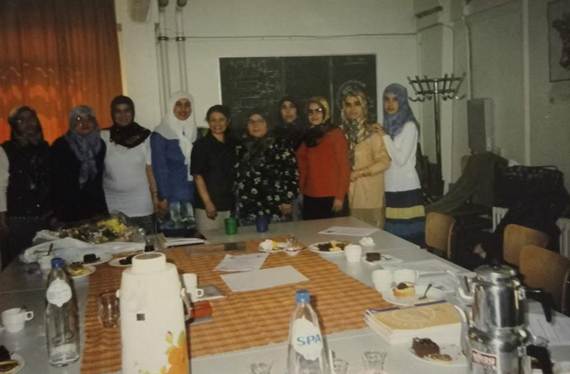
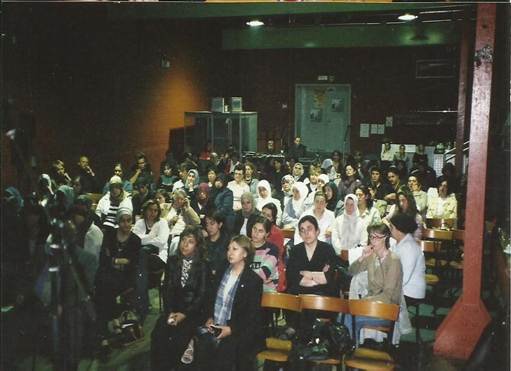
Ayşe became actively involved in various social organizations, focusing in particular on supporting Turkish women in the community. 

You are currently viewing a placeholder content from Vimeo. To access the actual content, click the button below. Please note that doing so will share data with third-party providers.

More Information

“With GTKB, we aimed on the one hand to promote the emancipation of migrant women and girls, and on the other hand to stimulate their participation in society. In addition to the language classes, we organized folk dance courses, driving lessons, sewing courses, aerobics and fitness classes, computer courses, and more. One important activity for the women was the weekly Kadınlar Kahvesi (Women’s Café), which was much more than just a café. It created a space where women from all backgrounds could freely discuss topics that interested them and that they wanted to learn more about. Speakers were invited to talk about topics they chose, such as health, nutrition, education, parenting, migration, elections, and leisure activities. Sometimes they went on outings together: cultural city visits, musical performances, to the cinema, or to a theatre show. We also organized large-scale cultural activities for the wider public, such as exhibitions with workshops, festivals, and performances by well-known artists. One of the most important projects realized by GTKB was the MOCEF (Mother–Child Education Foundation) project. Through this project, we supported Turkish mothers in raising their children in a multicultural context.”

Building Bridges for Turkish ​​Women  (original language)

You are currently viewing a placeholder content from Vimeo. To access the actual content, click the button below. Please note that doing so will share data with third-party providers.

More Information

“Met GTKB wilden we enerzijds de emancipatie van migrantenvrouwen en meisjes bevorderen en anderzijds hun participatie in de samenleving stimuleren. Naast de taallessen organiseerden we volksdanscursussen, rijbewijslessen, naaicursussen, aerobiccen, fitnescursussen en computercursussen. Een belangrijke activiteit voor de vrouwen was het wekelijkse kadınlar kahvesi (vrouwencafé), dat meer dan een café was. Het creëerde een omgeving waarin vrouwen van alle hoeken vrijuit konden discussiëren over onderwerpen die hen interesseerden en waarover ze meer wilden leren. Er werden sprekers uitgenodigd rond thema’s die ze kozen; zoals gezondheid, voeding, onderwijs, opvoeding, migratie, verkiezingen en vrijetijdsbesteding. Ze gingen soms samen op uitstap; een cultureel stadbezoek, muzikale optredens, naar de film of een theatervoorstelling. We organiseerden ook grootschalige culturele activiteiten voor het brede publiek, zoals tentoonstellingen, workshops, feesten en optredens van bekende artiesten. Een van de belangrijkste projecten die GTKB realiseerde was het MOCEF-project (Mother Child Education Foundation). Met dat project ondersteunden we Turkse moeders in het opvoeden van hun kinderen in een multiculturele context.”

An Interesting Opportunity 

An Interesting Opportunity 

One day, Ayşe’s husband came to her and told her that she had received a job offer to work as a teacher. This made her think…

You are currently viewing a placeholder content from Vimeo. To access the actual content, click the button below. Please note that doing so will share data with third-party providers.

More Information
For a full transcript of this video interview, please see the PDF linked below in the credits.

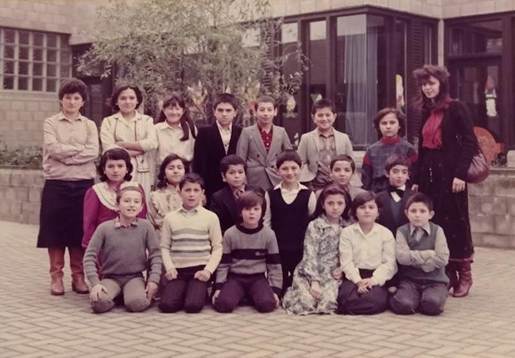
“Starting in January 1981, I began teaching Turkish language and culture classes in two schools in Ghent where most of the pupils spoke Turkish. My first schools were the Municipal Primary School Sint Macharius and the Municipal Primary School in Patrijsstraat in the Muide district. Our team consisted of four Turkish teachers. We mainly taught in schools with high concentrations of migrant pupils. Each class (kindergarten and primary) received two hours of Turkish lessons per week. In the kindergarten classes, we supported Turkish-speaking children in Turkish, especially during circle time, where children shared their experiences with the group and made plans for the entire week. Sometimes we would take these children aside to practise school-related concepts in their own language. In the first and second years of primary education, we mainly taught environmental studies. We worked together with Flemish teachers in each school. The content of the Turkish lessons was aligned with the themes of the Flemish teachers. Turkish children first received the content in Turkish. In this way, the children were prepared for the lessons in Dutch.”

Ayseimage006
Primary school class photo Sint-Macharius, Ghent (year is unknown) © privat photo, Ayşe Işçi

“Regular consultation with the Flemish teacher was crucial, but it was not always easy to obtain the themes of the Flemish teacher in advance.”

An Interesting Opportunity  (original language)

You are currently viewing a placeholder content from Vimeo. To access the actual content, click the button below. Please note that doing so will share data with third-party providers.

More Information
For a full transcript of this video interview, please see the PDF linked below in the credits.

Vanaf januari 1981 begon ik de Turkse taal- en cultuurlessen te geven in twee Gentse scholen waar de meeste leerlingen Turks spraken. Mijn eerste scholen waren de Stedelijke Basisschool Sint Macharius en de Stedelijke Basisschool in de Patrijsstraat in de wijk Muide. Ons team ​​Bi-cultureel Onderwijs binnen Pedagogisch Centrum bestond uit vier Turkse leerkrachten. We gaven vooral les in concentratiescholen. Elke klas (kleuter en lager) kreeg twee uur per week Turkse lessen. In de kleuterklassen ondersteunden we de Turkssprekende kinderen in het Turks, vooral tijdens het kringmoment, waar kinderen hun ervaringen met de groep deelden en een planning voor de hele week maakten. Soms namen we die kinderen even apart om de schoolse begrippen in hun eigen taal te oefenen. In het eerste en tweede leerjaar van het lager onderwijs gaven we vooral milieulessen. We werkten samen met de Vlaamse leerkrachten in elke school. De inhoud van de Turkse lessen werd afgestemd op de thema’s van de Vlaamse leerkrachten. Turkse kinderen kregen de inhoud eerst in het Turks. Op die manier werden de kinderen voorbereid op de lessen in het Nederlands.

Ayseimage006
Primary school class photo Sint-Macharius, Ghent (year is unknown) © privat photo, Ayşe Işçi

Regelmatig overleg met de Vlaamse leerkracht was cruciaal, maar het was niet altijd gemakkelijk om de thema’s van de Vlaamse leerkracht vooraf te krijgen.

A Challenging Start 

A Challenging Start 

After migrating to Belgium, Ayşe faced various challenges in her new environment.

You are currently viewing a placeholder content from Vimeo. To access the actual content, click the button below. Please note that doing so will share data with third-party providers.

More Information
For a full transcript of this video interview, please see the PDF linked below in the credits.

“The house where the six of us lived, on Halvemaanstraat, was very small. On the ground floor, at the front, there was a small, damp room. At the back, there was a living room with a three-seater sofa and a separate armchair, a small cabinet, a coal stove, and a table for four people. The kitchen was no more than one and a half square meters, with only a sink and a stove. Through the kitchen, you could reach a small courtyard with a single toilet. Upstairs, there were only two bedrooms. The father and his brothers slept in one room, and the other room became ours. In our room, there was a sponge mattress and a blanket on the floor, without sheets. There was a wardrobe that was used by everyone in the house. Getting used to the environment and the domestic situation was not easy. The small space, and being the only woman among five men, was something I had to adapt to.”

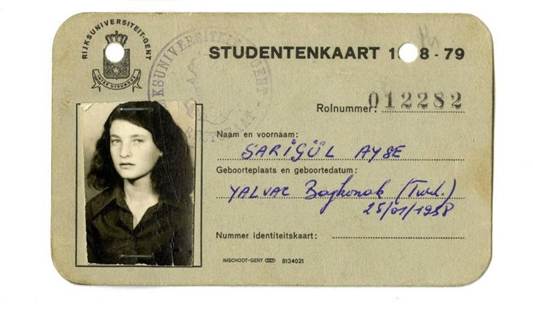
“I wanted to learn the language as quickly as possible and stand on my own two feet. I no longer wanted to be dependent on others, and (I wanted) to follow my classes effortlessly. In Turkey, I lived independently and was respected by those around me. Here, I was dependent on others and had to beg for respect. A teacher at school had told me that during the summer months I could take a free Dutch course organized by Ghent University for international students. I enrolled. In early July I started the Dutch course. There were students from different backgrounds, even an ophthalmologist from Turkey who had come here for specialist training at the University Hospital Ghent. He was married to a Belgian woman, named Vera. A few years later, she took part in the Turkish language courses that I gave to Belgian teachers. The Dutch course was taught by Professor De Keukelaere. He was very kind and understanding. He gave explanations in English and French, but I did not know any English and my French was not sufficient to understand everything. When he noticed that I did not understand something, he tried to explain it to me with gestures and body language. When I came home, I looked up the meaning of all the words from the course in the dictionary and made word lists that I could practice at every free moment, such as while cooking or on the bus t​​​​o and from class. I found it difficult to take proper notes in class. One day, the physics teacher asked: ‘Who is willing to lend Ayşe their notes?’ I hadn’t expected it at all, but several hands went up. I was so happy.”

Ayseimage005
Ayşe’s student ID card from the University of Ghent, 1979 © privat photo, Ayşe Işçi

A Challenging Start

You are currently viewing a placeholder content from Vimeo. To access the actual content, click the button below. Please note that doing so will share data with third-party providers.

More Information
For a full transcript of this video interview, please see the PDF linked below in the credits.

“Het huis waarin wij met zes personen verbleven in de Halvemaanstraat was heel erg klein. Beneden was aan de voorkant een klein vochtig kamertje. Aan de achterkant was een woonkamer met een driezitsbank en een losse fauteuil, een klein kastje, een kolenkachel en een tafel voor vier personen. Verder was er een keuken van hooguit anderhalve vierkante meter met alleen een spoelbak en een fornuis. Via de keuken kon je naar het kleine koertje met één toilet. Boven waren er slechts twee slaapkamers. De vader en zijn broers sliepen in de ene kamer, en de andere kamer was van ons. In onze kamer lag een sponsmatras en een deken op de grond, zonder lakens. Er stond een kledingkast die door iedereen in het huis werd gebruikt. Wennen aan de omgeving en de huiselijke situatie was niet gemakkelijk. De kleine ruimte en het feit dat ik de enige vrouw tussen vijf mannen was, maakte dat ik moest wennen.”

Ayseimage005
Ayşe’s student ID card from the University of Ghent, 1979 © privat photo, Ayşe Işçi

A Foreign Student in Ghent 

A Foreign Student in Ghent 

Although Ayşe initially did not want to leave her career and studies in Turkey behind, she eventually decided to move to Ghent as a student.

You are currently viewing a placeholder content from Vimeo. To access the actual content, click the button below. Please note that doing so will share data with third-party providers.

More Information
For a full transcript of this video interview, please see the PDF linked below in the credits.

“My husband had me enrolled at Ghent University in October 1978. The administrative formalities for a visa application took one week. When submitting the documents for the application at the Belgian consulate in Istanbul, I was told by the staff member that we would have to wait another week for approval. My father was with me and wanted to speak with the consul. We had a long conversation with the consul. I signed a student contract. The contract stated that I had to return to Turkey after my studies, but the consul said that as a graduate I could stay and work in Belgium without any problems if I wanted to. He also said that he could issue the visa immediately in exchange for fivehundred Belgian francs. I was a little surprised, but I gave him the money and immediately received the visa. At that moment, I realized that bribery was universal and that staying in Belgium was not really a problem for highly educated Turks. At the end of January 1979, I flew from Istanbul to Brussels. It was my first flight, and it was a difficult farewell to my father.”

A Foreign Student in Ghent  (original language)

You are currently viewing a placeholder content from Vimeo. To access the actual content, click the button below. Please note that doing so will share data with third-party providers.

More Information
For a full transcript of this video interview, please see the PDF linked below in the credits.

Mijn echtgenoot liet me in oktober 1978 inschrijven aan de Universiteit Gent. De formaliteiten voor een visumaanvraag duurden een week. Bij het indienen van de documenten voor de aanvraag bij het Belgische consulaat in Istanbul hoorde ik van de medewerker dat we nog een week moesten wachten op de goedkeuring. Mijn vader was bij me en wilde met de consul spreken. We hebben een lang gesprek gehad met de consul. Ik tekende een contract als student. In het contract stond dat ik na mijn studie moest terugkeren naar Turkije, maar de consul zei dat ik als afgestudeerde zonder problemen in België kon verblijven en werken als ik dat wilde. Hij zei ook dat hij het visum meteen kon ondertekenen in ruil voor vijfhonderd Belgische frank. Ik was een beetje verbaasd, maar ik gaf hem het geld en kreeg meteen het visum. Ik besefte op dat moment dat omkoping universeel was en dat verblijf in België voor hoogopgeleide Turken niet zozeer een probleem was. Eind januari 1979 vloog ik van Istanbul naar Brussel. Ik vloog voor het eerst en het was een moeilijk afscheid van mijn vader.

“Thank God, things have turned out very well.”

“Thank God, things have turned out very well.”

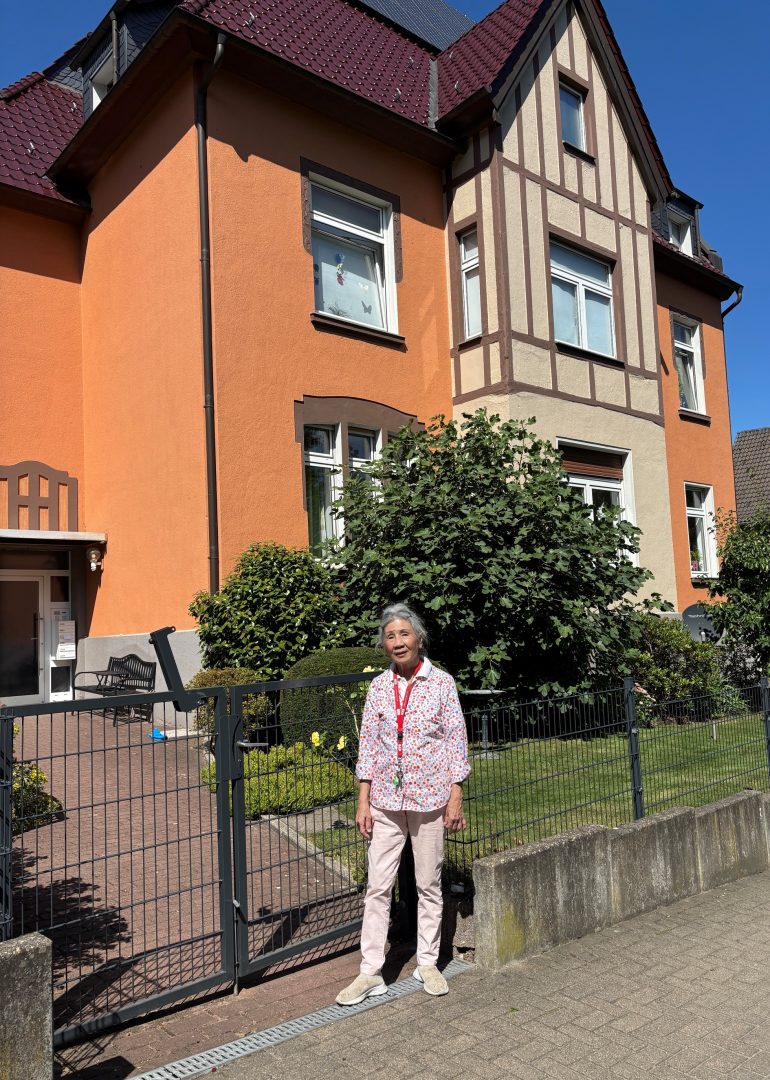
Today, Haeng-Ja Fischer is over 80 years old and content with her life.  

HJF 004 LVR Industriemuseum
Foto von Haeng-Ja Fischer vor ihrem Zeichen Haus im Jahr 2025| © Sara Demiriz | LVR-Industriemuseum

„Gott sei Dank ist alles sehr gut gelaufen.“   

Heute ist Haeng-Ja Fischer über 80 Jahre alt. Sie ist mit ihrem Leben zufrieden. 

HJF 004 LVR Industriemuseum
Foto von Haeng-Ja Fischer vor ihrem Zeichen Haus im Jahr 2025| © Sara Demiriz | LVR-Industriemuseum

Giving something back: share what you have

Giving something back: share what you have

After the bad experiences in her first marriage, Haeng-Ja Fischer didn’t even want to think about getting married again. But an encounter with Eikelbeck, who was then mayor of Bochum and a patient in St. Josef-Hospital, and his wife Gerda changed that. They introduced Haeng-Ja Fischer to her second husband, Peter. She was happily married to him until his death in 2019.  

Together, they dedicated themselves to helping others. They supported children in Gambia, Africa, and in the mid-2010s took in a young refugee from Eritrea. As they both knew how it felt to be a stranger in a foreign country, they felt it was the right thing to do. They helped him study German and supported him as he trained to become a nurse. For her and her husband, one thing was clear: if you have something, you have to share it.  

Today, Haeng-Ja Fischer is over 80 years old and content with her life.  

HJF 004 LVR Industriemuseum
Foto von Haeng-Ja Fischer vor ihrem Zeichen Haus im Jahr 2025| © Sara Demiriz | LVR-Industriemuseum

Etwas zurückgben: teile, was du hast   

Nach den schlechten Erfahrungen mit ihrer ersten Ehe kommt für Haeng-Ja Fischer eine Weitere nicht in Frage. Die Begegnung mit dem damaligen Bochumer Oberbürgermeister Eikelbeck und dessen Frau Gerda, änderten dies jedoch. Sie stellten Haeng-Ja Fischer ihren zweiten Mann Peter Fischer vor. Mit ihm blieb sie bis zu seinem Tod im Jahr 2019 glücklich verheiratet. 

Gemeinsam setzten sie sich für andere ein. Sie unterstützten Kinder in Gambia, Afrika, und nahmen Mitte der 2010er-Jahre einen jungen Mann aus Eritrea bei sich auf. Sie halfen ihm beim Deutsch lernen und unterstützten seine Ausbildung zum Krankenpfleger. Haeng-Ja Fischer wollte etwas von ihren Chancen weitergeben und auch anderen die Möglichkeit auf eine bessere Zukunft ermöglichen. Für sie und ihren Mann war eine Sache selbstverständlich: wenn du etwas hast, musst du es teilen. 

Heute ist Haeng-Ja Fischer über 80 Jahre alt. Sie ist mit ihrem Leben zufrieden. 

HJF 004 LVR Industriemuseum
Foto von Haeng-Ja Fischer vor ihrem Zeichen Haus im Jahr 2025| © Sara Demiriz | LVR-Industriemuseum

Unacceptable – standing up to others

Unacceptable – standing up to others

You are currently viewing a placeholder content from Vimeo. To access the actual content, click the button below. Please note that doing so will share data with third-party providers.

More Information
For a full transcript of this video interview, please see the PDF linked below in the credits.

Inakzeptabel– sich gegen andere behaupten    

You are currently viewing a placeholder content from Vimeo. To access the actual content, click the button below. Please note that doing so will share data with third-party providers.

More Information
Eine vollständige Transkription des Video-Interviews findet sich als PDF-Datei im Abschnitt “Credits”.

An invitation to dinner – tackling challenges head-on

An invitation to dinner – tackling challenges head-on

Haeng-Ja Fischer solved problems in her own way.  Above all, she was direct and clear, and when faced with a difficult situation, she often tried to change the other person’s perspective by putting them in her position. One time, that meant inviting the hospital personel to “Korean dinner with asparagus and ham rolls”. 

You are currently viewing a placeholder content from Vimeo. To access the actual content, click the button below. Please note that doing so will share data with third-party providers.

More Information
For a full transcript of this video interview, please see the PDF linked below in the credits.

Spargel-Schinken-Röllchen oder Herausforderungen offen angehen   

Haneg-Ja Fischer löste Probleme auf ihre ganz eigene Art und Weise. Vor allem war sie direkt und klar. Wenn sie mit einer schwierigen Situation konfrontiert war, versuchte sie oft, die Sichtweise ihres Gegenübers zu ändern, indem sie ihn in ihre Lage versetzte. Einmal bedeutete dies, das Krankenhauspersonal zu einem „koreanischen Abendessen mit Spargel und Schinkenröllchen“ einzuladen. 

You are currently viewing a placeholder content from Vimeo. To access the actual content, click the button below. Please note that doing so will share data with third-party providers.

More Information
Eine vollständige Transkription des Video-Interviews findet sich als PDF-Datei im Abschnitt “Credits”.