Struggling with Discrimination and Prejudices
Struggling with Discrimination and Prejudices
They bought us a ticket and I went to Leipzig with my husband. We stayed there for more than a year. […] We were not in the city, but in a small village. But that was not such a great experience, because I was a joke between the people in the village. They were always laughing at us, pointing at us and stuff. I don’t think they had ever seen a woman wearing a headscarf. I was the only one. First we lived in a reception camp, then they gave us an apartment when we got the residence [title]. They said: ‘Refugee’, ‘Are you Arab or what?’ My German wasn’t very good either, I only learned German at home because the school was an hour away by train. Here in Berlin one hour is normal, but in the village it is hard because the bus comes only once an hour and the train too. When it is gone, I wait three hours on the street. […] That was a difficult time: you don’t see nice people. Even when we went shopping, they looked at me strangely. It’s better for me in Berlin because it’s multicultural.
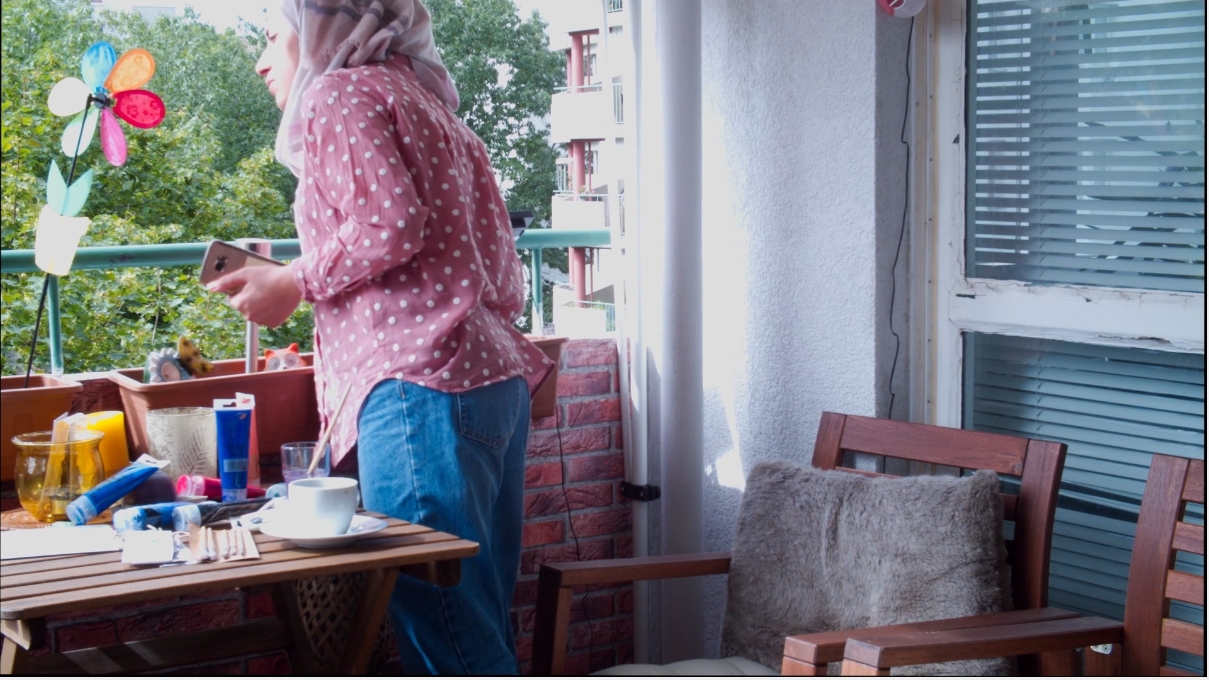
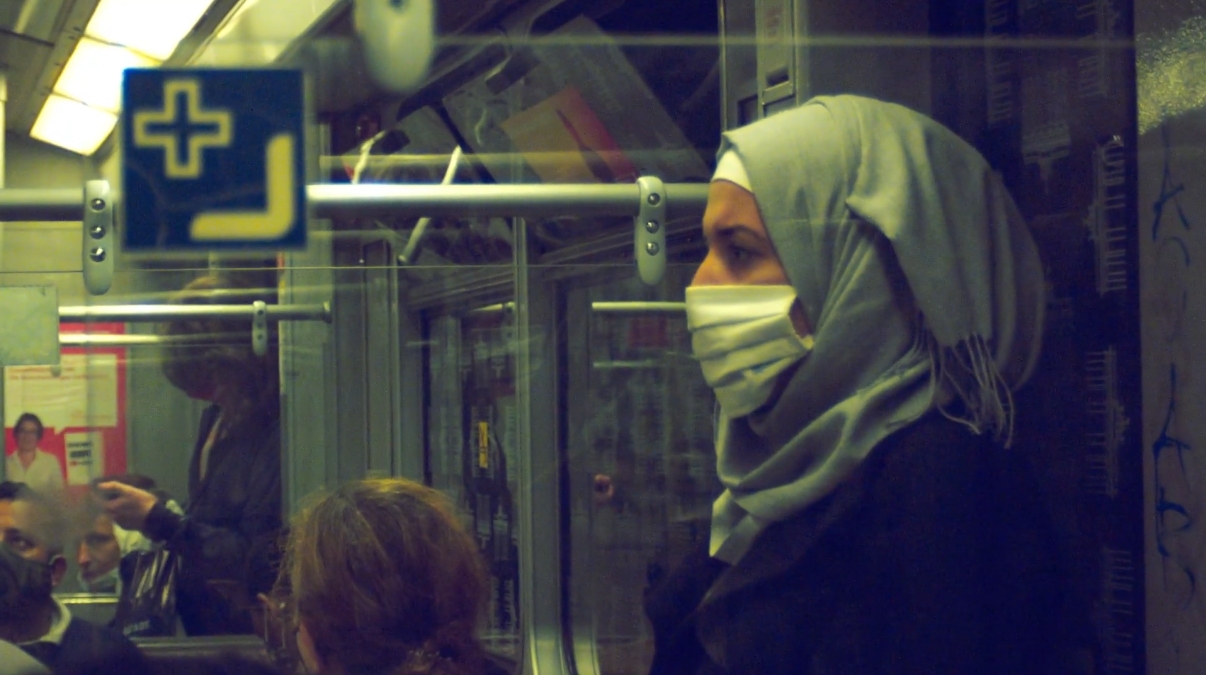
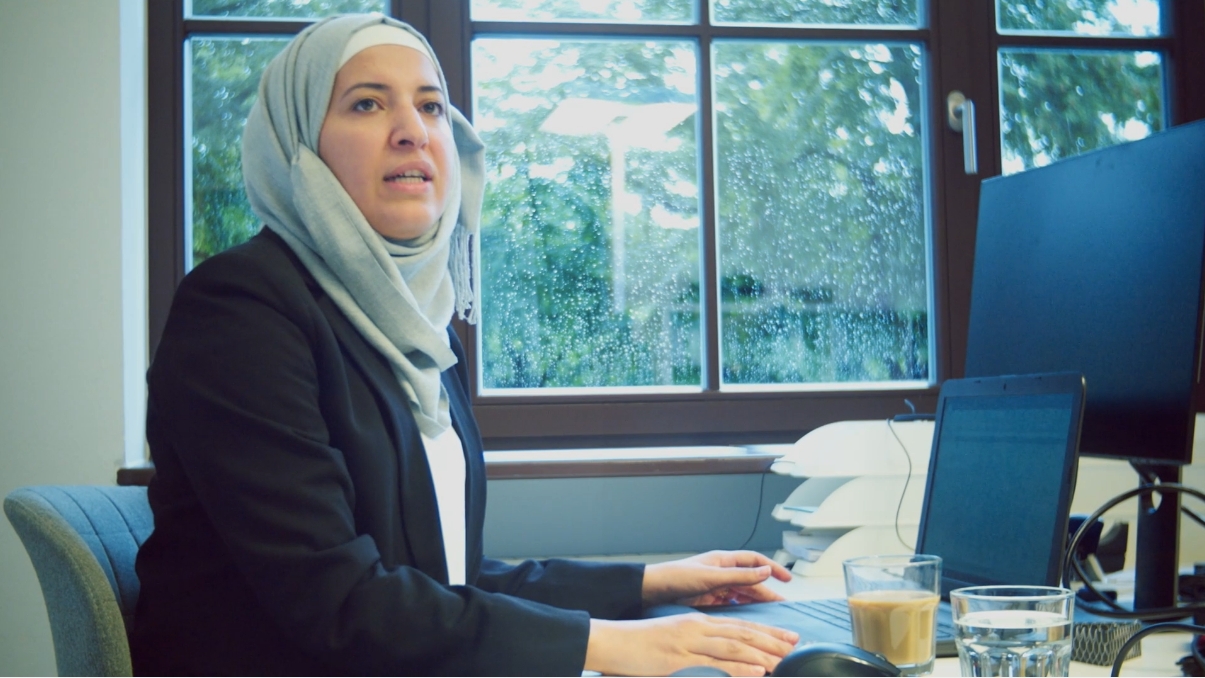
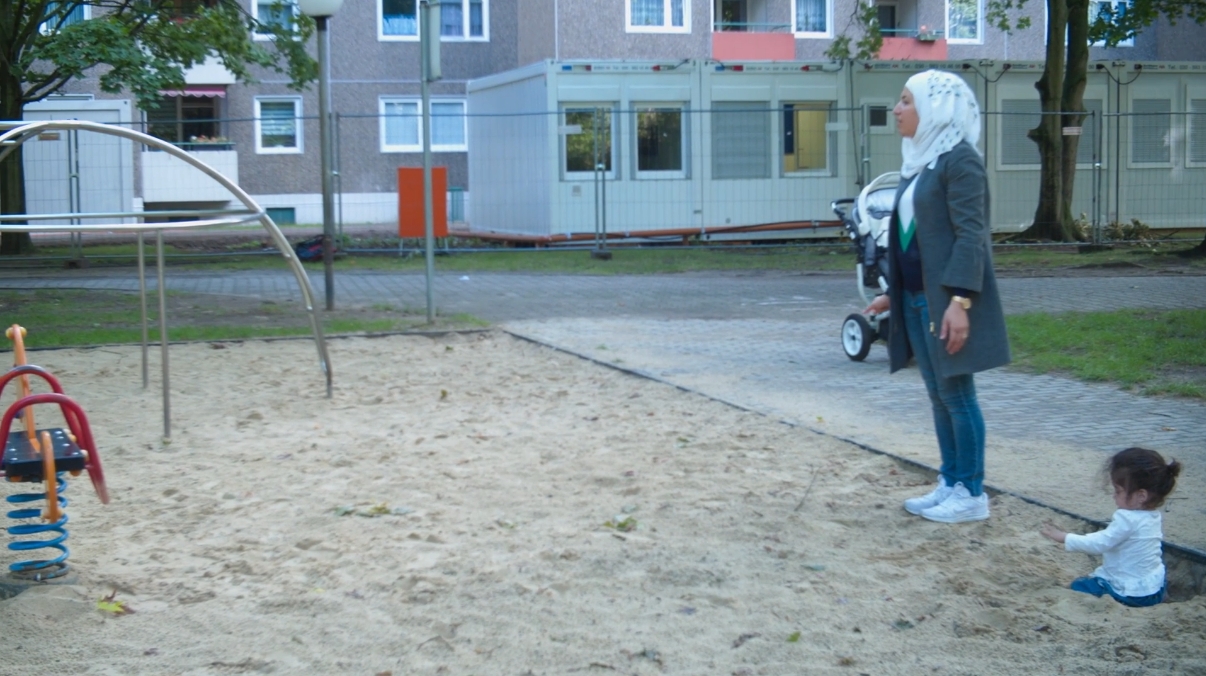
But I also want to talk about an experience I had in Berlin. It was really a pushback for me. I applied to a bank in Berlin for an apprenticeship as a bank clerk. They sent me an invitation for a job interview. When the employee saw me for the first time, she was surprised – I don’t know why, maybe because of the headscarf. They didn’t greet me; I stretched out my hand and she said: ‘Not now, when you leave’. All the time they were asking me questions that had nothing to do with the work: ‘Do you have friends in Berlin? Where do you go with your friends? What do you do with your friends?’ They gave me an exam, and I did the whole mathematical test. And after the interview they said: ‘The training is only for Germans and you don’t have a personality. […] You should work in a kindergarten.’ But I can’t work in a kindergarten with my certificates because I don’t have a degree and I need certificates for the kindergarten. […] After this experience I did a psychotherapy. Because I was very enthusiastic at the beginning, thought I spoke German and could do it. Afterwards I was so disappointed. She didn’t even greet me, although a greeting is the first step.
I don’t always like to say: The others are to blame. Maybe I did something that I didn’t mean, maybe they misunderstood me.
But I don’t always like to play this role: The role of the victim. I just don’t understand it. If someone doesn’t hurt me, why should I hate him?
But I think that it is a good experience for me. Not everybody loves me. That’s how it is.
One person, that means: many experiences, many thoughts, many feelings. When they say that someone is a refugee, it means that he is poor, he has no money, he has no certificates or these are worth less than in Germany. There are many prejudices, I have felt that. If someone has these thoughts about refugees, they should talk to them and then they can make a judgement.