Building friendships and support networks

Building friendships and support networks

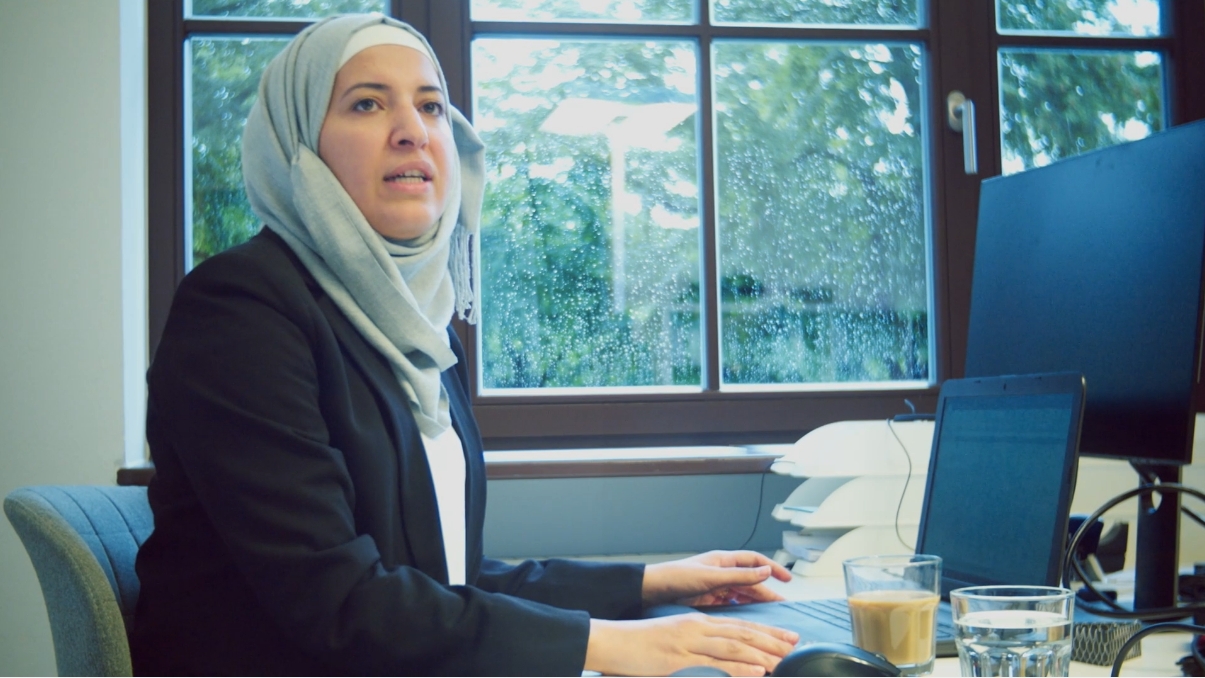
We lived in the hotel for a year, on Antonplatz close to Schönhauser Allee. During this time we attended the German course. […] There we met other Arab refugees. There are several groups on Facebook, and I wrote and met others. I also volunteered in a project that teaches refugee women how to ride a bicycle. And I could ride a bike, so I helped others. I saw this on Facebook in an event and wrote that I wanted to participate.

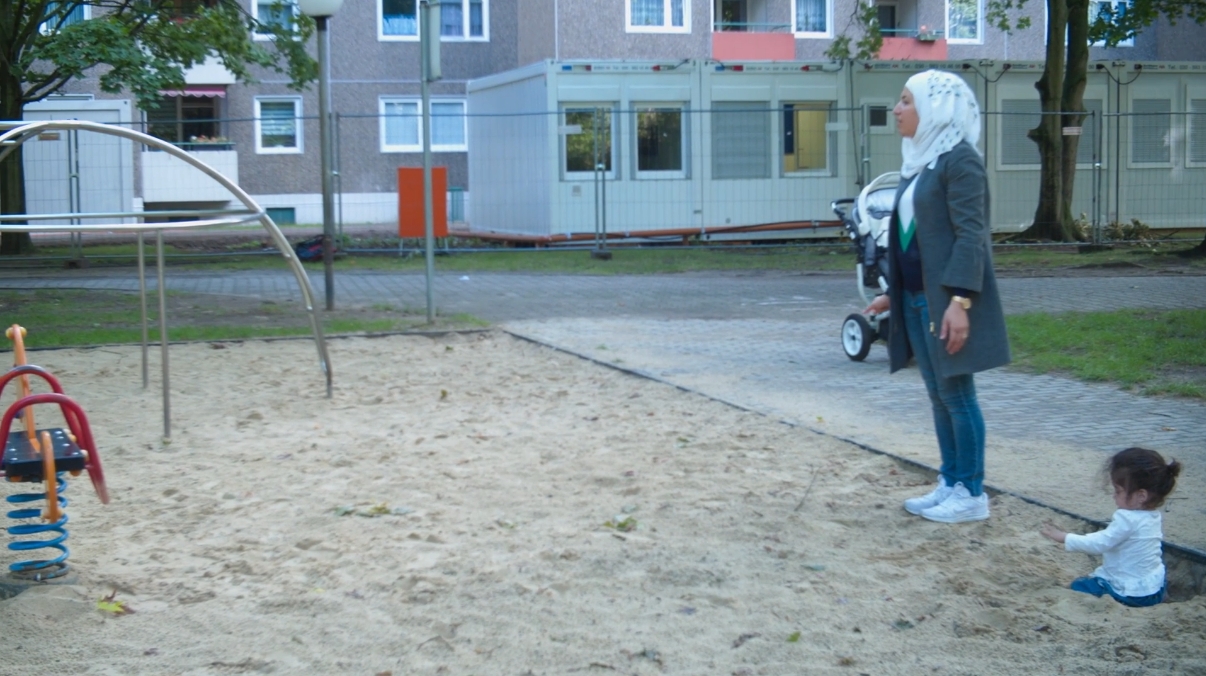
There is a project for people from different cultures and refugees, Start with a Friend. I found a German friend there. We meet often, go to the cinema and take a walk. Now it is a bit more difficult because I have children, but she is very supportive.

I have a lot of Syrian friends that I got to know through Facebook. And when I met someone, they would just say, ‘Come, I have other friends’ and take me with them. It is good to meet people who have the same experiences. But I prefer meeting Germans rather than Syrians, because I don’t want to talk about my experiences, about the war. And not about my parents and my family. With my German friend I don’t talk about that. We talk about other things and play with the children. But if there is news from Syria, then of course we have to talk about it with our Arab friends, and I don’t like to do that.”

Building friendships and support networks (original language)

Vivimos en el hotel durante un año, en Antonplatz, cerca de Schönhauser Allee. Durante ese tiempo, asistimos al curso de alemán. […] Allí conocimos a otros refugiados árabes. Hay varios grupos en Facebook, y escribí y conocí a otros. También participé como voluntaria en un proyecto que enseña a mujeres refugiadas a montar en bicicleta. Y como sabía montar en bicicleta, ayudé a otras. Vi esto en Facebook durante un evento y escribí que quería participar.

Hay un proyecto para personas de diferentes culturas y refugiados, “Empieza con un Amigo”. Encontré una amiga alemana allí. Nos vemos a menudo, vamos al cine y paseamos. Ahora es un poco más difícil porque tengo hijos, pero ella me apoya mucho.

Tengo muchos amigos sirios que conocí por Facebook. Y cuando conocía a alguien, simplemente me decían: «Ven, tengo otros amigos» y me llevaban. Es bueno conocer gente que ha vivido experiencias similares. Pero prefiero conocer alemanes que sirios, porque no quiero hablar de mis experiencias, de la guerra. Ni de mis padres ni de mi familia. Con mi amigo alemán no hablo de eso. Hablamos de otras cosas y jugamos con los niños. Pero si hay noticias de Siria, claro que tenemos que hablarlo con nuestros amigos árabes, y no me gusta hacerlo.
Struggling with Discrimination and Prejudices

Struggling with Discrimination and Prejudices

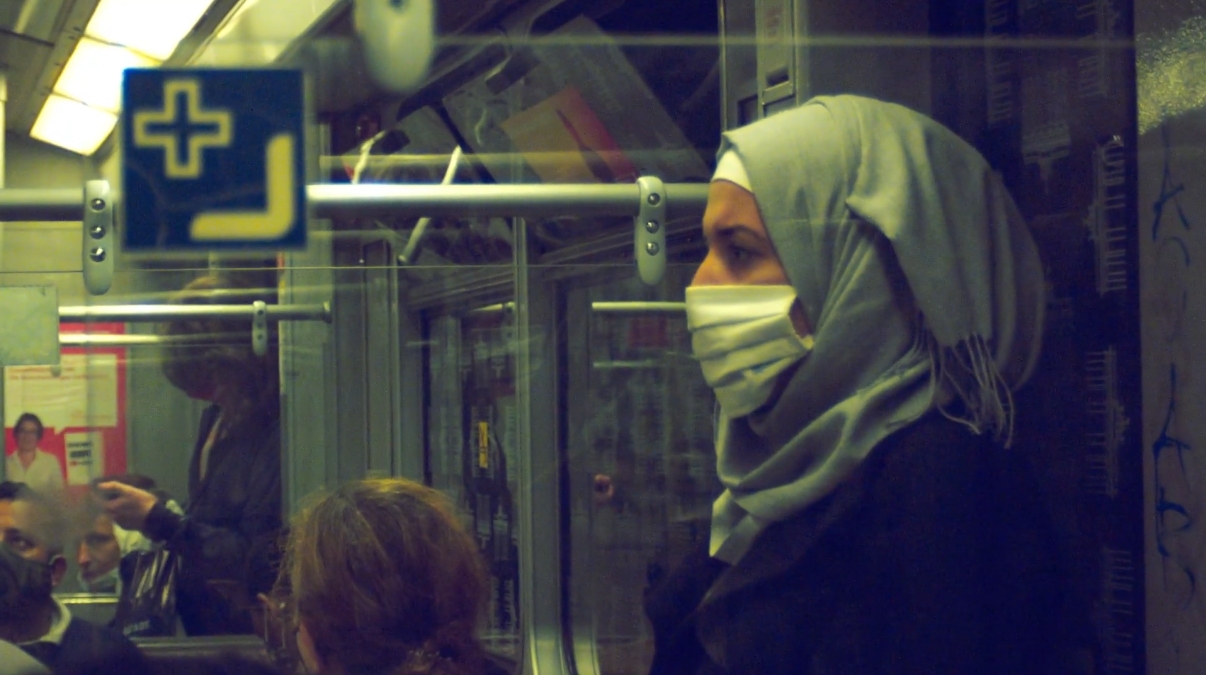
They bought us a ticket and I went to Leipzig with my husband. We stayed there for more than a year. […] We were not in the city, but in a small village. But that was not such a great experience, because I was a joke between the people in the village. They were always laughing at us, pointing at us and stuff. I don’t think they had ever seen a woman wearing a headscarf. I was the only one. First we lived in a reception camp, then they gave us an apartment when we got the residence [title]. They said: ‘Refugee’, ‘Are you Arab or what?’ My German wasn’t very good either, I only learned German at home because the school was an hour away by train. Here in Berlin one hour is normal, but in the village it is hard because the bus comes only once an hour and the train too. When it is gone, I wait three hours on the street. […] That was a difficult time: you don’t see nice people. Even when we went shopping, they looked at me strangely. It’s better for me in Berlin because it’s multicultural.

But I also want to talk about an experience I had in Berlin. It was really a pushback for me. I applied to a bank in Berlin for an apprenticeship as a bank clerk. They sent me an invitation for a job interview. When the employee saw me for the first time, she was surprised – I don’t know why, maybe because of the headscarf. They didn’t greet me; I stretched out my hand and she said: ‘Not now, when you leave’. All the time they were asking me questions that had nothing to do with the work: ‘Do you have friends in Berlin? Where do you go with your friends? What do you do with your friends?’ They gave me an exam, and I did the whole mathematical test. And after the interview they said: ‘The training is only for Germans and you don’t have a personality. […] You should work in a kindergarten.’ But I can’t work in a kindergarten with my certificates because I don’t have a degree and I need certificates for the kindergarten. […] After this experience I did a psychotherapy. Because I was very enthusiastic at the beginning, thought I spoke German and could do it. Afterwards I was so disappointed. She didn’t even greet me, although a greeting is the first step.

I don’t always like to say: The others are to blame. Maybe I did something that I didn’t mean, maybe they misunderstood me.

But I think that it is a good experience for me. Not everybody loves me. That’s how it is.

One person, that means: many experiences, many thoughts, many feelings. When they say that someone is a refugee, it means that he is poor, he has no money, he has no certificates or these are worth less than in Germany. There are many prejudices, I have felt that. If someone has these thoughts about refugees, they should talk to them and then they can make a judgement.

Fleeing Syria, Arriving in Berlin

Fleeing Syria, Arriving in Berlin

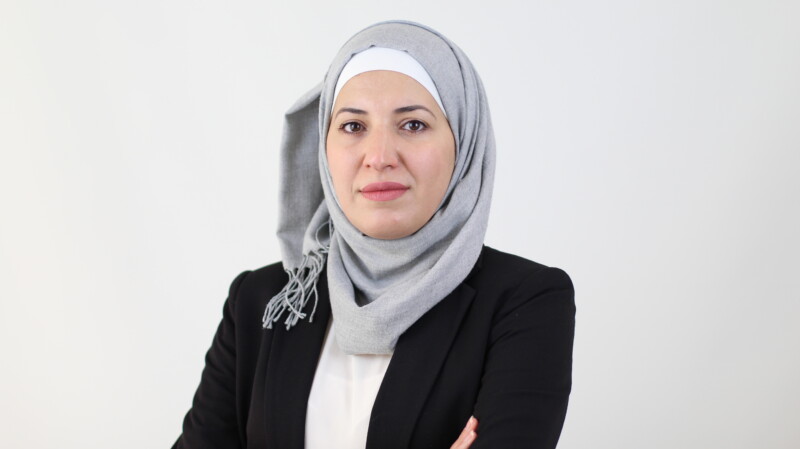
Alaa Muhrez © Minor Kontor

I am from Homs. This is the first city that was destroyed by war. My husband’s apartment was destroyed, my parents’ apartment was destroyed as well. Many men and women were kidnapped from Homs by al-Assad’s[1][AH1]   groups. Because we are religious, we were perceived as enemies of al-Assad. The war in Syria is not a religious war, but people were divided in this way. My parents and siblings stayed in Syria. We keep in touch through WhatsApp and FaceTime.

We have compared between Sweden, Holland and France. We read that there is more work in Germany than in the other countries. Here you can also study and learn German faster. That is why we went to Germany. Germany has a very good reputation in Syria: All great things are Made in Germany. That’s why we thought that there is perfect work here.

In Berlin we registered in a city hall. They gave us a certificate so we could sleep in a hotel. We lived in the hotel for a year, on Antonplatz close to Schönhauser Allee. […] Then my husband and I looked for an apartment. That was very difficult in Berlin. I wanted to move to Munich, but I think it was fate that we found an apartment in Berlin after all. I love Munich – Munich is more European than Berlin, Berlin is more multicultural. But Berlin is also great. I am not thinking about moving to Munich at the moment. In Berlin I heard about many new ideas: for example about gender and LGBT activism. I was very closed to this topic. But I met with people who were completely different than I had imagined.

And that is an advantage. The disadvantage is that it takes a lot of time.